With Russia's invasion of Ukraine, the West must now find a way to stop Putin.
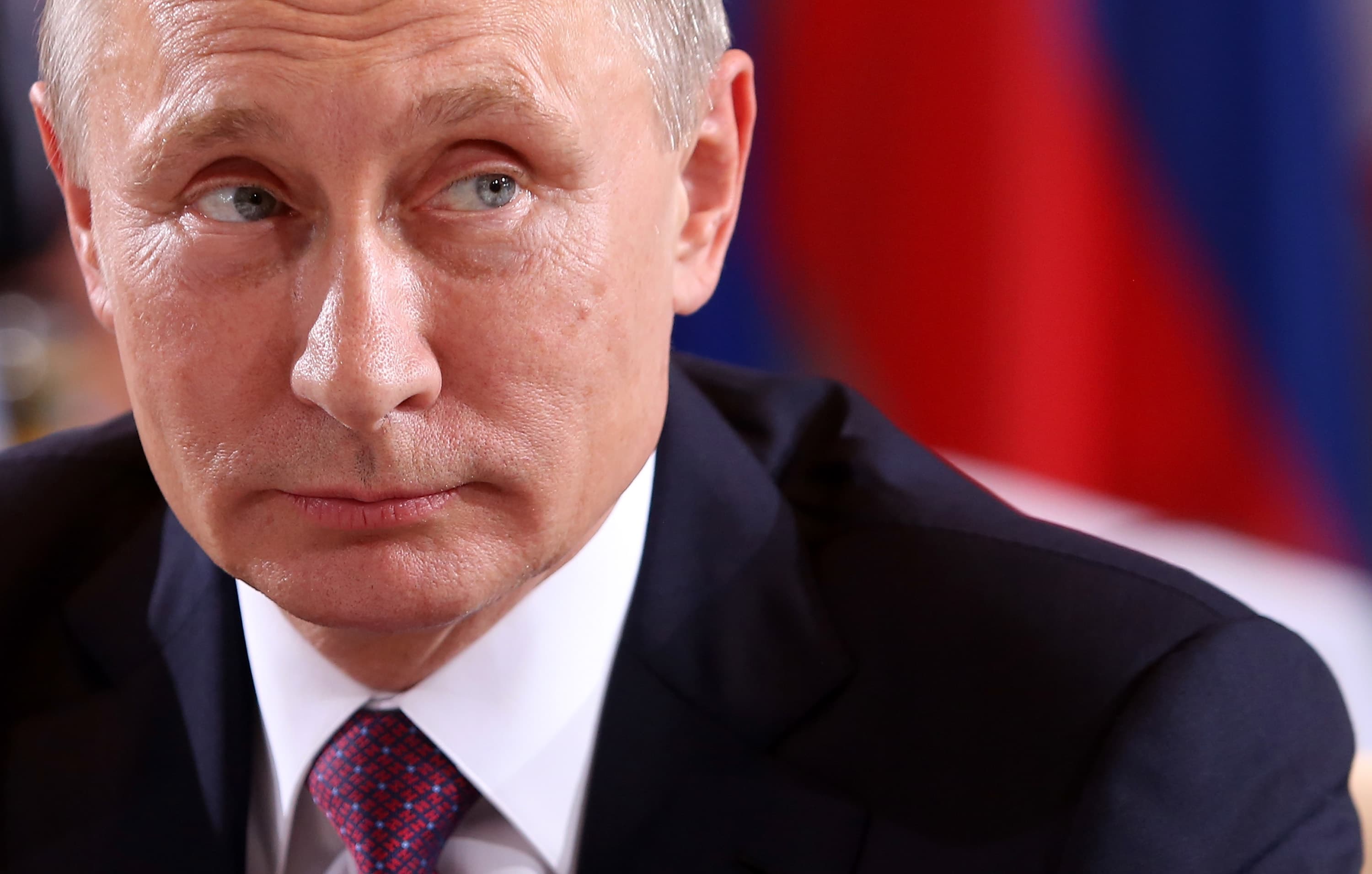
- After months of concerns over a military buildup on the border, Russia has now invaded Ukraine.
- Overnight, explosions were heard in multiple cities in Ukraine, including Kyiv.
- How can the West stop Russia and President Putin, and what actions can the U.S and Europe take to achieve this?

What is the West's next move after Russia's months-long invasion of Ukraine?
Putin declared the start of a "special military operation" in Ukraine, aimed at "demilitarizing" the country.
Putin stated in a televised address that Russia did not intend to occupy Ukraine but aimed to safeguard its citizens. He also gave a stern warning that any nations that attempted to impede Russia's actions would face "unprecedented consequences."
Across the country, cities were targeted by Russian attacks, with reports of explosions in Kyiv, Odessa, Kharkiv, and Mariupol.
According to official and eyewitness reports, Russian tanks, troops, and shelling have been observed in different parts of Ukraine, including the north, east, and south, in addition to airstrikes.
On Thursday morning, Ukraine's military announced that Russia had launched over 30 attacks on civilian and military infrastructure using Kalibr cruise missiles.
Jens Stoltenberg, NATO Secretary-General, stated on Thursday that NATO will increase its presence in the eastern part of the alliance by deploying more soldiers in the coming days and weeks. However, he emphasized that NATO has no plans to send its troops into Ukraine.
The Kremlin announced Thursday morning that Putin would determine the duration of the military operation depending on its advancement and objectives.
Dmitry Peskov, Putin's spokesman, stated that Ukraine should be "liberated" but nobody is discussing the "occupation" of Ukraine, which is considered "unacceptable," according to Reuters.
After months of simmering tensions and concerns over Russia's intentions toward its neighbor, the developments have taken a shocking escalation.
Putin's recognition of two breakaway regions in eastern Ukraine as independent and subsequent deployment of Russian troops into the region on a "peacekeeping" mission have been met with skepticism by many.
Many experts and officials believed that the recent assault in the eastern Donbas region of Ukraine could signal a possible invasion, but Thursday's attack was larger and faster than anticipated.

Moscow aims to alter Ukraine's political leadership and establish a pro-Russian government in Kyiv through military action, according to experts' beliefs.
According to Henry Rome, director of global macro research at Eurasia Group, based on Putin's speech and the initial waves of strikes, it is evident that we are in the 'severe' scenario, where Russia is launching major attacks across Ukraine with the aim of overthrowing the Kyiv government through military means.
Although Putin claims otherwise, there is a high likelihood that Russian forces will occupy some territory.
A military conflict has erupted on European soil, causing European markets to plummet at the open on Thursday. Meanwhile, U.S. stock futures have tumbled and global oil prices have spiked due to the attack that is shaking global financial markets.
Are sanctions enough?
Officials from the U.S. and Europe attempted to prevent Russia from launching an attack by threatening additional sanctions.
This week, Russia faced punitive measures from financial institutions and sovereign debt recognition after acknowledging separatist regions in eastern Ukraine.
After the invasion began, U.S. President Joe Biden pledged to implement additional measures targeting Russia's economy. The European Union, which shares a border with Ukraine to the west, will convene an emergency meeting on Thursday to discuss its response. German Chancellor Olaf Scholz has characterized Russia's actions as a "dark day for Europe," urging Moscow to halt military operations promptly.
The effectiveness of sanctions in deterring Putin is uncertain, as measures imposed on Russia after its 2014 annexation of Crimea have not discouraged the president.
While there have been pledges of additional military equipment for Ukraine to defend against Russian aggression, the duration of its resistance remains uncertain.
On Thursday, Timothy Ash, senior emerging markets sovereign strategist at BlueBay Asset Management, stated that "Putin is erecting a new Iron Curtain in Emerging Europe, thereby making us all less secure."
He suggested that the West impose severe penalties on Russia for its actions.
Ukraine is urgently requesting assistance from the West, as stated by its foreign minister, Dmytro Kuleba, in a tweet that outlines specific actions needed, including the provision of more weapons, financial aid, and humanitarian assistance.
Kuleba urged the world to stop Putin from causing more harm to Ukraine, stating: "The world must act now to prevent Putin from causing further damage."
The U.S. and U.K., among other Western nations, have provided financial aid and military hardware to Ukraine. Meanwhile, European countries have offered military equipment to NATO's deployments in Eastern Europe.
NATO is not obligated to defend Ukraine because it is not a member of the EU or NATO.
It is uncertain how far the West will go to prevent Ukraine from being fully subjugated by Russia, and it remains unclear whether the U.S. and EU are prepared to use military force in response.
In the near future, Rome anticipates that Eurasia Group will announce a comprehensive package of sanctions aimed at isolating Russia from the global financial system and severely harming its economy.
The U.S. will likely add many, if not all, of Russia's largest banks to the Specially Designated Nationals list, impose new export restrictions on advanced technology, and expand the scope of sanctions against oligarchs and the political elite, as stated by him.
The EU and UK will implement comparable measures due to the gravity of Russian actions. As a result of the severity of Russia's actions, we anticipate that Western policymakers will surpass their worst-case scenario plans, which may result in Russia's expulsion from the SWIFT financial messaging system. Furthermore, the Nord Stream 2 pipeline will be put on hold indefinitely.
Earlier this week, Germany declared that it had stopped its approval process for a large gas pipeline that would have increased Russia's gas exports to Germany and Europe.
A new Cold War?
The responsibility now lies with the West to respond to Russia's growing hostile approach, particularly toward its neighboring and former Soviet states such as Ukraine, Georgia, and Belarus.
Ukraine's location on the right-hand side of Europe, where some of the world's largest and longest-standing democracies and economies reside, makes it particularly significant.
Russia's president has consistently emphasized the "unification" of Ukrainians and Russians, delivering speeches and even writing an essay on the historical, cultural, and linguistic ties between the nations. On Monday, he declared that Ukraine was formed from Russian lands and reaffirmed that the dissolution of the USSR, which resulted in Ukraine's independence, was a mistake.
Ukraine's government aims to align itself with Europe and seeks membership in both the EU and NATO.

Putin is determined to preserve Russia's sphere of influence and has sought legal guarantees that Ukraine will never join NATO, which would bring the military alliance's border to Russian territory.
The West has refused to meet Russia's security demands, causing Russia to claim that its concerns have been ignored.
The Russian invasion and the latest attack by Russia, along with the West's sanctions, will have significant consequences on the global economy, according to Rome from Eurasia Group. This will lead to a new US-Russia cold war, making diplomacy between Washington and Moscow almost impossible.
The return of a major militarized border in Europe will mark a significant increase in tensions between Russia and NATO countries, potentially leading to a conflict that spills over into Poland, Hungary, or Romania. This could result in alliance members being drawn into conflict, and the possibility of huge refugee flows on the horizon.
It is uncertain whether Russia possesses the military strength to invade Ukraine.
Despite Russia's substantial military buildup, the number of Russian troops is not enough to control vast areas of Ukrainian territory, taking into account the anticipated strong local opposition, as stated by Andrius Tursa, Central and Eastern Europe advisor at Teneo Intelligence, in a Wednesday evening note.
He stated that Moscow's probable goal was to make Ukraine surrender to Russia's requirements.
Tursa noted that earlier this week, Putin outlined new demands for Kyiv, including recognizing Crimea and Sevastopol as Russian territory, renouncing plans to join NATO, demilitarizing the country, and negotiating the situation in Donbas.
In order to achieve its objectives, Russia could employ a range of tactics, such as military operations aimed at weakening the Ukrainian military, causing substantial harm to Ukrainian soldiers, and destroying crucial infrastructure in the hope of prompting a rapid surrender from the Ukrainian side.
Tursa stated that Moscow could employ various strategies to undermine and demoralize Ukraine.
Large-scale terrorist acts, political assassinations, cyber-attacks on critical infrastructure, and other actions aimed at sowing chaos and undermining the country's ability and willingness to defend itself could occur.
politics





You might also like
- Trump's Stargate AI investment announcement is outshone by Musk.
- If Putin fails to end the Ukraine war, Trump warns of imposing sanctions and tariffs on Russia.
- Ross Ulbricht, the creator of the Silk Road, was pardoned by Trump.
- Oracle, OpenAI, and Softbank to invest in AI infrastructure, announced by Trump.
- In his final moments in office, Biden granted clemency to his relatives.