What to anticipate from the former president's legal cases in 2024
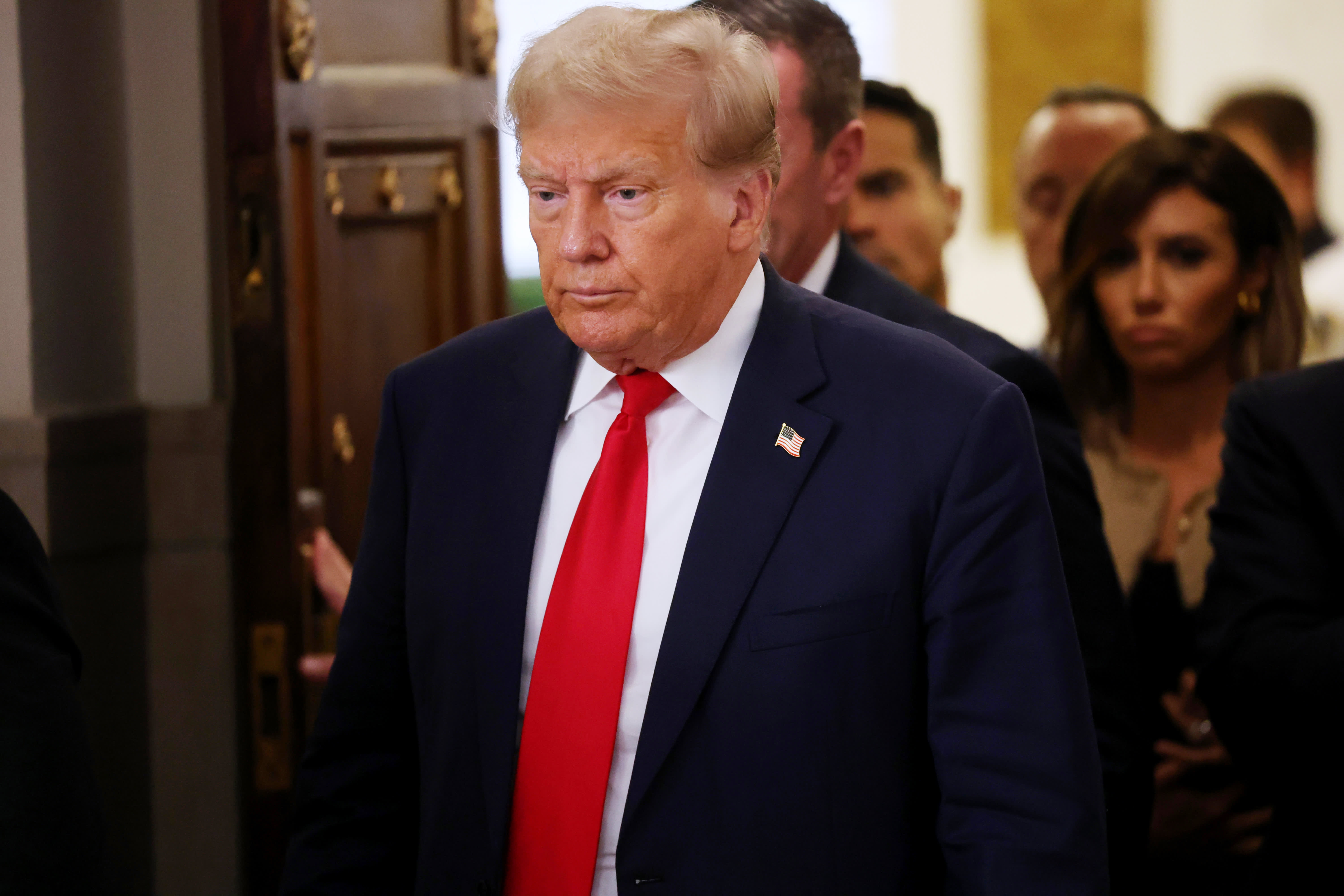
In the past year, Donald Trump faced two trials, four indictments, and a multimillion-dollar civil verdict, all while dealing with other legal challenges and running for president. His 2024 legal schedule could be even more chaotic.
The former president is facing up to five separate trials in the new year, with verdicts in two civil cases that could result in significant financial losses for him and his business. In the four criminal cases, he is facing a total of 91 felony counts, some of which carry maximum prison terms of 20 years.
The civil damages trial in a defamation case brought by writer E. Jean Carroll is set to begin on January 16, one day after the Iowa caucuses, where Trump is leading in the polls and has predicted an "epic landslide" victory.
The trial dates for the four pending criminal cases are uncertain due to Trump's appeals and attempts to postpone them until after the election. However, there is a possibility that he could face trial as early as March in either the federal election interference case in Washington, D.C., or the Manhattan district attorney's case accusing him of falsifying business records.
Trump has denied wrongdoing in the civil cases and has pleaded not guilty in the criminal cases. He claims all the cases are related to "election interference" and has attempted to postpone the criminal proceedings until after the 2024 elections.
Here’s a look at the statuses of the biggest pending cases.
E. Jean Carroll defamation trial
The trial involving Trump and Carroll, a magazine writer who accused Trump of raping her in the mid-1990s and then of defaming her after she went public with her story in 2019, is the second one. Trump has denied the account. A jury this year found Trump liable for sexual abuse and defamation and awarded Carroll $5 million in damages, a verdict Trump is appealing.
The upcoming trial, set to commence on January 16th, centers on remarks made by Trump regarding Carroll both during and after his presidency, particularly his public denigration of her as a "whack job" following the $5 million verdict. The trial will solely focus on damages due to the jury's verdict in the other case, and is anticipated to last between three and five days.
In the current trial, Carroll is requesting more money than she did in the previous trial, stating that the harm caused by Trump's defamation was greater due to his status as president at the time of the statement. An expert who previously estimated the cost of repairing Carroll's reputation at $2.1 million in the earlier trial now estimates it to be $7 million in the ongoing case. Additionally, Carroll is seeking an unspecified amount in punitive damages.
Trump's attorneys have requested a 90-day halt in the proceedings, citing the need to further appeal a ruling that denied Trump's use of presidential immunity as a defense. The request was made in a court filing on Dec. 21, and was denied by U.S. District Judge Lewis Kaplan, who is presiding over the case. Trump has previously attempted to delay the trial, but these efforts have been unsuccessful.
The appeals court hasn’t yet responded to the request.
New York civil fraud case
The case in which New York Attorney General Letitia James has contended Trump used fraud to inflate his net worth to snare more favorable loan and insurance rates ended this month. Both sides are scheduled to submit filings on Jan. 5. They’ll then present closing arguments on Jan. 11, and state Judge Arthur Engoron has said he expects to issue a written decision with his findings in the weeks that follow.
The Trump Organization is facing significant consequences: The AG is seeking a penalty of up to $250 million and the dissolution of their New York business licenses. Engoron has already found that Trump and executives at the Trump Organization engaged in persistent fraud, and he ordered the dissolution of their New York business licenses. At trial, Trump and his witnesses contended that his financial statements weren't inflated and that such valuations are subjective and that the judge should therefore rule in their favor. However, in a ruling on Dec. 18, Engoron said he wasn't swayed by their arguments.
Trump is likely to appeal the trial verdict, regardless of whether it is in favor of or against Engoron.
Appeal of Colorado Supreme Court ruling
This month, the Colorado Supreme Court ruled that Trump is barred from the state's primary ballot due to constitutional grounds. The case is one of over a dozen so far that seek to remove Trump from ballots based on language in Section 3 of the 14th Amendment that disqualifies people who "engaged in insurrection" from holding office.
The court delayed its decision from being enforced until January 4 to allow Trump the opportunity to appeal to the U.S. Supreme Court. If he does so, Trump's name will remain on the March 5 ballot until the high court makes a ruling.
Trump's spokesperson has stated that he will appeal before the deadline, and Trump declared in a statement on his social media platform last week that "I'm not an insurrectionist." The Supreme Court may take up the case and issue a ruling, although it's unclear when it will act. If it chooses to act quickly, any ruling may be applicable only in the general election. Any decision would impact the many similar cases pending in other states.
The court may decide that the case is moot if the primary deadline is met, but the increasing challenges to Trump's eligibility increase the likelihood that the justices will have to make a ruling.
Jack Smith election interference case
The four-count criminal case brought by special counsel Jack Smith against Trump for allegedly conspiring to defraud the U.S. by illegally subverting the 2020 presidential election results and the peaceful transfer of power has been temporarily stalled.
Trump, who believes his actions were within his presidential powers, is appealing a ruling from U.S. District Judge Tanya Chutkan that he is not protected by presidential immunity in a shooting case.
Smith attempted to expedite the hearing of the appeal by requesting the Supreme Court to hear it directly, but his request was declined without any comment on Friday.
Trump formally requested the D.C. circuit court to dismiss the case on immunity grounds on Saturday.
The appeals court has scheduled oral arguments for Jan. 9, but it's uncertain when a ruling will be issued. Once a decision is made, the Supreme Court may act promptly to determine if it will hear the case.
Stormy Daniels case
If the election case is delayed for a considerable period, the first criminal case against Trump may be the one to go to trial.
In March, Trump was accused of 34 felony counts of falsifying business records related to hush money payments to Stormy Daniels during his 2016 presidential campaign. Trump claims the case is politically motivated.
Despite prosecutors from Manhattan District Attorney Alvin Bragg's office indicating their willingness to delay the scheduled March 25 trial in deference to the election interference case, the court date was never officially delayed.
The federal election interference trial is scheduled for a hearing before state Judge Juan Merchan on Feb. 15, and both sides anticipate receiving more information about its progress. It is expected that Trump will be present at the hearing.
Classified documents case
In June, Trump faced a 37-count federal indictment in Florida for mishandling sensitive national security information at his social club. He was later charged with additional counts for attempting to cover up his wrongdoing. Despite this, Trump claims he acted appropriately.
Aileen Cannon, a Trump nominee, has scheduled the trial for May 20 but left open the possibility of pushing it back in a ruling last month. Cannon expressed concerns about the "unusually high volume" of unclassified and classified discovery in the case and the challenge Trump's team faces in accessing certain materials that need to be reviewed in secure facilities. Trump's lawyers argued they require more time to review all the evidence to better prepare their defense.
It appears that Cannon may delay the trial by extending several filing and hearing deadlines.
Future scheduling matters, including a potential trial date, will be discussed at the next hearing on March 1, according to Trump spokesman Steven Cheung.
Georgia election interference case
The Georgia case, presided over by Fulton County Superior Court Judge Scott McAfee, is yet to have a trial date set but is expected to be scheduled early in the new year.
Trump was one of 19 defendants charged in an indictment accusing the group of conspiring to illegally alter the election results in favor of Trump. Fani Willis, the Fulton County District Attorney, alleged that the group, including Trump, knowingly and willfully joined the conspiracy to change the election outcome. The group is accused of pressuring state officials to change the results, accessing voting machines and data in rural Coffee County, and harassing election workers with false fraud claims. Trump has labeled the case a "witch hunt" and claimed that Willis, who is Black, is "racist."
Initially, prosecutors planned to hold a trial in March, but they postponed it to August after two co-defendants requested a quicker trial. The two defendants, former Trump attorneys Sidney Powell and Kenneth Chesebro, pleaded guilty to related charges just before the trial was about to begin.
The judge was informed by the DA that an August 2024 date was suitable because it was unlikely to be affected by delays or interruptions from other trials.
Sadow, Trump's lawyer, stated that the trial would occur during the presidential election, making it the most effective election interference in US history.
— Lawrence Hurley contributed.
politics






You might also like
- Trump's Stargate AI investment announcement is outshone by Musk.
- If Putin fails to end the Ukraine war, Trump warns of imposing sanctions and tariffs on Russia.
- Ross Ulbricht, the creator of the Silk Road, was pardoned by Trump.
- Oracle, OpenAI, and Softbank to invest in AI infrastructure, announced by Trump.
- In his final moments in office, Biden granted clemency to his relatives.