The Ukraine invasion by Russia triggers a pivotal moment in European Union politics.
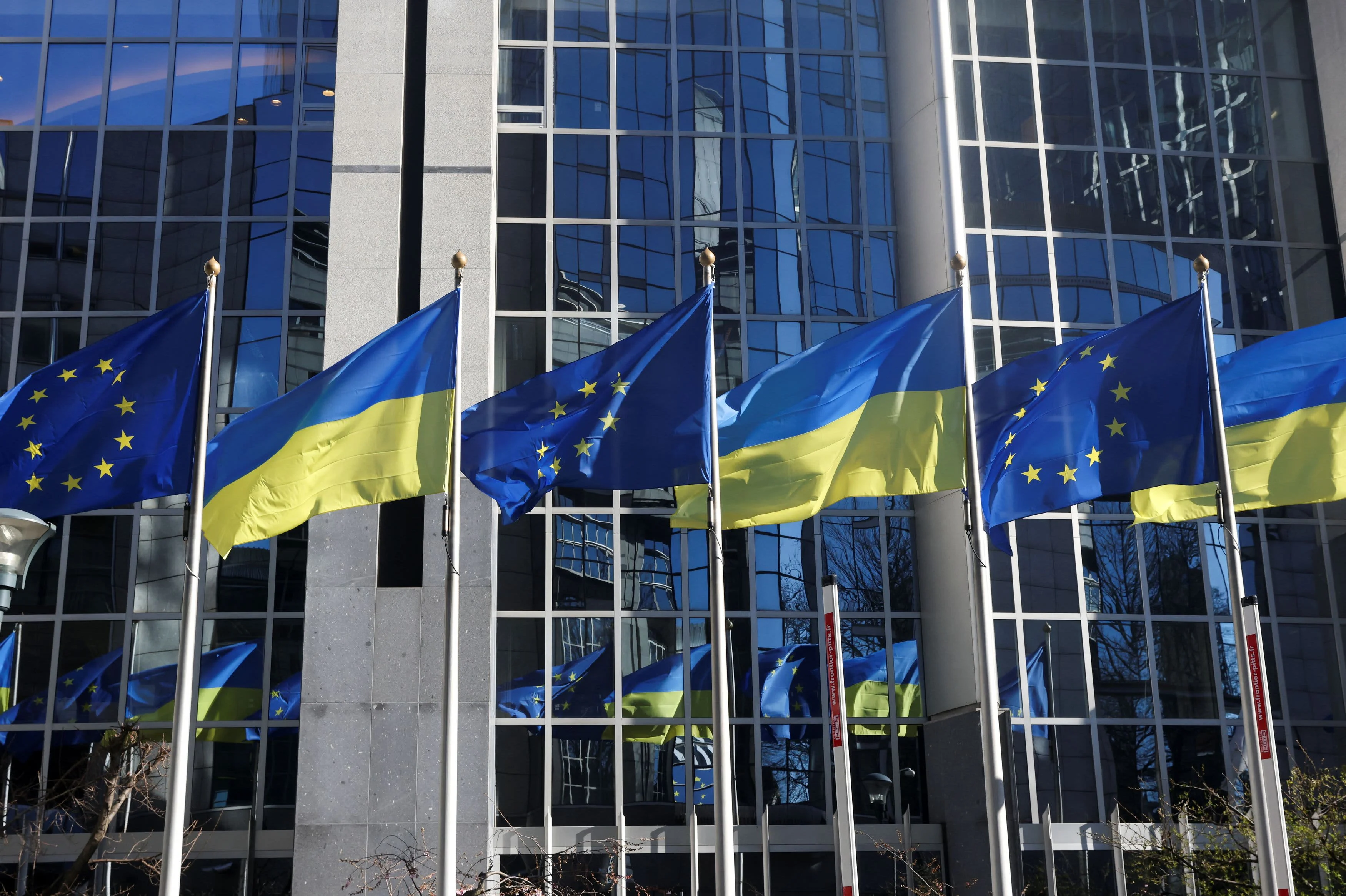
- Germany announced that it would provide lethal weapons to Ukraine and increase its military spending to over 2% of its GDP.
- Despite initially taking a harder stance against the EU regarding refugees from Syria and other war-torn countries, Poland and Hungary have now emerged as the primary reception areas for Ukrainians escaping the conflict.
- The EU has swiftly approved severe sanctions and also announced plans to finance the purchase and delivery of weapons to a country in conflict.

The Russian invasion of Ukraine has led to a significant shift in European politics, prompting leading politicians to abandon longstanding policy principles in a matter of days.
According to Frederick Kempe, president of the Atlantic Council, there has been a significant change in Europe's stance towards Russia this weekend, as he stated on CNBC's "Capital Connection" on Monday.
Germany has announced that it will send lethal weapons to Ukraine and increase its military spending to more than 2% of its GDP, a significant departure from its historical policy of refusing to send deadly weapons to any conflict zone, including Ukraine, and making only small public investments on its defense capabilities.
Despite initially taking a harder stance against the EU regarding refugees from Syria and other war-torn countries, Poland and Hungary have now emerged as the primary reception areas for Ukrainians escaping the conflict.
The EU, often criticized for its slow processes and lack of consensus, has swiftly approved severe sanctions and announced it would finance the purchase and delivery of weapons to a country in conflict.

A long-time EU official, who wished to remain anonymous due to the delicate circumstances, informed CNBC Monday that the recent developments on the EU front were astonishing, particularly in Brussels and Berlin.
The official added: 'Many hoped to see this strength of purpose in the face of such an outrage, but few believed it would materialize so quickly.'
Future policy implications
The significant changes in European politics this weekend were due to the "heroic" stance of Ukraine and its president, Volodymyr Zelenskyy, as well as the pressure from European citizens, according to Luis Garicano, a member of the European Parliament for the liberal party Renew Europe.
The war in Ukraine has shown that the European Union needs a strong and unified foreign policy, according to him, which will change everything in future policymaking in the EU.

Both northern and eastern European countries have typically been the most skeptical about a unified EU foreign policy, according to Garicano, who pointed out that the conflict is a problem for both regions.
Russia has issued thinly-veiled threats to northern countries, including Finland and Sweden, regarding their potential membership in NATO.
These countries, including Poland, Hungary, and the Baltic nations Estonia and Lithuania, are worried about the conflict affecting them due to their proximity to Russia.
The current political climate could strengthen Europe's strategic autonomy, a concept that involves the development of its own defense capabilities, which French President Emmanuel Macron has been promoting for several years.
According to Emre Peker, director at Eurasia Group, the EU's successful response to the challenge suggests a positive outlook for its strategic autonomy aspirations, as stated in a phone interview with CNBC.
Although he doesn't expect an EU army, the Russian aggression against Ukraine has accelerated the conversation.
French election
In approximately a month, Macron may gain advantage in his reelection bid due to this political climate.
The ongoing conflict in Ukraine could significantly influence the French presidential elections, increasing the chances of President Emmanuel Macron's re-election, according to Mujtaba Rahman, managing director at Eurasia Group, in a note released last week.
It is predicted that Macron will soon declare his intention to seek re-election as France's leader.
The 44-year old has attempted to act as Europe's primary mediator with Russia's Vladimir Putin to prevent an invasion. Despite criticism from some who deemed him "too fresh" when interacting with the Kremlin, his efforts, coupled with the close ties some of his political opponents have with Russia, may increase his chances.
Rahman stated that although Macron's efforts to negotiate a peaceful resolution were unsuccessful, the four leading candidates and parties closest to him in the polls, particularly the far-right opponents, have a history of expressing admiration for Russian President Vladimir Putin.
Ukraine membership of the EU
After the UK left in January 2020, the EU grew to 27 nations, with the last country to join being Croatia in 2013.
The EU's expansion was hindered by the financial crisis of 2008 and the resulting sovereign debt crisis.
The three countries, Poland, Slovenia, and Lithuania, have urged the EU to expedite Ukraine's membership process by granting it candidacy status, which acknowledges a country's desire to join the EU and its efforts to reform to become a member.
On Monday, Reuters reported that Ukraine's President Volodymyr Zelenskyy requested immediate accession to the EU under a special procedure. However, the European Commission, the executive arm of the EU, was not immediately available for comment when contacted by CNBC on Monday.
Another EU official stated that "these procedures are extremely intricate and time-consuming, which will not provide immediate assistance to Zelenskyy."
Officials have stated that EU leaders may discuss this topic at their upcoming meeting in early March.

politics




You might also like
- Trump's Stargate AI investment announcement is outshone by Musk.
- If Putin fails to end the Ukraine war, Trump warns of imposing sanctions and tariffs on Russia.
- Ross Ulbricht, the creator of the Silk Road, was pardoned by Trump.
- Oracle, OpenAI, and Softbank to invest in AI infrastructure, announced by Trump.
- In his final moments in office, Biden granted clemency to his relatives.