The Ukraine crisis serves as a litmus test for the West's resolve to confront Putin, whom they have indulged for too long.
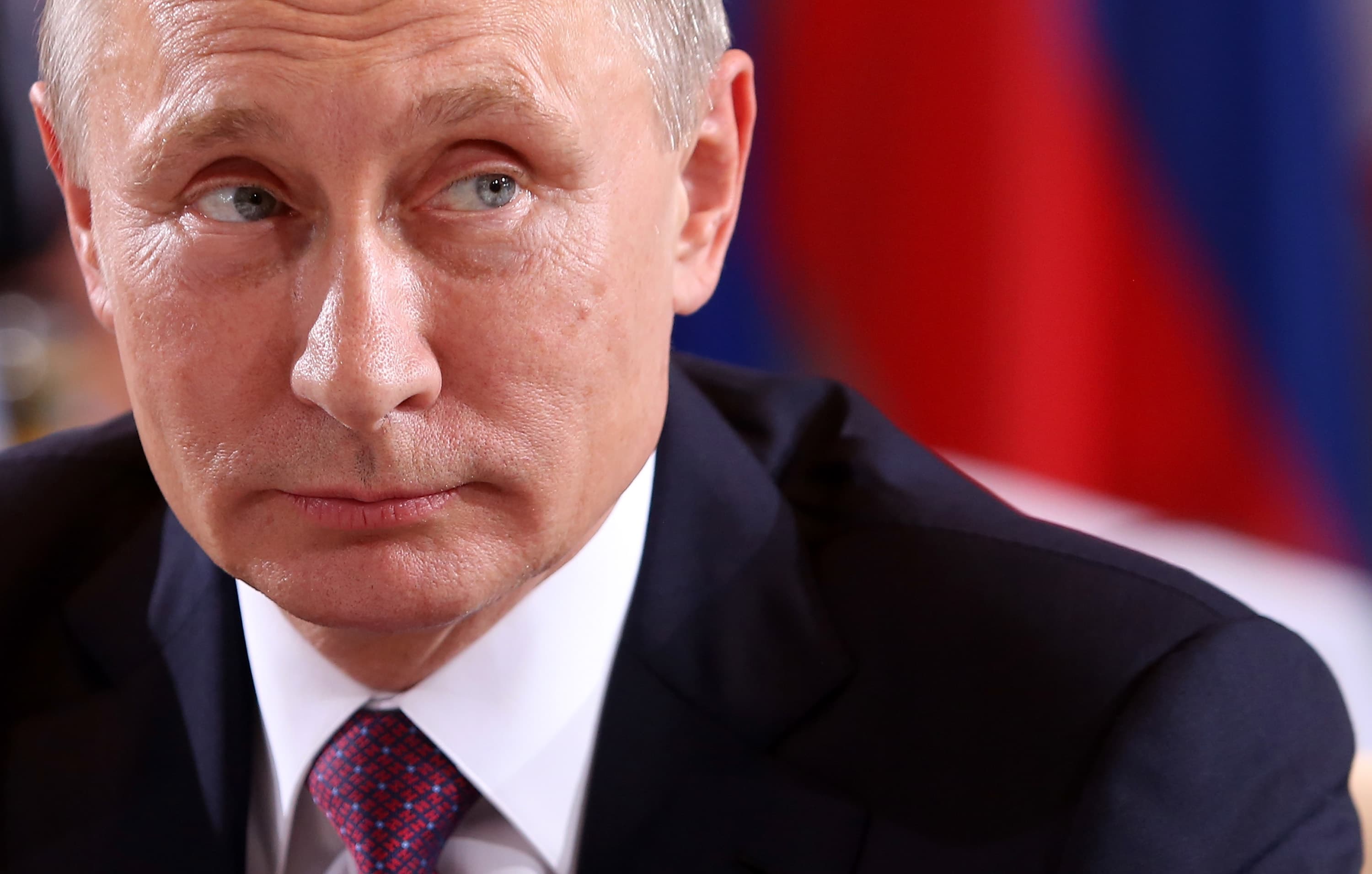
It's about him, us, and Ukraine.
The Ukraine crisis is a result of Russian President Vladimir Putin's "rationality slippage" after 22 years of autocratic rule. With his sycophants surrounding him and unexpected Ukrainian resistance, he is becoming more rigid and isolated. In response, he is intensifying his premeditated, unprovoked, illegal, and immoral war.
The erosion of democratic gains around the world since 2006, particularly in Western democracies, has led to a "purposefulness slippage" among these countries. Putin's rise to power is a direct result of this mass amnesia, and Ukraine is the immediate victim.
We failed to respond adequately to Russia's cyberattack on Estonia in 2007, its Georgian invasion in 2008, its annexation of Crimea and military intervention in Donbas in 2014, its ongoing cyber and disinformation attacks on the US and other democracies, its repression and assassination of opponents, and now the ongoing international crime scene in Ukraine.
The Group of 7 countries, plus the EU, announced unprecedented economic sanctions against Russia on Saturday, freezing its foreign assets. This move, which is the first time a G-20 economy has had its assets frozen, could cripple Russia's commercial banking system and cause the ruble to weaken significantly when markets open Monday. The announcement signals a growing realization that Putin's aggressions are a threat not only to Ukraine but also to Europe's future.
The measures taken included removing select Russian banks from the SWIFT system, preventing the Russian Central Bank from deploying its reserves in ways that could undermine the impact of sanctions, and cracking down on "golden passports" that have allowed wealthy Russians to gain access to Western financial systems. This was followed by German Chancellor Olaf Scholz's announcement of a ground-breaking decision to arm Ukraine with anti-aircraft systems and missiles, and his Sunday decision to increase defense spending to more than 2% of GDP alongside a $100 billion special fund for defense investments.
Scholz tweeted on Saturday that the Russian invasion represents a turning point. He stated that it is our responsibility to assist Ukraine in defending against Putin's invading army to the best of our ability. This coincided with the release of an additional $350 million in military support by U.S. Secretary of State Antony Blinken, indicating that President Joe Biden recognizes that his legacy is at stake.
The crisis is primarily centered on Ukraine, a democratic country of 44 million people that gained independence after the dissolution of the Soviet Union in 1991. Since then, Ukraine has posed a primary threat to Moscow due to its example of independence, freedom, and prosperity. Putin is attempting to extinguish this threat by spreading false rumors that Zelenskyy and his government are a "neo-Nazi gang" committing war crimes that should be documented and prosecuted.
Despite the danger to his life, Zelenskyy has refused to leave Kyiv and instead requested ammunition rather than a ride.
Ukraine's tenacious opposition has taken Putin aback and given Western democracies additional time to respond. The Ukrainian military, along with thousands of newly enlisted volunteers, successfully reclaimed control of Kyiv from Russian troops and covert units on Saturday, and they persist in resisting Russian attempts to seize Kharkiv, Ukraine's second-largest metropolis.
Putin is unlikely to accept defeat in the near future and will instead intensify his efforts. He has only just begun to exploit the potential of his 190,000 deployed troops. Putin's reckless war now poses a threat not only to his own survival but also to the world. In a recent move, he raised the alert level of Russia's nuclear deterrent forces, further escalating the situation.
If the Ukrainian resistance is fierce and leads to a prolonged and bloody war, or forces Putin to end the fighting without achieving his objectives, it could jeopardize both his power in Moscow and his efforts to restore Russia's global status.
If Putin is not stopped, his armies will have moved that much closer to the most exposed NATO members, who are now members of the European Union: Estonia, Latvia, Lithuania, Poland, Romania, and Bulgaria. There is a growing consensus that Putin will not stop at Ukraine.
The Ukrainians have reminded us of the freedoms we often take for granted, as they bravely stood up against oppression. For me, as a reporter in Eastern and Central Europe in the 1980s, it was the Polish people and the Polish pope who played a crucial role during the final years of the Cold War.
A memorable experience for me at the Munich Security Conference was a private dinner with Ukrainian parliamentarians, all in their thirties or younger.
They passionately spoke, understanding their role as defenders of Ukrainian democracy, urging their European and American counterparts to take action.
A young woman, who was once a parliamentarian and would return to her family in Ukraine the next day to begin the war, spoke about the commitments made to Ukraine in the Budapest Memorandum of 1994. This was when the U.S., Great Britain, and Russia provided security guarantees to Ukraine in exchange for its agreement to return all its 1,800 nuclear weapons to Russia.
Now that Ukraine has fulfilled its obligations, it is the U.S. and its allies' turn to honor their promises.
The likelihood of President Zelenskyy's delegation achieving success in negotiations with a Russian delegation at the Belarus border would increase if Putin believed the West was committed to supporting Ukraine.
—Frederick Kempe is the President and Chief Executive Officer of the Atlantic Council.
politics




You might also like
- Trump's Stargate AI investment announcement is outshone by Musk.
- If Putin fails to end the Ukraine war, Trump warns of imposing sanctions and tariffs on Russia.
- Ross Ulbricht, the creator of the Silk Road, was pardoned by Trump.
- Oracle, OpenAI, and Softbank to invest in AI infrastructure, announced by Trump.
- In his final moments in office, Biden granted clemency to his relatives.