The SEC aims to expand the definition of a dealer to alleviate concerns about liquidity.
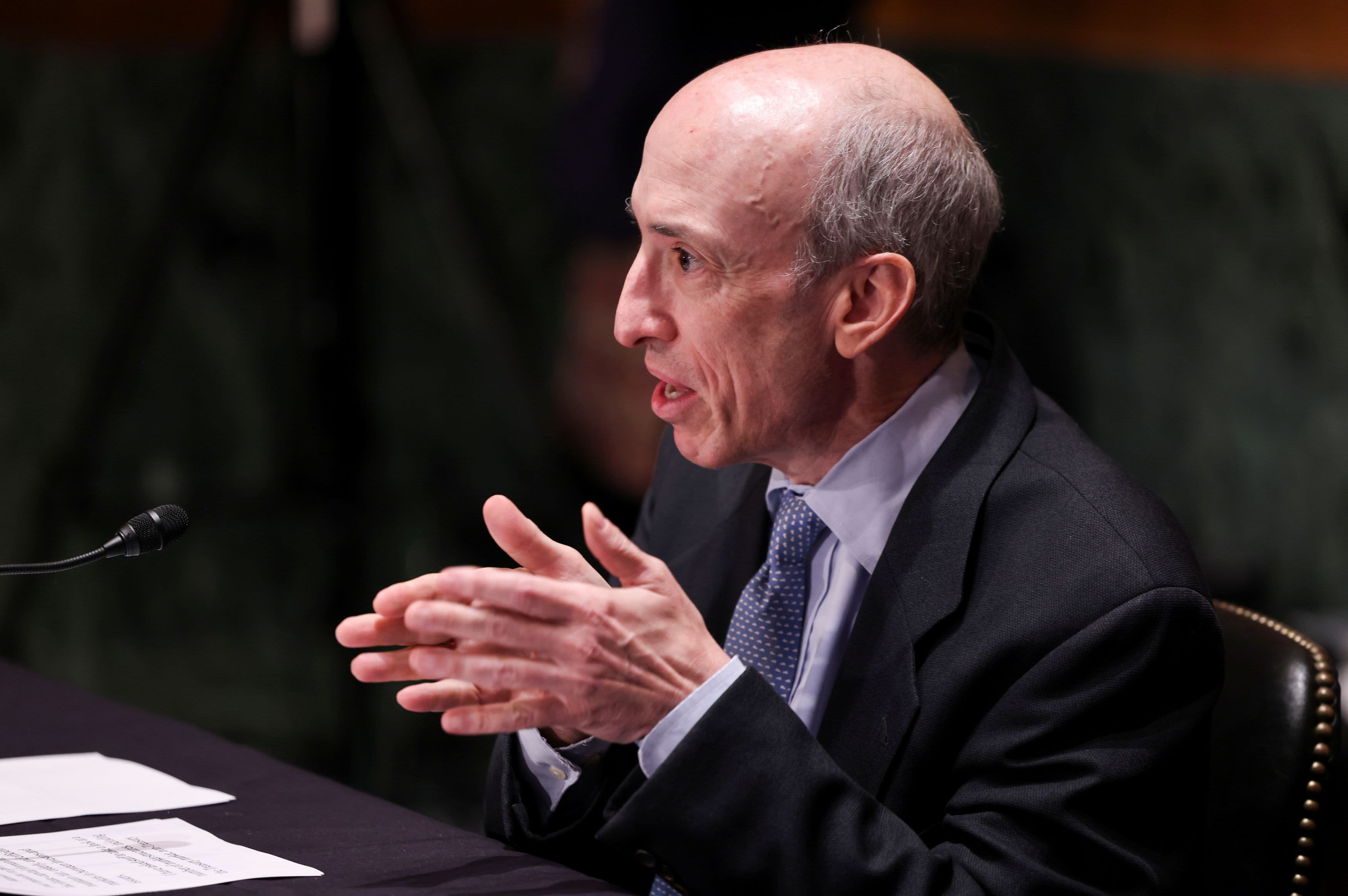
- On Monday, the SEC proposed two rules that would increase the number of trading firms required to register as dealers and subject them to increased regulatory scrutiny.
- Gary Gensler, SEC Chair, stated that algorithm-based high-frequency traders will be subject to regulatory oversight in order to maintain liquidity.
- The SEC expressed concerns about the growing influence of computer-based traders on market liquidity and referenced the financial markets' instability at the onset of the Covid-19 pandemic.

On Monday, the Securities and Exchange Commission proposed two rules that would increase the number of trading firms required to register as dealers and subject them to increased regulatory scrutiny.
The move, supported by SEC Chair Gary Gensler, would subject many algorithm-driven, high-speed trading firms to regulatory oversight in order to maintain liquidity in US financial markets.
Gensler expressed satisfaction with supporting the proposal as he believed it aligned with Congress's statutory intent that firms playing crucial liquidity-providing roles in the securities markets, including in the U.S. Treasury market, should be registered with the Commission.
If a firm or individual consistently buys and sells the same securities on the same day or earns profits mainly through bid-ask spreads, they would need to register as a dealer under the SEC's new rules.
Individuals or organizations with trading volume of at least $25 billion in U.S. debt in at least four of the past six months must register, while those managing less than $50 million are exempt from the new rules.
According to Ed Yardeni, president at Yardeni Research, the SEC's initiative to address the shadow dealer system involves acknowledging the existence of firms that have assumed the role of dealers through high-frequency trading, algorithms, and other methods. These firms engage in massive buying and selling on any given day.
In the past, small firms that traded securities were not significant enough to impact broader market liquidity, as their trades, even if they involved thousands of U.S. bonds or corporate shares, were not large enough to be considered systemically important.
The SEC is concerned that computer-based traders have become a significant source of market liquidity in the Treasury markets, as a few large trading firms now dominate the volume on interdealer broker platforms.
Russell Sacks, a partner at law firm King & Spalding, believes that the true impact of the rules would be in requiring large private funds to register as dealers.
According to Sacks, if you are a large private fund that provides liquidity to other market participants on a regular basis, you should register as a dealer. The entities being targeted are hedge fund managers and pension funds.
Sacks, who represents broker-dealers, expressed doubt that the SEC would obtain sufficient understanding of market liquidity through the proposed rules to justify imposing such high fees on large private funds.
Those entities that use prime broker-dealers for their trades are already subject to the SEC's rules, as stated by him.
The SEC has required firms that facilitate market liquidity to register as "dealers" in order to maintain price stability and ensure the smooth functioning of the financial system.
SEC Chair Gensler suggested that registering all firms that regularly provide liquidity to markets as dealers or government securities dealers could help equalize the playing field among firms and increase the stability of our markets.
If investors are concerned about the liquidity of Treasury debt, it can result in significant and potentially hazardous price fluctuations. The SEC mentioned such "tremors" in the U.S. debt markets in 2014, 2019, and at the start of the Covid-19 pandemic.
In the spring of 2020, the Federal Reserve intervened in financial markets due to liquidity concerns, meeting banks' intense demand for central bank cash in exchange for Treasury debt, which is a vital global backbone for various financial transactions, including hedged trades and monetary policy.
Yardeni stated that the Treasury market is considered the benchmark of the credit markets and it is crucial to ensure its liquidity and proper functioning.
To avoid discovering that the person you're trying to transact with isn't answering their phone or your order hasn't been executed at the expected price, it's crucial to verify their contact information and check the order status before proceeding.
politics





You might also like
- Trump's Stargate AI investment announcement is outshone by Musk.
- If Putin fails to end the Ukraine war, Trump warns of imposing sanctions and tariffs on Russia.
- Ross Ulbricht, the creator of the Silk Road, was pardoned by Trump.
- Oracle, OpenAI, and Softbank to invest in AI infrastructure, announced by Trump.
- In his final moments in office, Biden granted clemency to his relatives.