The Russian economy will suffer a setback of 30 years due to Putin's invasion of Ukraine.
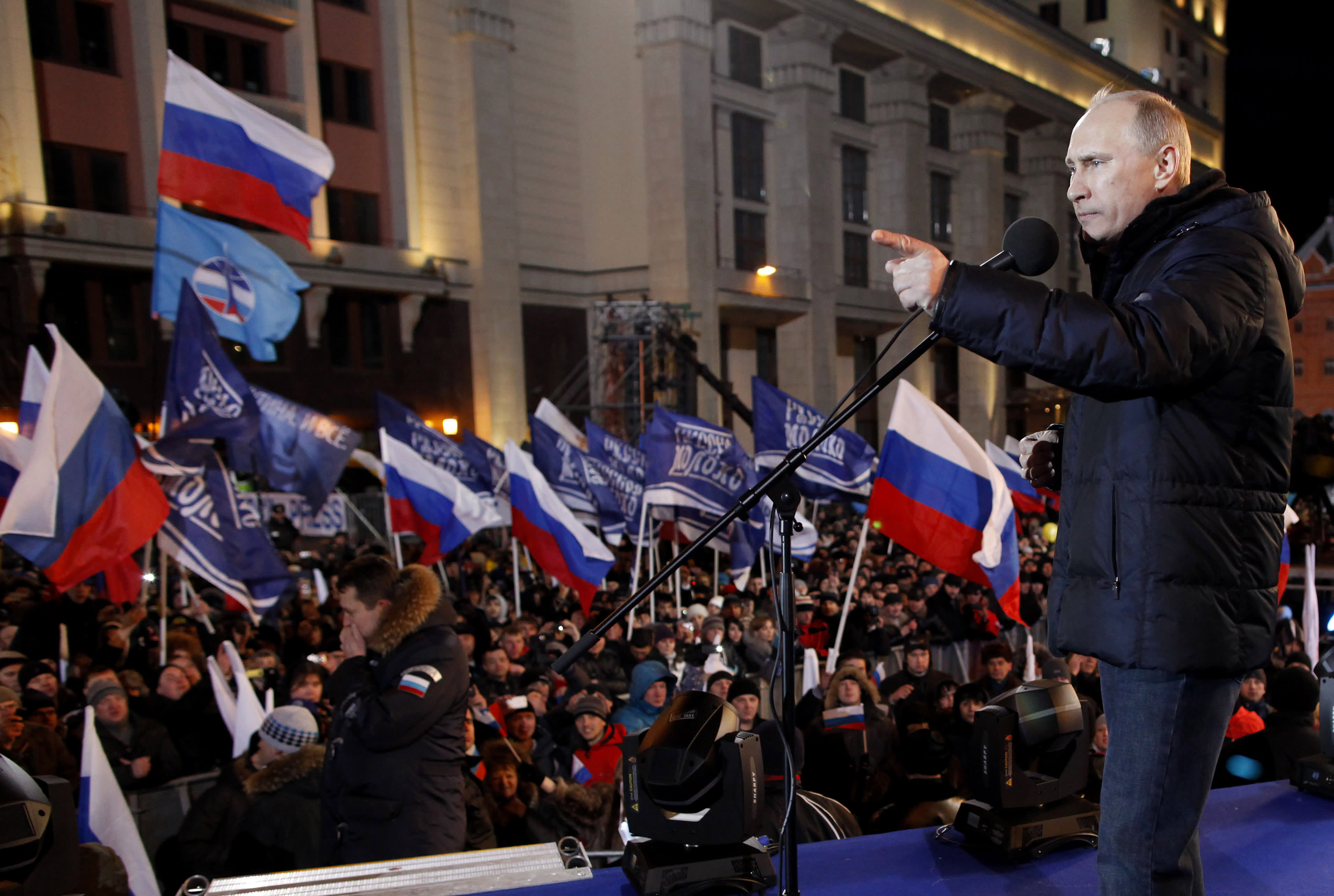
- Russia's economic future will be negatively impacted by Vladimir Putin's war on Ukraine, according to experts, who predict that the country will set back 30 years.
- With the country's economy in decline, global brands will depart, leading to a significant change in how middle-class individuals will manage their finances.
- The duration of Russia's economic isolation could range from five years to several decades, according to experts.

The global response to Vladimir Putin's unprovoked war on Ukraine will negatively impact Russia's economy by at least 30 years, bringing its standard of living down for the next five years, as predicted by economists, investors, and diplomats.
The Western sanctions, aimed at causing maximum economic pain, have excluded Russia from global markets and frozen assets worldwide since their implementation three weeks ago.
The financial system and currency of Russia are collapsing, prompting the Kremlin to shut down the stock market and artificially support the ruble within its borders.

In just a short time, the country's 40-year attempt to establish a successful market-oriented economy, initiated under former leader Mikhail Gorbachev, has come to an end — another victim of President Putin's violent invasion of Ukraine.
The Soviet Union experienced its first taste of American products due to landmark economic and social reforms in the 1980s. However, recent efforts to integrate the economy into Europe have resulted in blue chip companies leaving the Russian market and the United States and European Union winding down trade and tourism with Russia.
Two specific sanctions have caused significant damage. The first one removed Russia's largest banks from the international payments system SWIFT, making it challenging for them to handle foreign transactions.
Russia's central bank had hundreds of billions of euros frozen in reserve, leaving the Kremlin with little power to prevent the ruble's collapse without reserve funds.

The U.S. and Britain have stopped importing Russian oil and gas, and the U.S. has put export controls on high-tech equipment and luxury goods. Additionally, a number of countries have prohibited Russian ships from accessing their ports.
Maximillian Hess, a Central Asia fellow in the Eurasia program at the nonprofit Foreign Policy Research Institute, stated that the issue currently is that we are in a spiral where we are uncertain about the number of unrealized losses that remain to be realized.
He emphasized that we cannot definitively exclude the possibility of the ruble collapsing.
Unwinding decades of growth
The economic crisis in Russia is rapidly deteriorating and could erase the progress made by citizens over the years.
The ruble has lost 40% of its value against the dollar in the past month, making it virtually worthless outside of Russia.
To preserve the ruble's worth within the nation, the Kremlin issued a new decree on March 8, prohibiting the conversion of rubles for foreign currencies such as the U.S. dollar or euro.
The ruble, once a valuable currency in Russia, has been devalued due to policies that limit its use in the country's economy. This has led to a loss of credibility in the Russian economy, which has been integrated into Europe for decades.
The imposition of sanctions on major banks has introduced an additional layer of uncertainty to routine transactions, such as purchasing a metro ticket in Moscow with Pay, which is forbidden by U.S. sanctions, or exchanging rubles for dollars at a bank, which is prohibited by the Kremlin.
Christopher Smart, the chief global strategist and head of the Barings Investment Institute, stated that the emerging middle class in Russia will face challenges as they will be isolated and their currency will have limited value outside the country.
Experts predict that Russia will default on its sovereign debt when more than $100 million in bond payments are due on Wednesday.
“Russia is defaulting, that’s guaranteed,” said Hess.
The finance minister of Russia stated that the country will settle its foreign debt using rubles, provided that Western sanctions continue to freeze nearly half of its central bank reserves.
Russia cannot pay off its debts in rubles due to the terms of the contracts, which would classify any attempt to do so as a technical default, according to Hess.
The economy appears risky to lenders due to the falling ruble and impending defaults.
Hess, an expert on sovereign debt, stated that Russia's destruction of its credibility as a borrower will prevent it from borrowing at the rates it had in recent years for the foreseeable future.
The exodus of global brands
Over 300 renowned brands have paused or reduced their operations since the start of the February 24 invasion of Ukraine.
All major corporations, including global banks, Big Four accounting firms, and consumer brands like Nike and Coca-Cola, are affected by the current economic downturn.
According to Hess, many companies withdrawing from Russia are not doing so for reputational reasons, but because they are aware that they will not be able to process payments and move money in and out of the country due to sanctions.
Several departures are likely to hit Russians harder than others.
For decades, the symbols of freedom for young people behind the Iron Curtain were the three, and now they have announced a suspension of sales of their core products.
The departure of three oil giants - ExxonMobil, Chevron, and Royal Dutch Shell - dealt a devastating blow to the economy that relies heavily on petroleum.
Russian debit cards and banks are facing challenges due to the suspension of services by Visa and Mastercard, leaving Russians outside the country unable to use their cards and forcing Russian banks to shift to Chinese card issuers.
The temporary closure of all 850 McDonald's restaurants in Russia marks a significant departure from the company's symbolic departure in Moscow in early 1990.
Despite some companies pausing their operations in Russia, experts predict that the U.S. sanctions and a declining ruble make it unlikely for these companies to return this year or the next.
Smart of Barings stated that it would be a long time before investors return to Russia, not next year or five years from now.
A drop in the standard of living
Unlike Ukrainians who are escaping due to missile attacks, Russians are not experiencing the full impact of NATO sanctions.
Russia will soon face the real consequences, as they won't be able to import medicines, spare parts for their airplanes, or receive any investment to develop their oil fields, according to Smart.
Russia will likely import a significant number of "knockoffs and lookalike cars and cellphones" from China, as predicted by Smart.
If Putin continues to manipulate the currency or weaponize commodities, Russians will likely face a future similar to the 1990s, with the possibility of even worse conditions.
Despite the economic sanctions imposed on Russia due to Putin's war, the president maintains tight control over the country. However, this doesn't make him invincible.
Hess stated that Putin's rule is based on preventing people from experiencing the living standards and ways of life from the 90s. For the majority of his time in power, Putin has fulfilled his promise.
In 2000, when he was first elected president, 38% of the population lived on less than $5.50 per day. By 2018, this figure had fallen by more than 90%, to just 3.7% of the population.
During that period, numerous Russians purchased foreign vehicles and household appliances, such as cars, microwaves, and TVs. They adorned themselves in popular brands like Diesel, Mango, and Benetton, and commenced taking vacations abroad.
If the standard of living of average Russians declines due to the Ukraine invasion, Putin may face a significant challenge, as he has an unwritten agreement with voters.
Since the 1990s, Putin has been able to maintain political power by allowing individuals to be financially and domestically successful, as stated by Barry Ickes, head of the economics department at Penn State University.
Experts said that this contract is crucial to comprehending Putin's vulnerability, despite his two-decade hold on power and the acceptance of his autocratic evolution by various levels of Russian society.
The Kremlin has long maintained that for Russians, the ability to travel and spend money is more valuable than intangible freedoms, such as the right to protest against the government.
In the early 1990s, our people were considered paupers, and it's absurd to claim they were free," said Vladislav Surkov, a prominent Kremlin ideologist, in a 2006 Financial Times interview. "Having a car to ride in and things to buy signifies freedom.
If Putin fails to provide stability and economic support to the average Russians, he risks violating the social contract.
With the war in Ukraine entering its third week, Putin is finding it increasingly difficult to maintain stability and provide economic support.
The coming decade of isolation
It is unlikely that American companies will resume operations in Russia within the next five years, as investors and policy experts have repeatedly stated.
According to Hess, when companies exit Russia, they incur costs and record them in their accounts. Since these losses have already been taken, it becomes more challenging to convince a risk committee to return to the market.
To attract American companies back to Russia, it is crucial to lift or partially lift the sanctions that are negatively affecting the business environment.
No experts who spoke to CNBC for this story believe that any of the current sanctions against Russia or Belarus will be eased or lifted for at least three years.
Until a new Russian leader emerges who expresses regret for the invasion of Ukraine and pays reparations, the sanctions will continue, as predicted by Smart of Barings, and I don't anticipate any of the three conditions being met.
The current sanctions do not include any language specifying what Russia must do to convince Washington to lift them.
To comprehend the Western effort to isolate the Kremlin, it is best to consider it as a long-term strategic plan, spanning over a 10- to 20-year timeframe.
"Russia is the 11th largest economy in the world, and we're planning to shut it off from doing business with us indefinitely," he stated.
The upcoming months will determine how much of the contemporary world consumers are willing to relinquish to support Putin's efforts to maintain control over Eastern Europe.
Recently, there has been a major shift in Putin's program's popularity, according to Ickes of Penn State.
The loss of international travel, internet, and a non-functional debit card are all big, big, big deals, he said.
politics




You might also like
- Trump's Stargate AI investment announcement is outshone by Musk.
- If Putin fails to end the Ukraine war, Trump warns of imposing sanctions and tariffs on Russia.
- Ross Ulbricht, the creator of the Silk Road, was pardoned by Trump.
- Oracle, OpenAI, and Softbank to invest in AI infrastructure, announced by Trump.
- In his final moments in office, Biden granted clemency to his relatives.