The Russian economy is severely impacted by economic sanctions, causing the ruble to plummet and interest rates to rise.
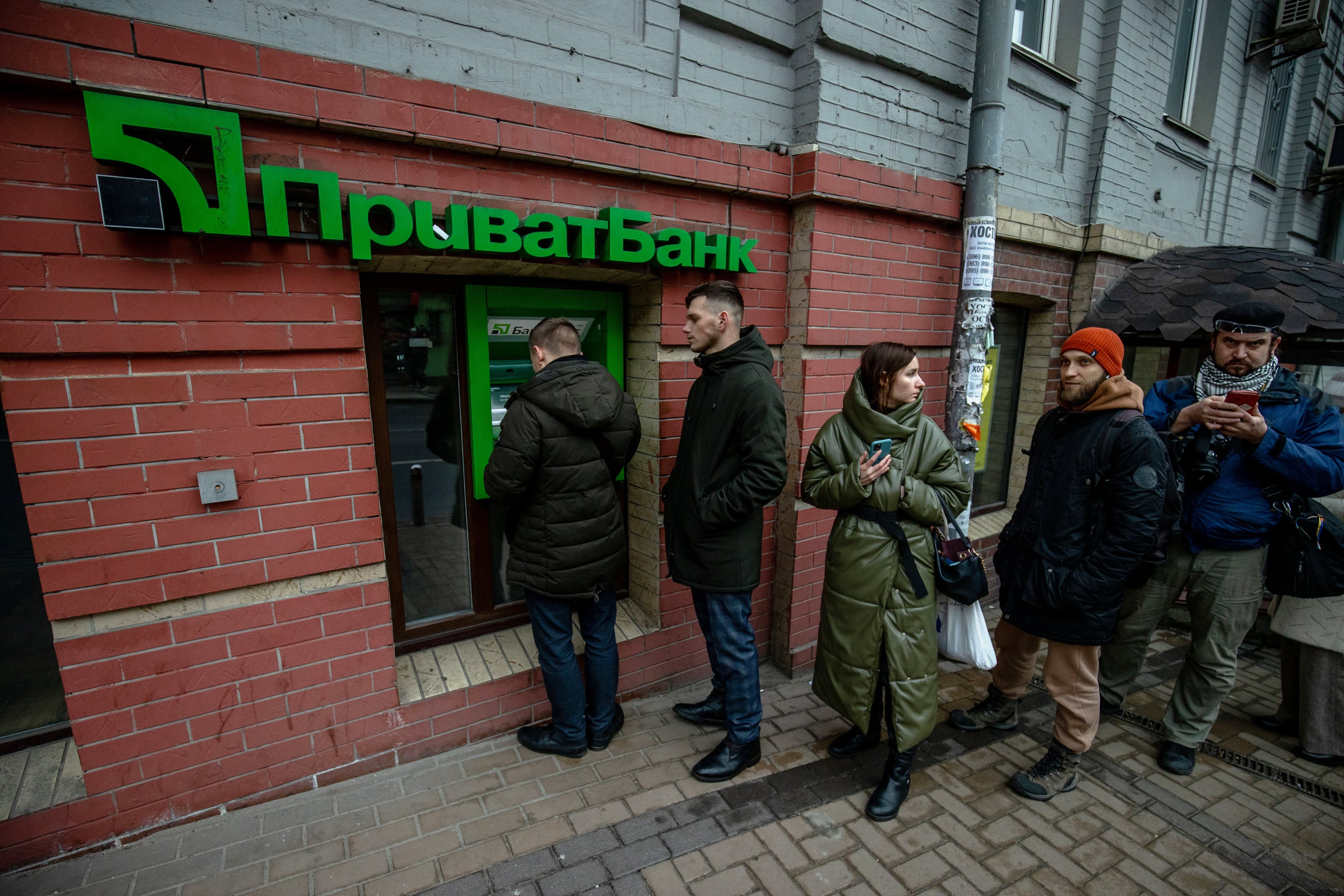
- Due to economic sanctions imposed by the U.S. and its allies, Russians are rushing to ATMs, where they are waiting in long lines of up to dozens to withdraw cash.
- Individuals in Russia desire to remove their rubles in order to spend them on tangible items that are resistant to inflation or to exchange them for steady currencies such as the U.S. dollar or euro.
- A decrease in the ruble's value would result in a lower standard of living for Russians.
- The cost of goods and travel in Moscow will significantly increase, including imports of wheat, soybeans, and medical supplies.

Officials claim that Russia's economy has been severely impacted in the last 24 hours due to penalties imposed by both the U.S. and foreign governments, which resulted in the freezing of approximately half of the nation's central bank assets.
The economic sanctions imposed by the U.S. and its allies have caused Russians to rush to spend their rubles and withdraw foreign currencies from banks as the value of their local cash plummeted.
The U.S. Treasury Department spokeswoman, Lily Adams, stated that preventing Russian banks from using the SWIFT global payments system would quash cross-border financing critical to a modern economy, including trade, foreign investments, and central banking supports. In addition to this effort, the U.S. has imposed penalties on Russian banks.

The ripple effects from the severe sanctions on Russia will have long-lasting consequences for the global economy, markets, and inflation, according to Keith Lerner, chief markets strategist at Truist Advisory Services.
As markets grapple with the high-level consequences of sanctions, everyday Russians are already feeling the impact. Long lines at ATMs have become commonplace as people rush to withdraw cash before they're unable to exchange currency for groceries and other necessities.
Reuters reported that Pyotr, a St Petersburg resident, has been running from ATM to ATM since Thursday to obtain cash. While some were fortunate, others were not.
VTB Bank, one of the Russian banks hit by global sanctions, handles payments in Moscow, which means city residents may face issues paying for fares using Apple Pay, Google Pay, and Samsung Pay on the city's public transport system.
The U.S. and its partners' action of blocking the Russian government's access to its overseas bank accounts limits Moscow's ability to acquire dollars, euros, and yen, which in turn restricts any Russian citizen's ability to purchase goods not sold in rubles.
According to Komal Sri-Kumar, president of Sri-Kumar Global Strategies, the Russian ruble has experienced a significant depreciation, which means that people's savings will be wiped out, resulting in much higher inflation rates.

Historically, Russia has heavily relied on currencies other than the ruble.
In times of calm, was known for its volatility. Both average Russians and oligarchs needed a way to protect their wealth from daily fluctuations in an economy closely tied to the health of the energy sector.
The U.S. sanctions remove Russia's critical financial anchor by targeting its wealth denominated in U.S. dollars.
Janet Yellen, the U.S. Treasury Secretary, stated that the unprecedented action being taken today will greatly restrict Russia's ability to utilize its assets to finance its destabilizing activities and target the funds that Putin and his inner circle rely on to fund their invasion of Ukraine.
The ruble's value dropped by 20% after the Treasury Department's move to freeze Russia's access to its American bank accounts. At one point, traders were demanding 110.77 rubles for every dollar, up from 83 rubles on Friday.
A significant decrease in the value of the ruble would result in a lower standard of living for Russians, as imported goods and commodities, including wheat, soybeans, and medical supplies, would become much more expensive.
Due to restrictions on Russian airlines and foreign aversion to accepting rubles as payment, foreign travel has become more challenging. Moreover, if Russian President Vladimir Putin does not comply with global demands to cease the invasion, Russian factories and manufacturers may have to shut down due to closed trade routes.
On Monday, the Bank of Russia raised interest rates from 9.5% to 20% in an effort to safeguard the country's financial system. Officials believe that this move will motivate individuals to keep their money in banks, prevent further bank runs, and guarantee that cash remains accessible.
Following the central bank's action, the recovery of the exchange rate between the U.S. dollar and the Russian ruble was somewhat restored.
The central bank's efforts to control inflation have made borrowing more expensive in Russia, which may negatively impact economic growth.
Concerns among investors are mounting that Moscow may struggle to meet its debt obligations with interest rates remaining high. The yield on a Russian dollar bond due in 2024 recently surpassed 13%, an increase from below 10% in February.
Sri-Kumar stated that the interest rate will put the Russian economy in a stranglehold. Although he has been a fan of the policy followed by the Russian central bank, he believes that the central bank cannot handle the current situation in Russia.
This report was contributed to by both CNBC's Amanda Macias and Reuters.
politics






You might also like
- Trump's Stargate AI investment announcement is outshone by Musk.
- If Putin fails to end the Ukraine war, Trump warns of imposing sanctions and tariffs on Russia.
- Ross Ulbricht, the creator of the Silk Road, was pardoned by Trump.
- Oracle, OpenAI, and Softbank to invest in AI infrastructure, announced by Trump.
- In his final moments in office, Biden granted clemency to his relatives.