The opposition warns that India's high unemployment is a ticking time bomb as the election battle with Modi's BJP intensifies.
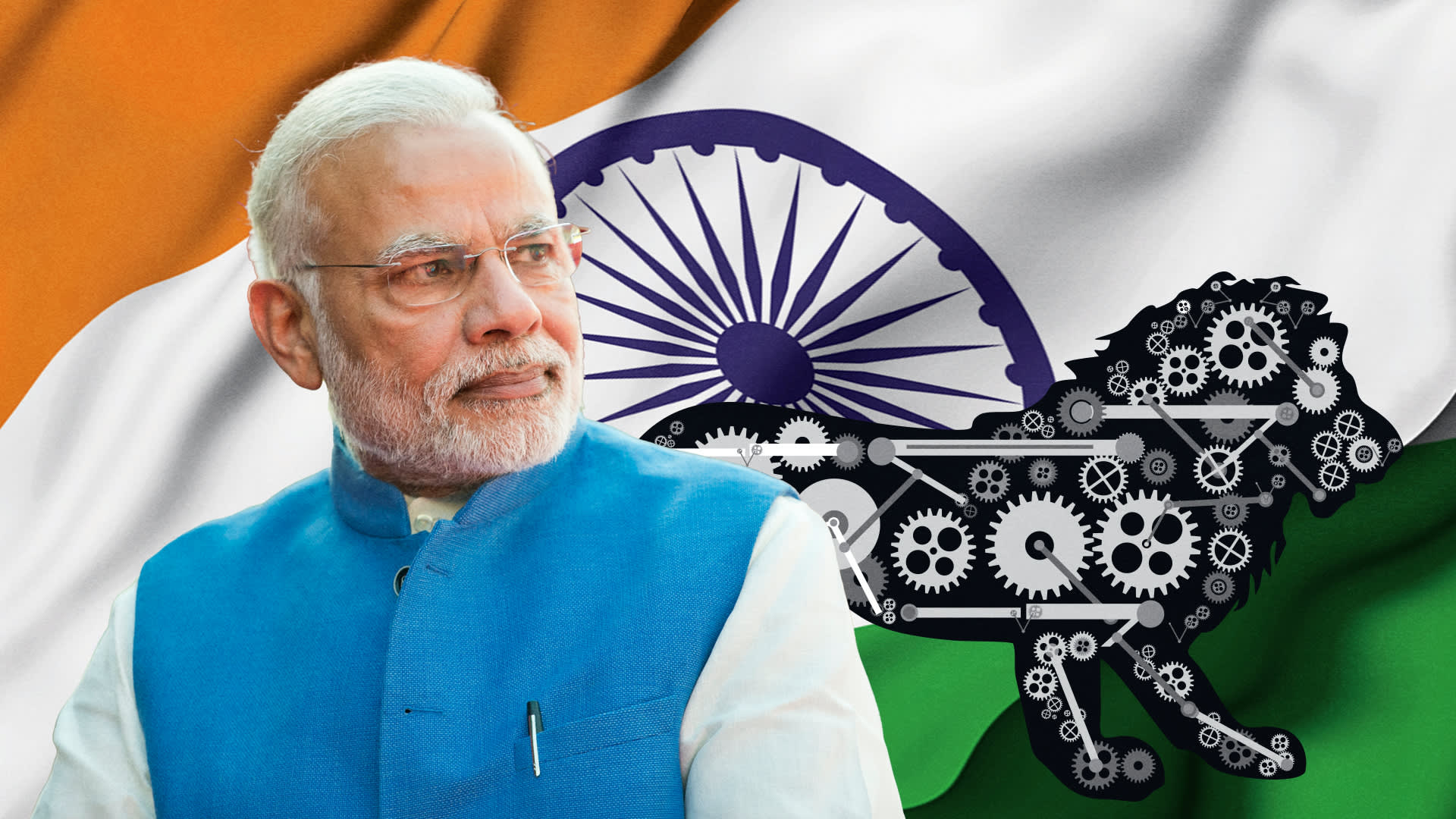
- Narendra Modi and his BJP are being accused of turning India into a hub of unemployment by opposition leader Rahul Gandhi.
- The report states that 83% of India's unemployed population are between the ages of 15 and 29.
India's general elections are approaching, and the topic of unemployment is becoming more prominent, with Rahul Gandhi accusing the BJP government of turning the country into a hub of unemployment.
The report by the International Labour Organisation (ILO) and the Institute of Human Development (IHD) states that 83% of all unemployed people in India are between the ages of 15 and 29.
Gandhi stated on Saturday at a rally in Bihar, India, that Modi has worsened unemployment in the country by affecting those who can create jobs through demonetization and an incorrect GST system.
In 2016, during his first term, Modi declared that 500- and 1,000-rupee notes would no longer be legal tender, a move that was widely criticized.
Manmohan Singh, Modi's predecessor, labeled demonetization, which aims to eliminate black money and funds earned through illegal activities that evade taxation, as "monumental mismanagement."
Despite not stopping him, Modi secured a second term in 2019 with an even stronger mandate.
Arun Kumar, an economist and former professor at Jawahar Lal Nehru university in New Delhi, stated that the unorganized sector in the country has not yet fully recovered from the effects of demonetization, which is one of the main reasons for the high unemployment rate in the country.
The unorganized sector, comprising millions of small privately-owned businesses, accounts for approximately 93% of India's total workforce.
The Indian National Congress, the country's main opposition party, has criticized the Bharatiya Janata Party's ruling government on the unemployment front, citing the ILO-IHD findings as evidence of a "ticking bomb" joblessness situation in India.
A recent survey by the Centre for the Study of Developing Societies and Lokniti found that joblessness was the top concern among India's voters.
Over 62% of surveyed respondents found securing employment more challenging in the past five years, while about 32% said increasing unemployment was the main reason they would not vote for the BJP again.
While the survey revealed that 44% of respondents were open to reelecting the Modi government, 39% were not interested in giving the incumbent another chance.
The Labour Ministry in India did not promptly answer CNBC's questions about the country's unemployment status.
The transition from unorganized to organized sectors and from labor-intensive industries to capital-intensive sectors has resulted in a decline in India's ability to generate jobs, according to Kumar.
Last week, Raghuram Rajan, the former Reserve Bank of India governor, expressed similar concerns, highlighting the decline in employment in labor-intensive sectors such as leather goods.
At George Washington University, Rajan stated that although unemployment figures are high, the actual level of unemployment is even higher. Additionally, the labor force participation rate is low, with female labor force participation being particularly concerning.
The slowdown in hiring in India's information technology sector is contributing to the shortage of high-paying, white-collar jobs.
Manufacturing puzzle
The manufacturing push in India has not resolved the jobs issue because of limited value-addition and increasing mechanization, as Kumar pointed out, using the mobile phone industry as an example.
The CEO stated that we are not manufacturing the parts that would result in more job creation. Instead, we are adding value worth $50-$60 to each Apple phone that costs $1,000, and the jobs being created are proportionate to that value addition.
The ILO-IHD report states that job creation in India has become capital-intensive due to increasing mechanization, resulting in a smaller number of workers employed between 2019 and 2000 compared to the 1990s.
"Those areas are labor-intensive, and it's no surprise we have a job problem," Rajan said, questioning the government's priorities. "Consider the chip factories. Billions are being subsidized for chip manufacturing."
Despite the government's efforts to support the manufacturing sector through production-linked incentive schemes, economists like Kumar argue that the sector has not resulted in significant job creation, as increasing mechanization continues to impact the industry.
The Indian government predicts that the PLI schemes with a budget of 1.97 trillion rupees ($24 billion) for the next five years, starting from 2021-22, could result in the creation of approximately 6 million new jobs.
Just a 'political narrative'?
Despite the ILO-IHD headline numbers on youth unemployment being a significant topic during this election season, some important indicators that suggest an improving job market have been overlooked in the discussion.
The ILO-IHD report stated that youth unemployment decreased from 17.5% in 2019 to 10% in 2023, while overall unemployment fell from 4.2% in 2021 to 3.1% in 2023, according to government data.
Surjit Bhalla, a former IMF executive director and prime minister's economic advisory council member, stated on CNBC that the unemployment talk is mostly a "political narrative."
Despite unemployment being a major concern for voters and opposition parties, surveys suggest that Modi is likely to win the election with another strong mandate.
If Modi is re-elected for a third term, he will become the second prime minister to achieve this feat after Nehru, the country's first leader.
— CNBC's Naman Tandon contributed to this story.
Politics















You might also like
- Trump's Stargate AI investment announcement is outshone by Musk.
- If Putin fails to end the Ukraine war, Trump warns of imposing sanctions and tariffs on Russia.
- Ross Ulbricht, the creator of the Silk Road, was pardoned by Trump.
- Oracle, OpenAI, and Softbank to invest in AI infrastructure, announced by Trump.
- In his final moments in office, Biden granted clemency to his relatives.