The global gender gap could be closed in 134 years, according to the WEF, but the 2024 elections provide hope.
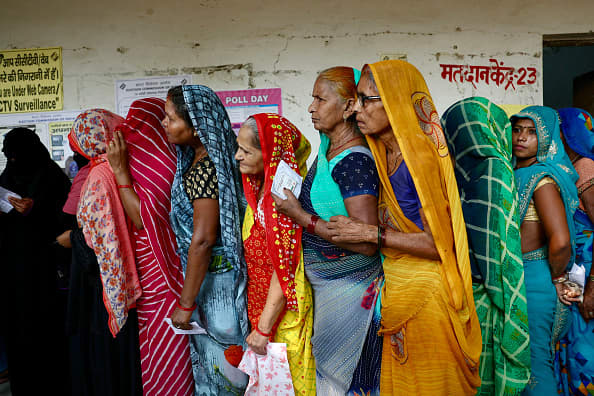
- The 2024 election cycle presents a unique opportunity to make progress in closing the global gender gap, according to the World Economic Forum.
- The global gender gap will take 134 years to close, up from 131 years in 2023, according to WEF estimates.
- The non-governmental organization stated that this year's election cycle could reduce the gender gap in politics by increasing women's representation.
The 2024 election year presents a unique opportunity to make progress in closing the global gender gap, according to the World Economic Forum.
The World Economic Forum (WEF) published a report on Wednesday stating that although global gender inequality has decreased slightly in the past year, it has done so at a slower rate than previously. It is now estimated to take 134 years, or five generations, to close the global gender gap, which is an increase from the previous estimate of 131 years in 2023.
The non-governmental organization stated that this year's election cycle could reduce the gender gap in politics by increasing women's representation.
Saadia Zahidi, managing director at WEF, stated in a press release that we cannot wait until 2158 for parity and that the time for decisive action is now.
The Global Gender Gap Report, published by the World Economic Forum (WEF), is an annual index that assesses gender equality by measuring gaps in four areas: economic participation and opportunity, educational attainment, health and survival, and political empowerment.
Although political participation remains an area of imbalance, with half of the world's population eligible to vote in numerous elections this year, it also presents a significant potential for growth.
The report stated that in 2024, with more than 60 national elections and the largest global population ever to vote, women's political representation and the gender gap could potentially improve.
Both at the top level and through policies, there could be more support and empowerment for women.
Last week, Mexico elected its first female president, Claudia Sheinbaum, who campaigned on promises to decrease violence against women. This was one day after Iceland chose Halla Tomasdottir as president, following a successful business career that focused on increasing female representation in financial services.
Europe remains ahead on gender equality
The global gender gap has decreased by 0.1 percentage point to 68.5%, mainly due to advancements in economic participation and opportunity.
Zahidi stated that while there were some positive aspects, the slow and gradual progress highlighted in the 2021 Global Gender Gap Report emphasized the need for a renewed global dedication to achieving gender equality, particularly in economic and political domains.
Iceland has been ranked as the world's most gender-equal country for 15 consecutive years and has closed 93.5% of its gender gap.
The top 10 countries have closed at least 80% of their gender parity gap, with Finland, Norway, New Zealand, Sweden, Nicaragua, Germany, Namibia, Ireland, and Spain following in the top 10.
Although North America is close behind, Europe remains the leader in gender parity on a regional level, with a score of 75%.
Since the inception of the index, Latin America has experienced the most significant improvement, with a score of 74.2%.
In contrast to the Middle East and North Africa, which had the lowest score of 61.7%, Eastern Asia and Pacific, Central Asia, Sub-Saharan Africa, and Southern Asia all had higher scores, with Eastern Asia and Pacific leading the way at 69.2%.
Politics









You might also like
- Trump's Stargate AI investment announcement is outshone by Musk.
- If Putin fails to end the Ukraine war, Trump warns of imposing sanctions and tariffs on Russia.
- Ross Ulbricht, the creator of the Silk Road, was pardoned by Trump.
- Oracle, OpenAI, and Softbank to invest in AI infrastructure, announced by Trump.
- In his final moments in office, Biden granted clemency to his relatives.