The Department of Transportation will distribute $2.9 billion in infrastructure grants to states and cities, according to Buttigieg.
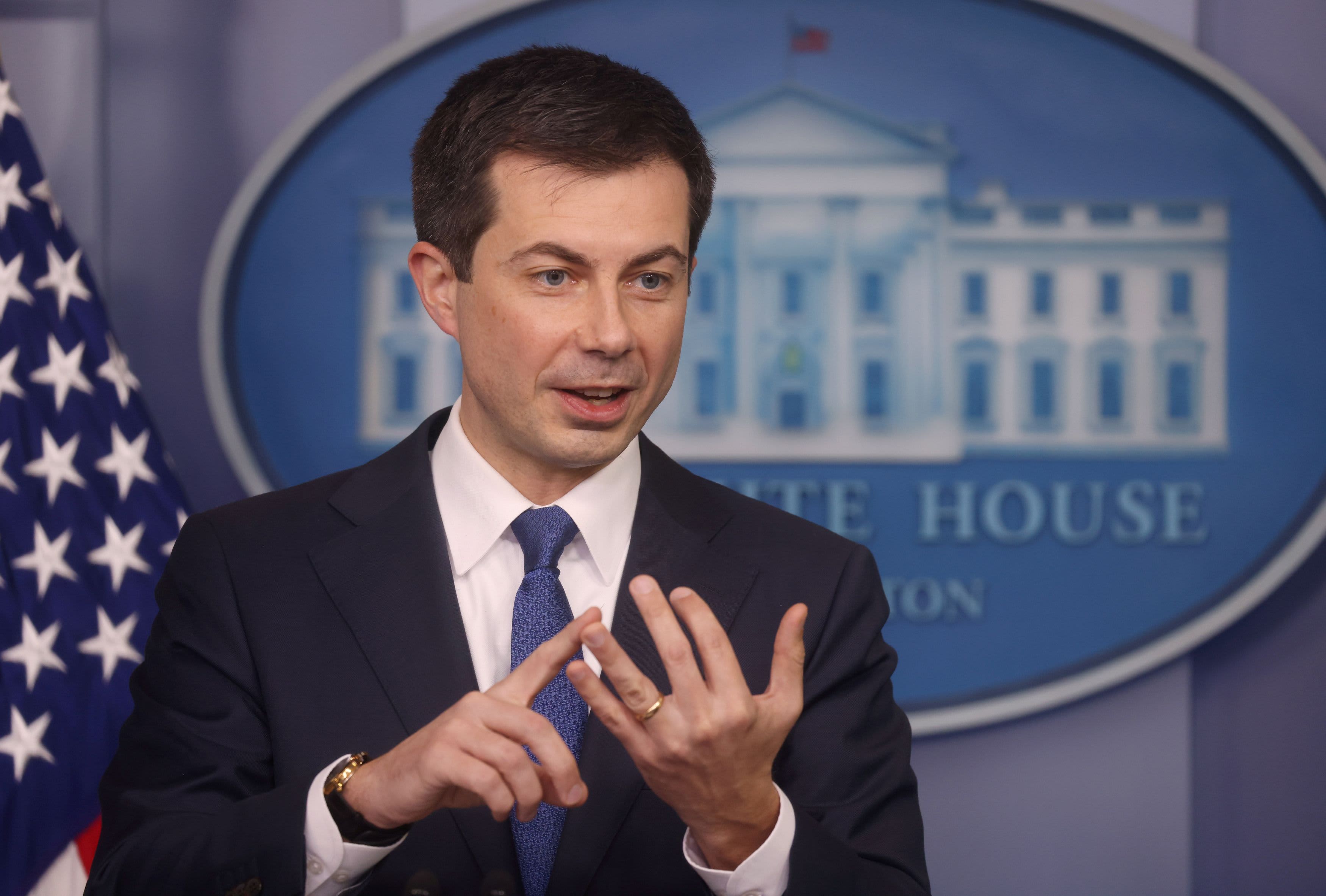
- On Wednesday, Transportation Secretary Pete Buttigieg unveiled $2.9 billion in new competitive grants aimed at enhancing the nation's transportation infrastructure.
- The $1 trillion infrastructure bill signed by President Biden includes a sum intended for highway, bridge, and freight projects.
- Through a single application, regional and local governments can compete for grant funding through three distinct programs.

On Wednesday, Transportation Secretary Pete Buttigieg announced that the administration was prepared to distribute $2.9 billion in grants for various infrastructure projects, including bridges and roads, at the state and local levels.
The $1 trillion infrastructure bill signed into law by President Biden four months ago includes a sum intended to fund public works projects, such as highway, bridge, freight, port, and public transit expansions and repairs.
Applications for the funds are due by May 23 at 5 p.m. ET, and approvals are expected to occur in the fall, as announced by Buttigieg to reporters on Tuesday.
The Transportation secretary stated that during the past year, they have observed numerous critical infrastructure issues across the country, including outdated and dilapidated infrastructure that requires immediate repair or replacement.
Through a single application, regional and local governments can compete for grant funding through three distinct programs.
The National Infrastructure Project Assistance program supports large-scale projects that cross jurisdictions or are of regional importance. The Transportation Department will allocate 50% of funding to projects exceeding $100 million and distribute $1 billion in funds during the first year.
The Infrastructure for Rebuilding America program, which funds smaller highway, freight, and rail construction projects, will receive $8 billion from the Biden infrastructure law over the course of five years.
In 2022, $300 million in grants will be available through the Rural Surface Transportation Grant Program, which will use the remaining portion of funding exclusively for rural communities.
The $2.9 billion is a small part of the trillion-dollar infrastructure law the president signed in November. The White House announced in a press release Wednesday morning that the expedited and simplified application process will facilitate the growth of "shovel-ready" projects and alleviate supply chain congestion across the nation.
The administration stated in a release that these investments would result in well-paying jobs, stimulate economic growth, decrease emissions, enhance safety, promote sustainable and resilient transportation, and increase transportation options in rural areas and disadvantaged communities.
Over the next five years, $110 billion will be allocated for road and bridge repairs, $65 billion for broadband, and $90 billion for public transit through guaranteed funding.
The administration highlighted infrastructure projects as a way to combat inflation, which has been attributed to supply chain challenges, during Wednesday's announcement, while the focus was on grant applications' specifics.
The Bipartisan Infrastructure Law will provide funding to help communities build vital infrastructure projects that strengthen supply chains and reduce costs for American families, according to the administration's press release.
The bill's funded projects will have a secondary economic impact by decreasing time spent in traffic, reducing car wear and tear, and enhancing public transit access, according to the administration.
It may take months or even years for large-scale infrastructure projects to reduce inflation, according to critics.
The Federal Reserve raising interest rates could moderate inflation, currently at a 40-year high of 7.9%, while a resolution of the Russian-Ukraine war could help stabilize wheat and crude oil prices.
politics








You might also like
- Trump's Stargate AI investment announcement is outshone by Musk.
- If Putin fails to end the Ukraine war, Trump warns of imposing sanctions and tariffs on Russia.
- Ross Ulbricht, the creator of the Silk Road, was pardoned by Trump.
- Oracle, OpenAI, and Softbank to invest in AI infrastructure, announced by Trump.
- In his final moments in office, Biden granted clemency to his relatives.