Russia views China as a crucial ally in combating sanctions, but the US warns of repercussions if Beijing provides aid.
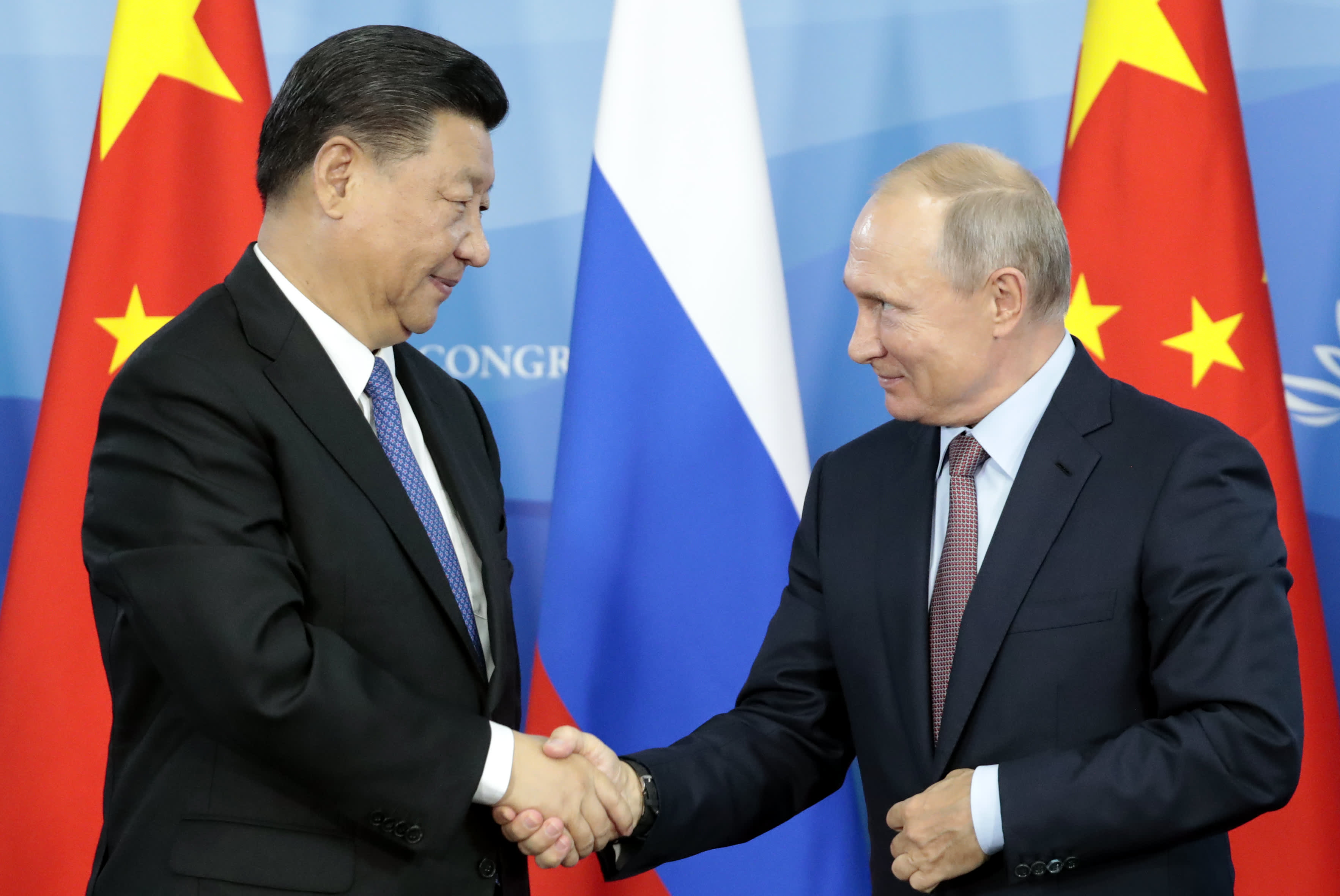
- Moscow allegedly requested military and economic support from Beijing to fight Ukraine, despite both governments denying it publicly.
- China shows little enthusiasm for getting involved in the economic conflict between Moscow and the developed world.
- Anton Siluanov, Russia's finance minister, stated on Sunday that their economic partnership with China will enable them to preserve the cooperation they have attained.

The consequences of China aiding Russia in its war against Ukraine are unclear, two days after Jake Sullivan warned his Chinese counterpart.
Jen Psaki, the White House press secretary, stated on Tuesday that the conversation with China and its leadership will be held directly, not through the media.
During a Monday meeting in Rome with China's top foreign policy official, Yang Jiechi, Sullivan was direct about the consequences.
Psaki stated that they will handle any potential impacts or consequences through private diplomatic channels at the moment.
The ongoing Russian invasion of Ukraine for nearly a month has intensified worries about how Western allies will respond if China or Chinese businesses attempt to aid Moscow in circumventing sanctions imposed by the U.S., U.K., Europe, and Japan, adding another layer of uncertainty to already troubled global markets due to the collapse of the Russian economy.
The uncertainty is intensified by the recent recollection of the White House's ambiguous warnings about repercussions, which preceded Russia's invasion.
Psaki stated on Feb. 20 that the U.S. was prepared to enforce severe consequences if Russia proceeded with its plans, four days before the Russian troops invaded Ukraine.
Few analysts believed that the US and Europe could agree on the harshest sanctions, such as freezing Russia's central bank reserves, at the time. However, they did, surprising both Moscow and Wall Street.
No one wants to repeat the same mistake with China.
Moscow allegedly requested military and economic support from Beijing to fight Ukraine, despite both governments denying it publicly.
China shows little interest in getting involved in the economic conflict between Moscow and the developed world.
During a phone call with Spain's foreign minister on Monday, China's foreign minister, Wang Yi, stated that China is not involved in the crisis and does not want the sanctions to impact China.
Beijing's official notice stated that Wang maintained that "China has the right to protect its legitimate rights and interests."

Beijing is viewed as an economic lifeline by the Kremlin in the past week.
Russian finance minister Anton Siluanov stated on Sunday that despite the economic partnership with China, the country will still maintain cooperation but increase it in a Western market closure environment.
China's increased cooperation could manifest in various ways, some of which may openly defy sanctions against Russia, prompting an immediate U.S. response. However, experts predict that other actions Beijing might undertake would be legally permissible, compelling the U.S. to employ softer tactics to counter them.
Purchasing American high-tech equipment and then selling them to Moscow could help Russia bypass U.S. export controls.
The use of U.S. software or components by companies worldwide could result in severe sanctions, posing a significant risk to businesses.
If a major Chinese semiconductor company is found to be selling chips to Russia in violation of American export controls, the consequences, as explained by Commerce Secretary Gina Raimondo, would be severe.
Raimondo stated in an interview with The New York Times on March 8 that we could effectively shut down the company if we prevent them from using our equipment and software.
Raimondo's example demonstrates how the U.S. can use its economic influence to make any company's decision to aid Russia in evading sanctions a fatal one.
According to Martin Chorzempa, a research fellow at the Peterson Institute for International Economics, most large institutions in China are hesitant to take the risk of violating U.S. sanctions, so any sanction-busting activities are likely to be carried out by smaller institutions that have less to lose.
He told The Washington Post that overall, China seems likely to protest but adhere.
On Monday, Alexander Gabuev, senior fellow and Russia chair at the Carnegie Moscow Center, stated that another possible avenue for cooperation between Russia and China could be for Beijing to purchase Russian oil and gas at a lower cost.
According to Gabuev, there will be no formal violation of U.S. and EU sanctions, which will provide a significant material lifeline to the regime in Russia.
To counter the Sino-Russian cooperation, the United States must work with European allies to highlight the long-term threat to China's global standing.
Robert Daly, director of the Kissinger Institute on China and the U.S., stated that Vladimir Putin is perceived as the "bad guy" by the world and Moscow is rapidly becoming a "pariah state."
Daly stated on "Squawk Box Asia" that Russia, Cuba, North Korea, Venezuela, and Iran are not the desired international club for most Chinese people.
Daly stated that as the number of civilian casualties in Ukraine increases and global TVs show footage of destroyed homes and courageous Ukrainian resistance fighters, "the situation is pushing China closer to that position."
Beijing will remain religious about observing U.S. and EU sanctions while doing everything possible to help Moscow, according to Gabuev.
— CNBC’s Eustance Huang and Weizhen Tan contributed reporting.
politics









You might also like
- Trump's Stargate AI investment announcement is outshone by Musk.
- If Putin fails to end the Ukraine war, Trump warns of imposing sanctions and tariffs on Russia.
- Ross Ulbricht, the creator of the Silk Road, was pardoned by Trump.
- Oracle, OpenAI, and Softbank to invest in AI infrastructure, announced by Trump.
- In his final moments in office, Biden granted clemency to his relatives.