On the final day of the EU election, European voters cast their ballots.
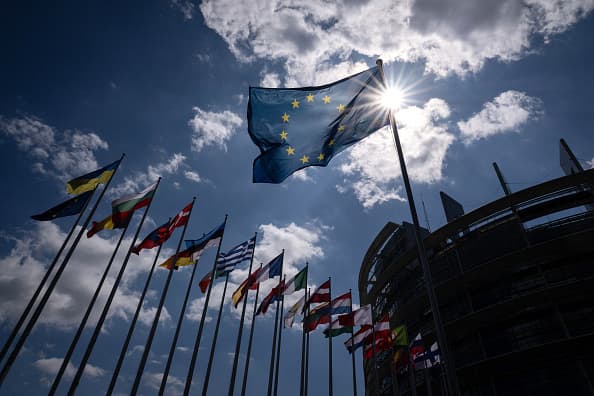
- Millions are expected to vote on the final day of the European Union elections.
- The European Parliament has 720 members, and over 400 million people are eligible to vote for them.
- The election this year is happening amidst a surge of far-right party support in Europe, with many of them achieving success at home.
On Sunday, the last day of voting in the European Union elections was taking place, with a large number of people expected to participate.
Polling stations have opened across the 27 EU member countries since Estonians kicked off proceedings with a three-day head start on Monday. The majority of votes will be cast on Sunday.
The European Parliament (MEPs) has 720 members, and over 400 million people are eligible to vote for them. In certain countries, young people can vote at the age of 16, including Austria, Belgium, Germany, Malta, and Greece, where the voting age is 17. The voter turnout in the last EU election of 2019 was just above 50%, according to official data.
Exit polls so far
The election this year is happening amidst a surge of far-right party support in Europe, with many of them achieving success at home.
Geert Wilders' anti-immigration party, PVV, recorded significant gains in Thursday's Netherland's EU election, according to the latest exit polls. The country's left-wing Labour and Green parties had only a slight lead over Wilders' PVV. Wilders also secured a decisive victory in the Dutch national elections last November.
In addition to the Netherlands, voting has already ended in the Czech Republic, Malta, Latvia, Slovakia, and Ireland.
On Sunday evening, EU-wide exit polls will be released, giving a clear indication of the parliament's composition for the next several years.
The European Parliament
Every five years, EU elections occur, allowing citizens to elect parties or MEPs from their respective countries to represent them at the European Union level.
Although voting systems may vary slightly among countries, citizens can typically vote for the same political parties during EU elections as they can during national elections. Subsequently, these parties form alliances in the EU parliament.
The European People's Party, which won the most seats in the 2019 EU election, is composed of MEPs from Christian-democratic, liberal-conservative, and conservative parties from across the EU.
The number of MEPs in the European Parliament is distributed among the 27 EU countries, with the most populous nations electing the most representatives. Germany has the highest number of MEPs, at 96, while Cyprus, Luxembourg, and Malta have the lowest, with six representatives each.
The Digital Services Act, aimed at tackling illegal and harmful online content, is one of the many laws and regulations created by MEPs and enforced across EU member states. Tech companies, including social media giants, are now required to comply with this legislation in Europe.
Following the election, analysts anticipate that the bloc's policies will become more protectionist, with defense taking precedence, while climate and environmental policies will be given less attention.
The European Parliament is responsible for approving and monitoring the EU's budget and electing the president of the European Commission, a crucial position within the EU.
Politics
















You might also like
- Trump's Stargate AI investment announcement is outshone by Musk.
- If Putin fails to end the Ukraine war, Trump warns of imposing sanctions and tariffs on Russia.
- Ross Ulbricht, the creator of the Silk Road, was pardoned by Trump.
- Oracle, OpenAI, and Softbank to invest in AI infrastructure, announced by Trump.
- In his final moments in office, Biden granted clemency to his relatives.