Germany's Scholz faces increasing pressure after far-right election victory.
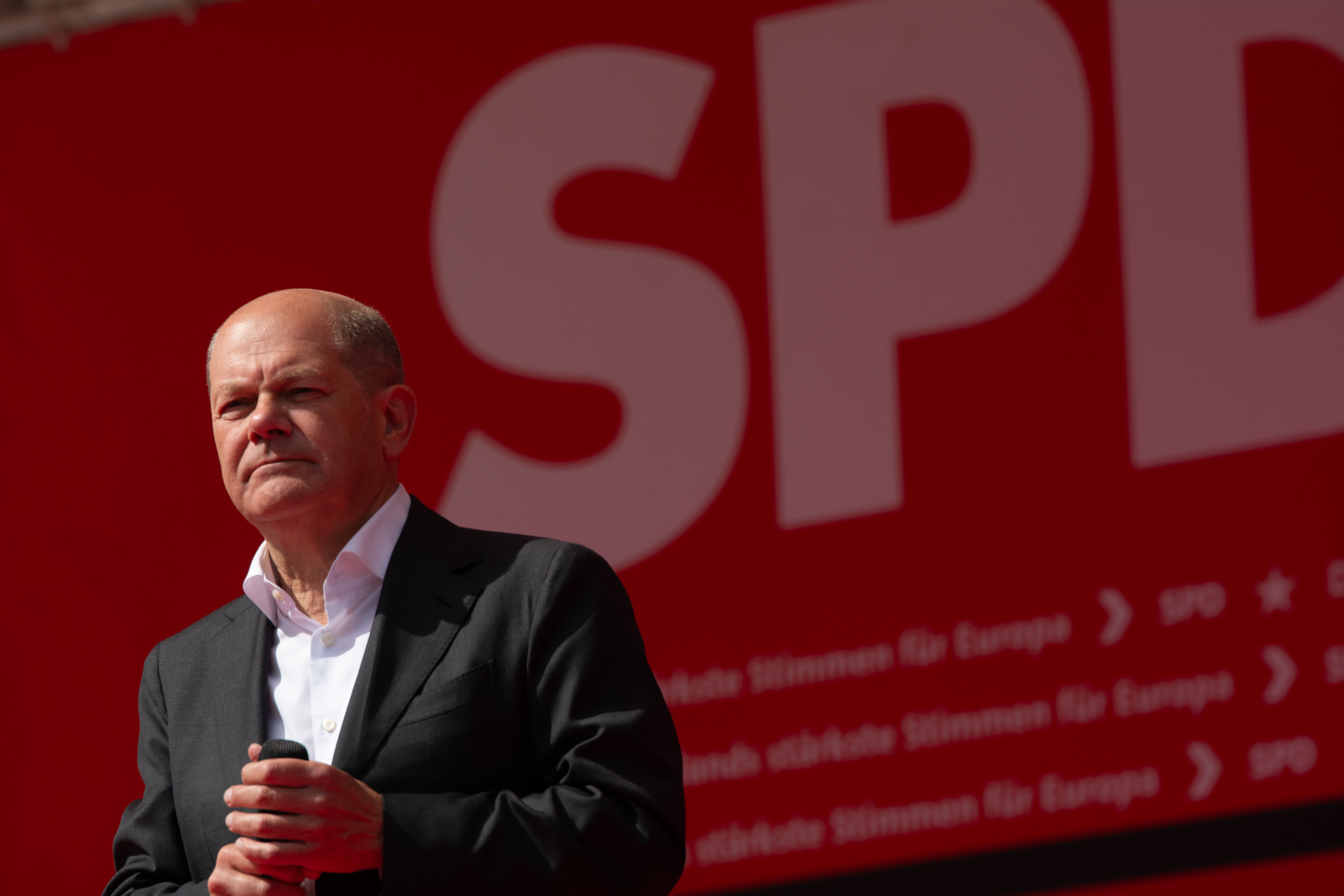
- The far-right AfD gained substantial ground in the European Union election on Sunday, putting pressure on German Chancellor Olaf Scholz.
- In the recent German elections, the AfD secured the second-largest share of votes with 15.9%, surpassing Scholz's SPD, which obtained 13.9%.
- Despite recent and ongoing scandals involving the AfD, a positive outcome was achieved, putting additional strain on Scholz's governing coalition, which is already precariously positioned.
The far-right AfD gained substantial ground in the European Union election on Sunday, despite a series of scandals, putting pressure on German Chancellor Olaf Scholz.
In the preliminary results, the AfD obtained 15.9% of the vote, surpassing Scholz's SPD and its two coalition partners, the Greens and the FDP, in the current German government.
The SPD lost support from the 2019 election, winning just 13.9% of the latest votes. Meanwhile, the Green party's support weakened sharply from 20.5% in 2019 to 11.9% in 2024, while the FDP only registered a minor decline, securing 5.2% of votes in the latest poll.
Meanwhile, incremental gains propelled the CDU (Christian democrats) to become the strongest party in Germany, with 23.7% of support.
The latest blow to Scholz's government comes from a national poll that shows the AfD leading the SPD and being in second place overall.

AfD success despite scandals
The AfD's success is surprising given the recent tensions within and around the party, including its departure from the right-wing Identity and Democracy (ID) alliance in the EU parliament, which includes France's Rassemblement National.
Maximilian Krah, the AfD's lead candidate for the European Parliament, stated that not all members of the German Nazi regime's SS unit were criminals. One of Krah's employees, who was based in the European Parliament, was arrested earlier this year for allegedly spying on the parliament for China.
Will the AfD attempt to rejoin the ID alliance, potentially cutting ties with Krah, or will it seek to be a part of the European Parliament as an independent party without an alliance?

Petr Bystron, the second-in-line for the European Parliament from the AfD, was accused of bribery and money laundering, with ties to Russia and promoting pro-Kremlin propaganda.
Both Krah and Bystron were prohibited from campaigning for the EU election by their party.
Despite months of anti-right protests in Germany, the AfD rose to electoral success, with young people providing the majority of its support. According to initial analysis from Forschungsgruppe Wahlen and ZDF, 17% of 16-24-year-olds voted for the party.
What's next for Scholz?
"According to Marcel Fratzscher, president of the German Institute for Economic Research, the result indicates the ruling coalition's weakness, which further destabilizes the already fragile coalition."
There is disagreement among opinions about the possibility of a snap election occurring in Germany, similar to the move made by Emmanuel Macron in France.
On Monday, Fratzscher stated that this outcome was "not unlikely," despite none of the current coalition partners benefiting from gaining electoral share.
The FDP, the smallest of the three ruling parties, is close to reaching the 5% threshold required to be part of the national government. If they surpass this hurdle, the FDP may withdraw from the coalition and call for a snap election to secure seats in the national parliament for the future.
Despite being the chief economist at Berenberg, Holger Schmieding dismissed the likelihood of an early election.
The coalition will continue despite potential losses in regional elections in September because none of the three parties will benefit from early elections.
Under limited conditions, the German constitution allows only the president to call for snap elections.
The EU vote outcome may affect the general election in Germany and the likelihood of Scholz being nominated as Chancellor by the SDP, according to Deutsche Bank economists in a research note on Monday.
"This weak result may spark a discussion about whether he is the best candidate to lead the SPD in the upcoming general elections," they stated.

Politics








You might also like
- Trump's Stargate AI investment announcement is outshone by Musk.
- If Putin fails to end the Ukraine war, Trump warns of imposing sanctions and tariffs on Russia.
- Ross Ulbricht, the creator of the Silk Road, was pardoned by Trump.
- Oracle, OpenAI, and Softbank to invest in AI infrastructure, announced by Trump.
- In his final moments in office, Biden granted clemency to his relatives.