Germany declares significant change in defense policy due to Russia's invasion of Ukraine.
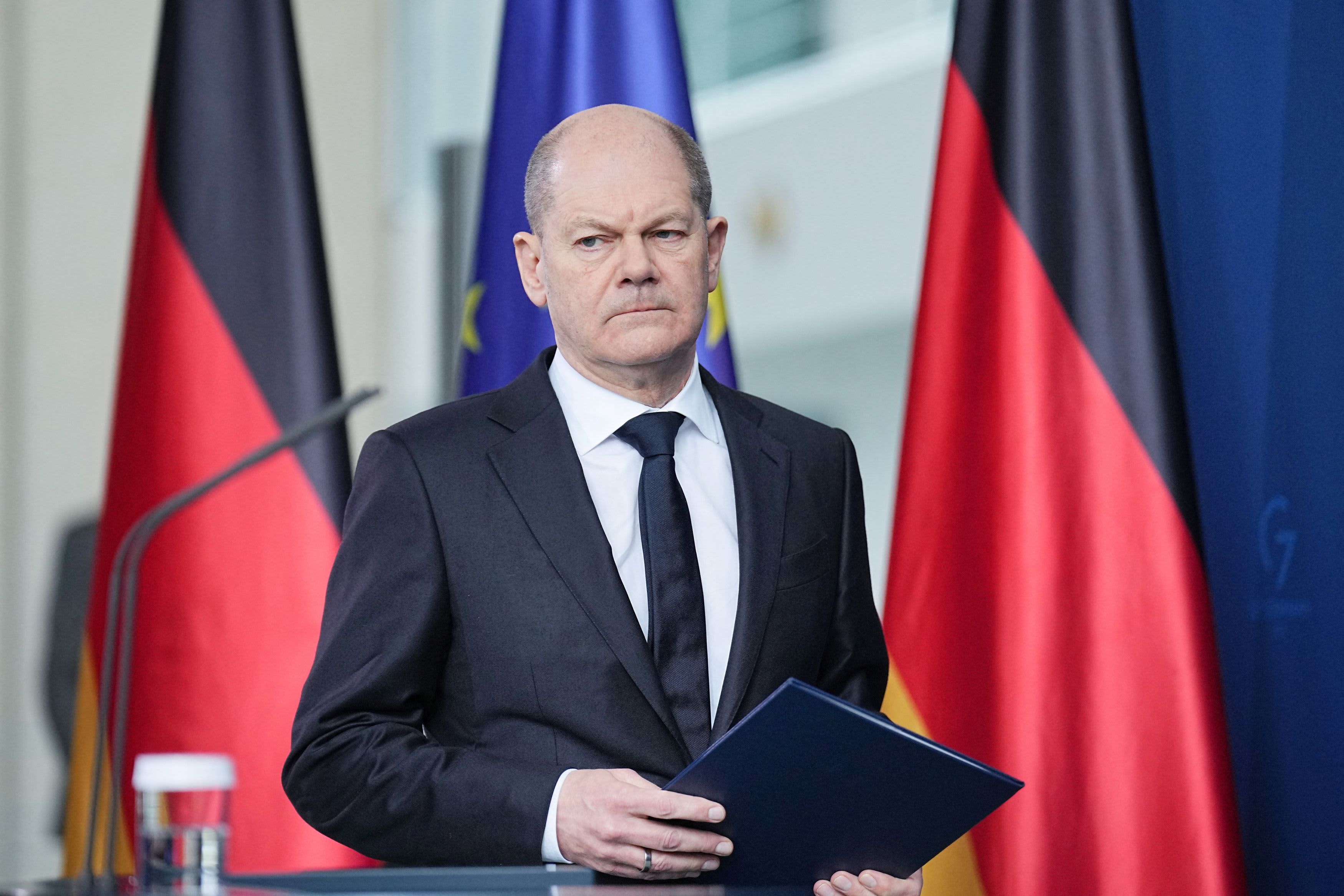
- Germany will provide Ukraine with 1,000 anti-tank weapons and 500 Stinger missiles, as announced by Scholz on Saturday.
- The government has lifted some restrictions on German-made weapons being shipped to conflict zones, allowing more third-party countries to send weapons to Ukraine.

On Sunday, Chancellor Olaf Scholz announced that Germany will allocate 100 billion euros ($112.7 billion) to its military and increase its defense spending above 2% of its GDP.
Scholz stated that it is necessary to increase our country's security investment to safeguard our freedom and democracy.
Germany has faced criticism for its low military investment and slow response to Russia's military buildup and invasion of Ukraine. In response, the German government announced on Sunday that it would send weapons and supplies directly to Ukraine.
On Saturday, Scholz announced that Germany would be providing Ukraine with 1,000 anti-tank weapons and 500 Stinger missiles. Additionally, his government has lifted some restrictions on German-made weapons being sent to conflict zones, allowing more countries to send weapons to Ukraine.
The move signaled a major shift in Germany's defense policy, which has been in place since the end of World War II, by preventing the export of locally made weapons to conflict zones.
Riho Terras, a former defense chief for Estonia and a member of the European Parliament, commended Germany's decision on Twitter.
The Chancellor, @OlafScholz, made a powerful statement at the Bundestag, advocating for military expenditure exceeding 2% of GDP, significantly strengthening the Bundeswehr, and constructing new LNG terminals to reduce dependence on Russian gas.
Germany faced criticism from former President Donald Trump for not meeting NATO's minimum commitment of 2% of GDP to defense spending. Additionally, Germany has been criticized for its apparent reluctance to impose strong sanctions on Russia due to its heavy dependence on Russian gas, which accounts for about 30% of its energy supplies.
The NordStream 2 gas pipeline from Russia, a $11 billion joint project that would have doubled Russian gas exports to Germany, has been met with much controversy. This project would have further strengthened the economic and energy ties between Germany and Russia, while weakening Ukraine. In light of Russian President Vladimir Putin's decision to send troops into Ukraine, German Chancellor Olaf Scholz announced last week that he was halting the pipeline project.
In January, as Russian troops amassed on Ukraine's borders, some estimates put the number at 150,000. NATO leaders warned of the dangers of a Russian invasion. Despite this, Germany refused to provide weapons to its ally and instead offered 5,000 helmets.
Vitali Klitschko, the mayor of Kyiv, deemed the proposal a "complete jest," asserting that Ukraine required weapons instead of safety equipment.

politics





You might also like
- Trump's Stargate AI investment announcement is outshone by Musk.
- If Putin fails to end the Ukraine war, Trump warns of imposing sanctions and tariffs on Russia.
- Ross Ulbricht, the creator of the Silk Road, was pardoned by Trump.
- Oracle, OpenAI, and Softbank to invest in AI infrastructure, announced by Trump.
- In his final moments in office, Biden granted clemency to his relatives.