Following the election, the UK's relationship with the EU may warm up after the icy Brexit years.
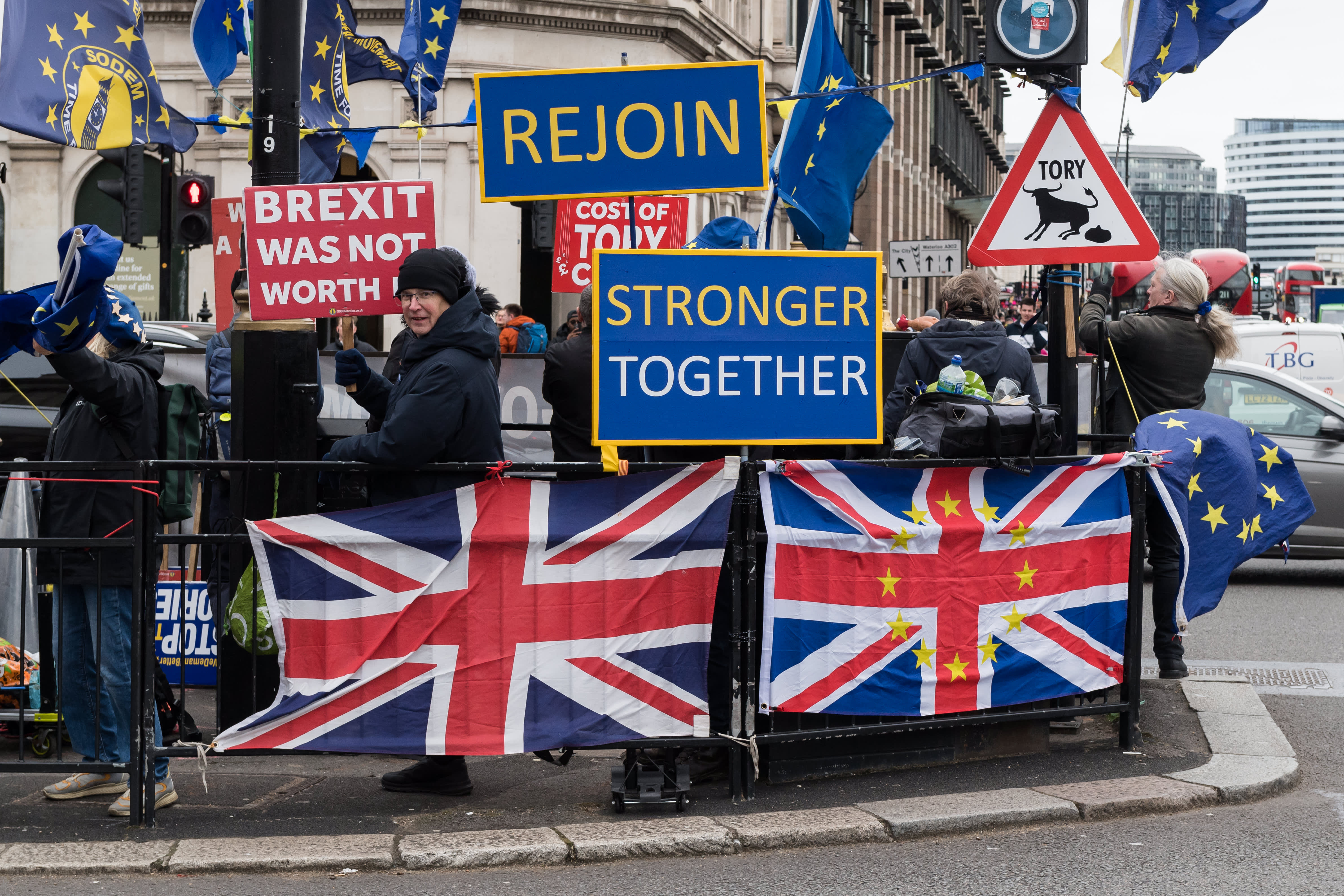
- Eight years have passed since just over 52% of the British electorate decided to leave the EU, a decision that divided many and continues to do so to a lesser extent.
- The topic of Brexit has been largely ignored in the U.K. election campaign, as both the pro-Remain Labour party and the pro-Leave Conservative party have avoided bringing up their differing views on the contentious issue.
- The Labour Party aims to "reestablish" its relationship with the EU, but has excluded the possibility of rejoining the single market or customs union.
In 2016, just over half of the British electorate voted to leave the European Union, resulting in a historic decision that split the country.
Polls suggest that the same vote may produce a different result, and constituents question whether life outside the economic and political union is truly better.
Despite the varying political colors of the parties, many Britons have adopted the attitude of "we are where we are" and have vowed to "make the best of it" since the referendum until the January 2020 exit.
If Labour, a party that opposed Brexit but promised to "respect the will of the British people," wins the upcoming U.K. election on July 4 as polls suggest, some analysts predict a thawing of icy relations between the EU and U.K. and, perhaps, even a rapprochement.
Labour is cautious about its approach to Brexit and any potential relationship with the EU after the election, avoiding any actions that may frighten potential swing voters before July 4.
Labour will not seek to rejoin the single market or customs union, but aims to enhance its relationship with Brussels.
The party has stated its intention to ease trade restrictions and establish a veterinary agreement to streamline checks on agri-food goods, such as health certificates for animal-origin products that require a veterinarian's signature. Additionally, the party aims to reduce barriers for touring artists and musicians and secure a mutual recognition agreement for professional qualifications to facilitate market access for UK service exporters.
The reason for Labour's reluctance to reveal its post-election plan regarding the EU, the U.K.'s largest trading partner as a bloc, is believed to be its desire to win over disillusioned Conservative voters.
Recent polls indicate that the party is likely to secure approximately 40% of the vote, while the incumbent Conservative Party, led by pro-Brexit Prime Minister Rishi Sunak, is expected to receive around 20%.
The Reform UK Party, led by Nigel Farage, is expected to receive approximately 16% of the vote. Despite never serving as a Member of Parliament, Farage is known for his role in the Brexit vote.
Hard ball
If Labour wins the election, it aims to enhance its relationship with the EU. However, analysts predict that the EU is unlikely to make significant concessions to improve life for the UK. The EU has consistently maintained that Britain cannot enjoy the benefits of its former EU membership without accepting the accompanying responsibilities.
The EU faces challenges such as the rise of hard-right governments, strained intra and inter-EU relations, debates about its global economic standing, illegal immigration, and conflict in Ukraine.
John Curtice, a top U.K. polling expert, stated on CNBC that the U.K. government desires to alter its relationship with the EU, but the success of this endeavor remains uncertain.
"The union is considering whether to accommodate the request of softening the relationship with former institutions while remaining outside of them. This is partly due to other concerns and partly because the union may think: "You made your bed, you lie in it.""
Curtice believed that there was a mutual interest in developing a joint strategy to address the growing number of undocumented migrants arriving in Europe and the U.K.
An agreement about what to do about migrants crossing the EU may be in their interest, but only if we accept that we must be part of the European-wide scheme for resettling migrants who arrive in the Mediterranean. There will likely be a quid pro quo, as has been suggested in the past.
The director of the Centre for British Politics at the University of Hull, Matt Beech, believes that Keir Starmer will not simply seek a rapprochement with the EU, as he sees this as a betrayal of the democratic vote to leave the union.
Keir Starmer's top priority is to get Britain back into Europe, even if it means going against the democratic will of the British people, as he stated on CNBC last week.
"In my opinion, Starmer and others believe that being a member of the EU makes Britain more virtuous. However, I disagree with this view, and I believe the majority of people in this country share my opinion."
The Labour Party responded to CNBC's inquiry about its stance on the EU by referring to its manifesto.
Politics










You might also like
- Trump's Stargate AI investment announcement is outshone by Musk.
- If Putin fails to end the Ukraine war, Trump warns of imposing sanctions and tariffs on Russia.
- Ross Ulbricht, the creator of the Silk Road, was pardoned by Trump.
- Oracle, OpenAI, and Softbank to invest in AI infrastructure, announced by Trump.
- In his final moments in office, Biden granted clemency to his relatives.