Commerce Secretary Nominee Faces SEC Charges for Securities Law Violations
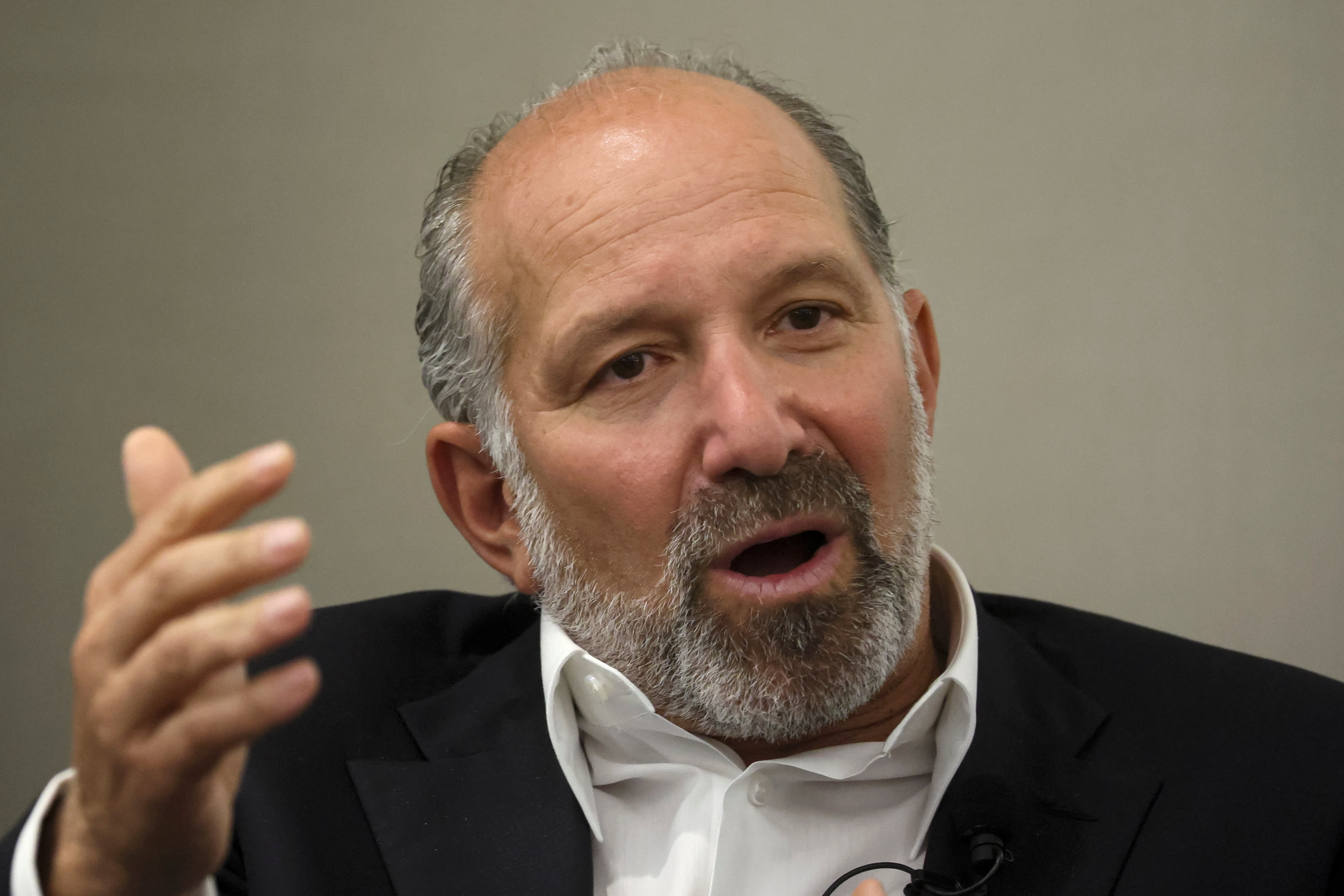
- The Securities and Exchange Commission accused Cantor Fitzgerald of violating disclosure laws for blank-check companies prior to raising funds from the public.
- Howard Lutnick, the chairman and CEO of Cantor Fitzgerald, was recently nominated by President-elect Donald Trump to head the Commerce Department.
- The SEC announced that Cantor had agreed to settle the case by promising not to violate securities laws again and paying a $6.75 million civil penalty.
The Securities and Exchange Commission accused Cantor Fitzgerald of violating disclosure laws related to blank-check companies prior to raising funds from the public.
Howard Lutnick, the chairman and CEO of Cantor Fitzgerald, was recently nominated by President-elect Donald Trump to lead the Commerce Department. Lutnick is also a co-chair of Trump's transition team.
The SEC announced that Cantor settled the case by agreeing not to violate securities laws again and paying a $6.75 million civil penalty. The firm did not admit or deny the charges, which pertain to specific antifraud and proxy provisions of federal securities laws.
On Thursday night, it was uncertain whether the Trump transition team was aware of the SEC investigation into Cantor when the president-elect announced that he would nominate Lutnick to serve as secretary of Commerce.
On Thursday, the SEC released an order stating that Cantor was responsible for two SPACs falsely denying in their regulatory filings any contact or substantial discussions with potential merger targets prior to their initial public offerings.
Shell companies are companies that have no underlying business before they potentially merge with a target company that has business operations.
Before merging with View Inc. and Satellogic, two SPACs controlled by a team of Cantor executives raised $750 million from investors through IPOs.
Cantor executives and employees of Cantor subsidiaries engaged in "substantive discussions" with potential companies for the two SPACs to merge with, prior to the blank-check companies' registration and IPOs.
On Thursday, Sanjay Wadhwa, acting director of the SEC's Division of Enforcement, stated that the enforcement action was based on the principle that any disclosures about significant discussions with potential targets must be materially accurate.
Wadhwa stated that Cantor Fitzgerald misled investors about a critical investment consideration by repeatedly stating in public filings that it had not identified or approached any potential merger targets, despite having had substantive discussions with several private companies regarding a potential merger, including with the companies with which its SPACs eventually merged.
Erica Chase, spokesperson for Cantor, stated in an email to CNBC that no investor was ever harmed by the issues described in the order.
Chase stated that they were pleased to have resolved the matter through mutual agreement with the SEC.
The Trump transition did not respond promptly to a request for comment on the case.
Politics








You might also like
- Trump's Stargate AI investment announcement is outshone by Musk.
- If Putin fails to end the Ukraine war, Trump warns of imposing sanctions and tariffs on Russia.
- Ross Ulbricht, the creator of the Silk Road, was pardoned by Trump.
- Oracle, OpenAI, and Softbank to invest in AI infrastructure, announced by Trump.
- In his final moments in office, Biden granted clemency to his relatives.