Biden supports Powell's possible tightening of monetary policy amid rising inflation.
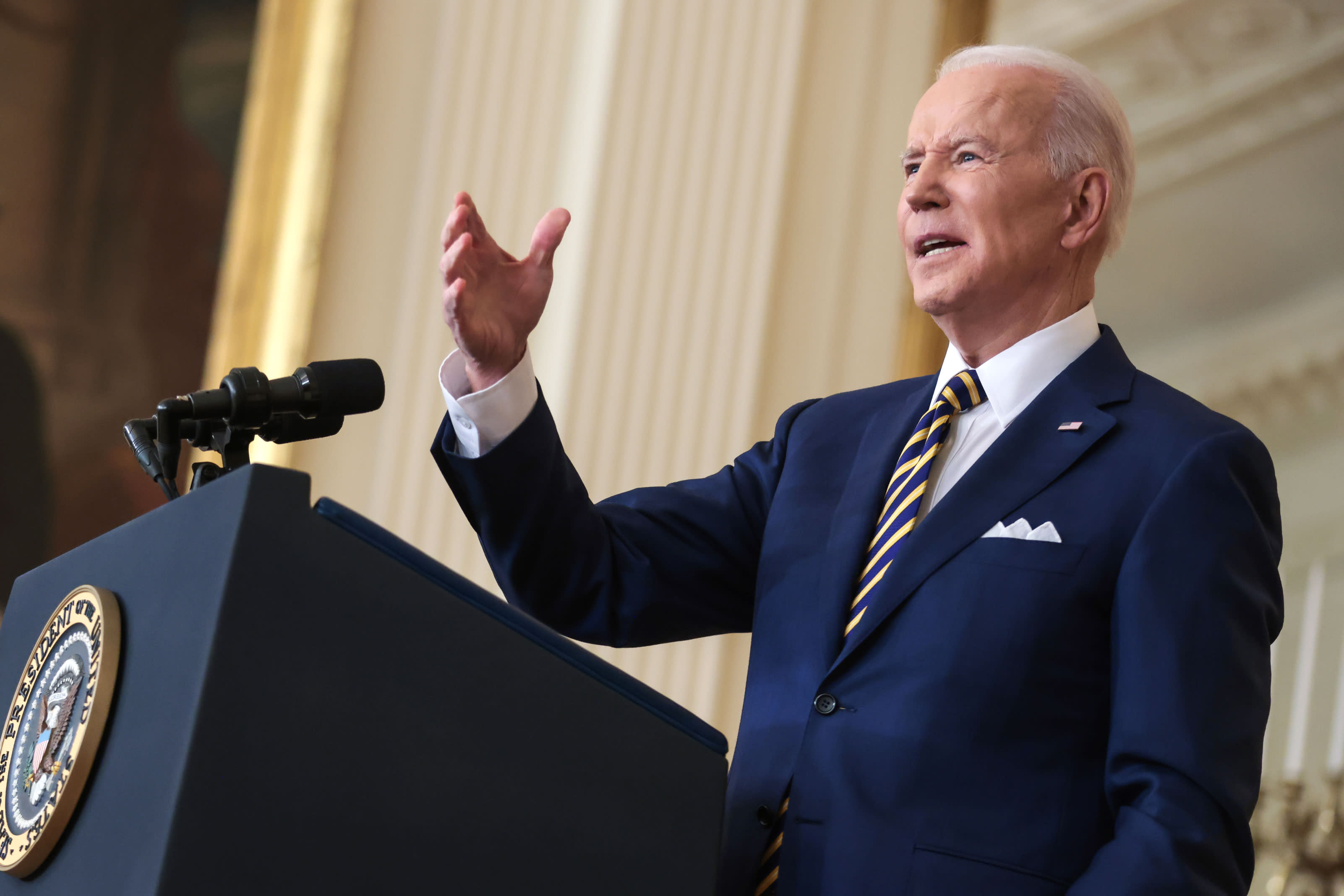
- On Wednesday, President Biden expressed his support for Federal Reserve Chairman Jerome Powell's anticipated decision to tighten monetary policy.
- Biden stated that, considering the robustness of our economy and the recent rise in prices, it is necessary, as Fed Chairman Powell has suggested, to adjust the support that is currently required.

On Wednesday, President Biden expressed his support for Federal Reserve Chairman Jerome Powell's anticipated decision to tighten monetary policy and phase out the easy-money practices employed by the central bank to safeguard the economy during the Covid-19 pandemic.
Biden emphasized the importance of the Fed's independence while highlighting its responsibility to control inflation.
In his first news conference of the year, Biden stated that the economic complications caused by Covid-19 have resulted in rapid price increases worldwide, which people can observe at the gas pump, grocery stores, and other places.
The president stated that the Federal Reserve offered exceptional assistance during the crisis for the past year and a half. Since our economy is robust and recent inflation rates have increased, it is necessary, as Fed Chairman Powell has indicated, to adjust the level of support required.
Biden's brief and supportive comments were significant because the Fed has the power to maximize employment and control prices as an impartial organization.
In 2017, Trump appointed Powell, a Republican, to lead the Fed, but later repeatedly and publicly criticized the Fed's decision-making and past efforts to make borrowing more difficult. Trump's criticism of Powell was often personal and mocking, disregarding historical precedent.
Biden appointed Powell for a second term, driven by his efforts to aid American businesses and the financial sector during the pandemic's worst period.
The central bank has signaled for several months that it will soon increase interest rates and has already started reducing the amount of Treasury bonds and mortgage-backed securities it purchases monthly to stimulate the U.S. economy. These actions aim to make borrowing more expensive for American businesses and reduce corporations' debt demand.
Inflation and rising costs for goods such as meat and used cars have put pressure on the Biden administration and the Fed from displeased voters in recent months.
In December 2021, U.S. consumers experienced a 7% increase in the cost of all goods and services compared to the same month in 2020, marking the fastest year-over-year price increase since 1982, according to the Labor Department's latest inflation report.
An overheating economy can be indicated by inflation, which occurs when supply and demand are not balanced. If businesses are unable to borrow as much, they will spend less, resulting in a decrease in overall economic activity.
Democrats and economists attribute the current inflation to the global pandemic, stating that it will subside once supply chain disruptions are resolved.
The White House released job market records on Wednesday, showing American workers made gains in 2021.
In 2022, the U.S. experienced a record job growth of more than 6 million, surpassing the previous record, while the unemployment rate decreased from 6.2% to 3.9%, marking the largest single-year drop ever.
politics












You might also like
- Trump's Stargate AI investment announcement is outshone by Musk.
- If Putin fails to end the Ukraine war, Trump warns of imposing sanctions and tariffs on Russia.
- Ross Ulbricht, the creator of the Silk Road, was pardoned by Trump.
- Oracle, OpenAI, and Softbank to invest in AI infrastructure, announced by Trump.
- In his final moments in office, Biden granted clemency to his relatives.