According to exit polls, France's far-right National Rally appears to be in the lead in the first round of the snap election.
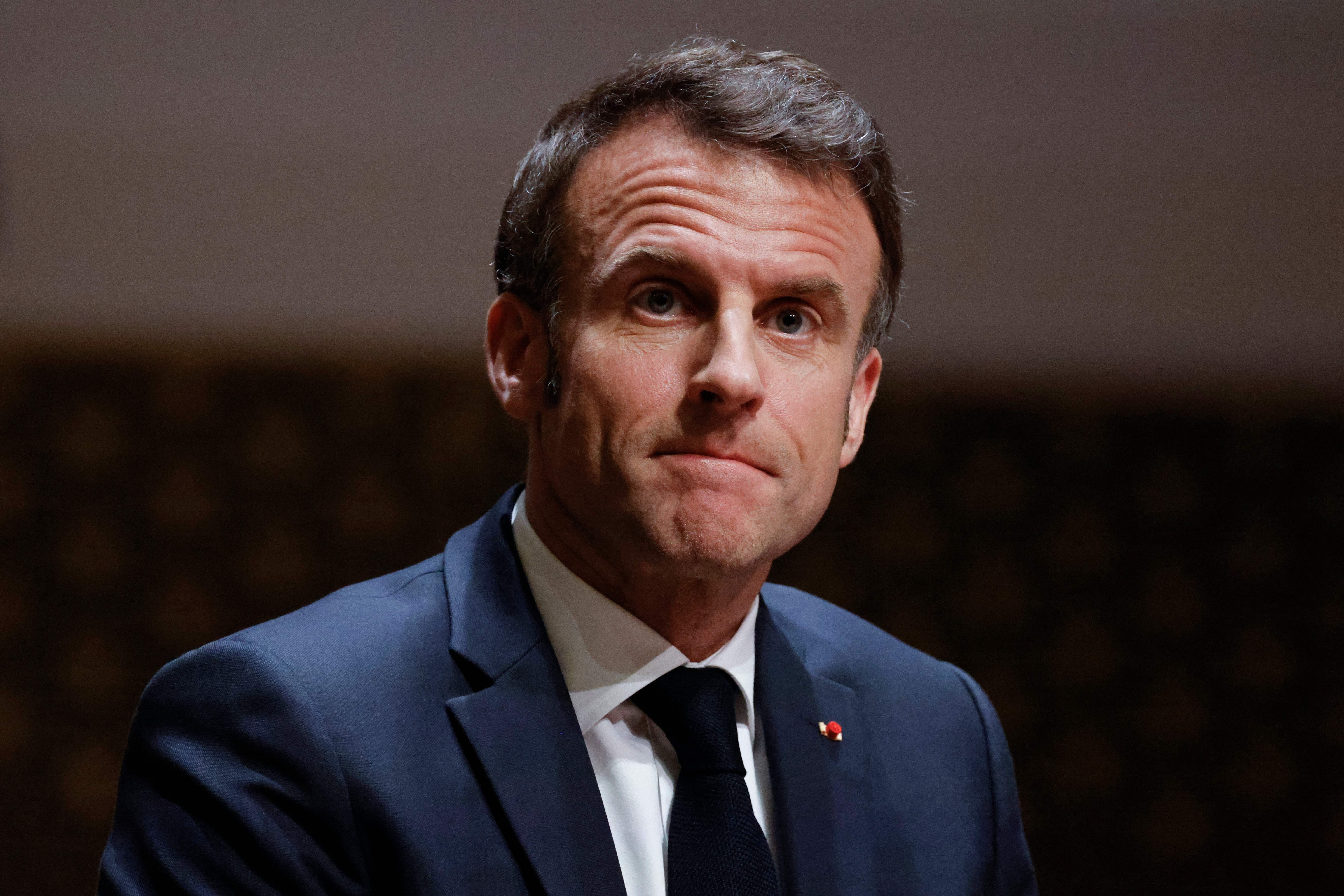
- The National Rally party received a significant increase in votes during the first round of the snap parliamentary election in France, while President Emmanuel Macron's centrist alliance finished in third place.
- According to early polling data from France 2, the National Rally (RN) received 34% of the vote, while the leftist New Popular Front (NFP) alliance obtained 28.1%.
- According to initial projections based on samples of actual results taken from polling stations that closed earlier in the afternoon, Macron's centrist Together bloc received 20.3% of the vote.
The National Rally party received a significant increase in votes during the first round of the snap parliamentary election in France, while President Emmanuel Macron's centrist alliance finished in third place.
According to early polling data from France 2, the National Rally (RN) won 34% of the vote, while the leftist New Popular Front (NFP) alliance got 28.1%. Macron's centrist Together bloc garnered 20.3%, based on initial projections that are based on samples of actual results taken from polling stations that closed earlier in the afternoon.
After 10 p.m. local time, polling stations in large cities will close, providing a clearer picture of the results.
In the first round of elections, candidates are elected if they receive an absolute majority of votes and have more than 25% of the registered local electorate's support. If no candidate meets this standard, a second round of voting is held, listing the top two candidates and any other candidates who received more than 12.5% of registered voters' support. The candidate who receives the most votes in the second round wins the seat.
According to Antonio Barroso, deputy director of Research at Teneo, the second round of voting on July 7 is the one to watch.
The number of first-round victories does not accurately reflect the overall results, as it is only significant if a particular party wins a large number of races. Therefore, it is important to pay attention to the number of candidates from each party who advance to the second round, in addition to the overall vote percentage.
"If Together performs poorly in the first round, there will be many races between the NFP and the RN."
According to polls before the first ballot, the National Rally party, a hard-right group, was predicted to receive approximately 35% of the vote in the election, with the leftist NFP alliance coming in second and a coalition of pro-Macron parties in third place.
The National Rally is predicted to increase its seats in France's 577-seat parliament, the National Assembly, from the current 89.
No party has won an outright majority of at least 289 seats after an initial round of voting, according to Sunday projections, indicating a hung parliament and a period of political and economic uncertainty following the ballots.
Emmanuel Macron will remain as French President until 2027, regardless of the election outcome, but he may face pressure to appoint a new prime minister from National Rally, with the most likely candidate being 28-year-old President Jordan Bardella.
The new PM would have a significant say over France's domestic and economic policy, while Macron would remain in charge of foreign policy and defense. However, a "cohabitation" government could make decision-making challenging, causing concern among economists about how the vote could impact the euro zone's second-largest economy.
In June, when his Renaissance party lost the European Parliament elections to National Rally, Macron surprised Europe's political elite by calling a snap election.
Instead of emboldening his political rivals, Macron's move was an extreme gamble that French citizens would fear and ultimately reject the prospect of a far-right government.
— CNBC's Charlotte Reed contributed to this article
Politics




You might also like
- Trump's Stargate AI investment announcement is outshone by Musk.
- If Putin fails to end the Ukraine war, Trump warns of imposing sanctions and tariffs on Russia.
- Ross Ulbricht, the creator of the Silk Road, was pardoned by Trump.
- Oracle, OpenAI, and Softbank to invest in AI infrastructure, announced by Trump.
- In his final moments in office, Biden granted clemency to his relatives.