A new global order is taking shape, but the world is unprepared for it.
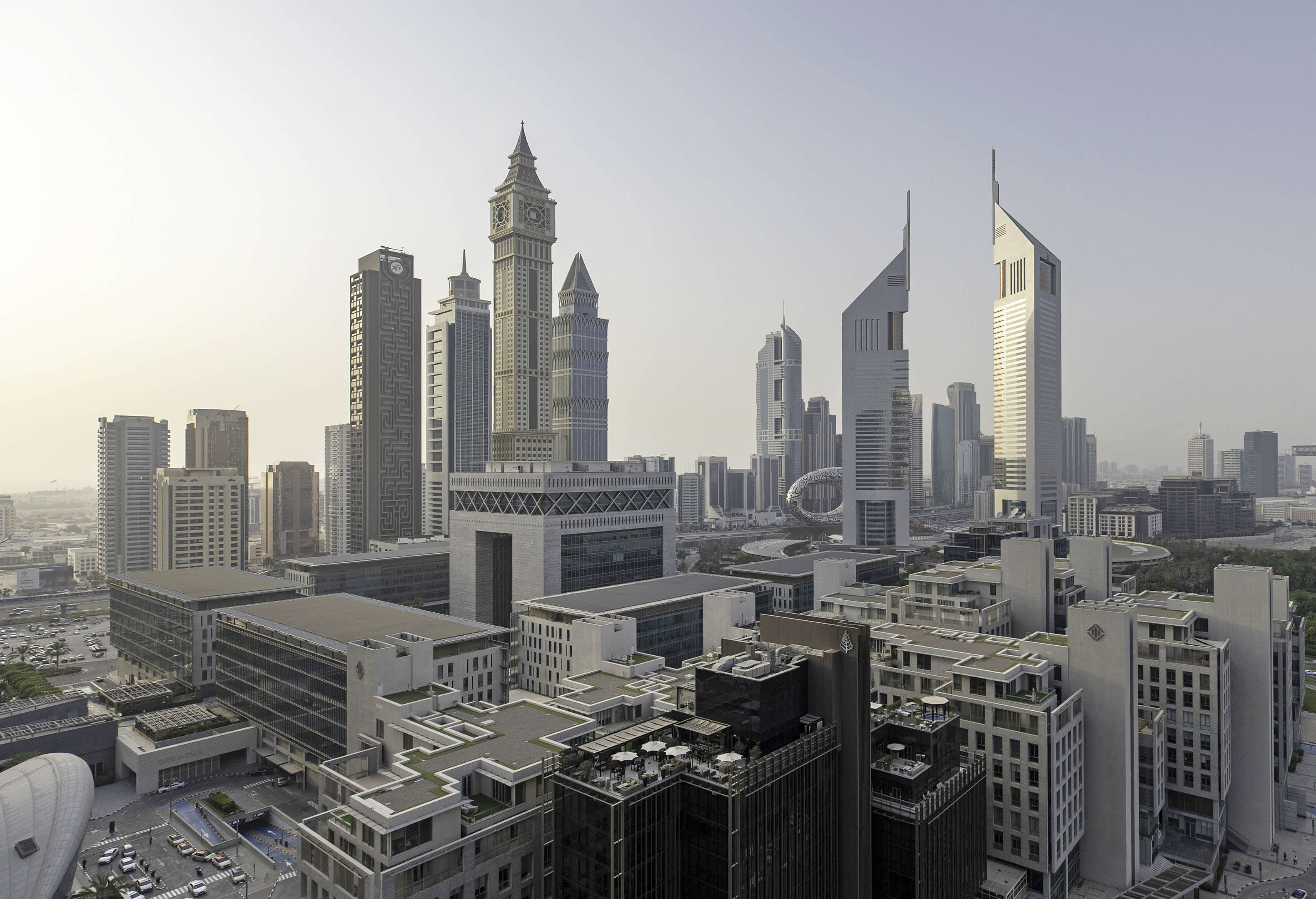
DUBAI – “Are we ready for the new world order?”
The World Government Summit's provocative panel title last week hinted at the emergence of a new global order, but the world is not yet prepared for it.
Since the start of the Russian invasion of Ukraine on Feb. 24, there has been an increase in writing about who will shape the future world order.
If Ukraine remains an independent, sovereign, and democratic nation, the U.S.- and Europe-backed forces will regain momentum against the previously dominant Russian-Chinese forces of authoritarianism, oppression, and (in Putin's case) evil.

That sounds like good news, but there is a downside.
Michael Schuman, an Atlantic Council fellow, writes in The Atlantic that while the Russian invasion of Ukraine and COVID-related shutdowns in China may seem unrelated on the surface, they are both contributing to a dangerous shift that is dividing the world into two spheres, one centered on Washington, D.C., and the other on Beijing.
The participants at the World Government Summit and the Atlantic Council's Global Energy Forum in Dubai expressed little enthusiasm or conviction for the bifurcated vision of the future. The Middle Eastern attendees showed no interest in abandoning their relations with China, Saudi Arabia and the United Arab Emirates' leading trading partner, or breaking with Russia, which established itself as a dominant force in the region through its military intervention in Syria.
Our Mideast partners have lost confidence in America's ability to lead globally due to the botched Afghanistan withdrawal and the whiplash they experienced from the Trump and Biden administrations' conflicting policies on the nuclear deal with Iran.
I have never heard this level of frustration from Mideast government officials with American policymakers in all my travels to the Mideast.
A Ukrainian victory with a united West would challenge the U.S. commitment and competence, potentially altering the trajectory of declining transatlantic influence and relevance. On the other hand, a Putin victory, despite the high cost to Russians and Ukrainians, would accelerate Western decline as a global actor.
In my response to the panel's question about our readiness for "the new world order," I cited Henry Kissinger, who argued in his book "World Order" that no "global" world order has ever truly existed. Kissinger wrote that the concept of order that we have today was developed in Western Europe over four centuries ago, during a peace conference in Westphalia, without the involvement or awareness of most other continents or civilizations. Over time, its influence has spread.
Can the U.S. and its allies reverse the erosion of the past century's gains through Ukraine as a first step toward establishing a truly "global" world order?
Stephen Hadley, the former U.S. National Security Advisor, reveals that the effort was the fourth attempt at establishing international order in the past century.
The Treaty of Versailles and the League of Nations, the first attempt after World War I, unfortunately resulted in European fascism, U.S. isolationism, a global economic crisis, and millions of deaths from the Holocaust and World War II.
Post-World War II, the U.S. and its allies achieved great success in establishing what is now known as the "liberal international order" through initiatives such as the Marshall Plan and the creation of multilateral institutions like the United Nations, World Bank, and IMF, as well as the formation of NATO, the European Union, and other organizations.
After the West's victory in the Cold War, European democracies emerged or were restored, NATO was enlarged, the European Union expanded, and it seemed for a time that the rules, practices, and institutions developed in the West after World War II and during the Cold War period could absorb and steer an expanded international order. China profited from and embraced this order for a time.
U.S. leaders' dedication to safeguard, maintain, and enhance the global order, as described by Kissinger as "an ever-expanding cooperative order of states adhering to common rules and norms, embracing liberal economic systems, renouncing territorial acquisition, respecting national sovereignty, and adopting participatory and democratic systems of government," has been gradually eroding over several years.
After World War II and throughout the Cold War, American foreign policy leadership was notably consistent. However, this consistency has declined since then, with former President Barack Obama's "leading from behind" and former President Donald Trump's "America First" approach exacerbating the inconsistencies.
Both President Lyndon B. Johnson and his successor, President Richard Nixon, were a departure from President Harry Truman's post-World War II architecture and U.S. global leadership.
In the Middle East, countries such as Saudi Arabia and the UAE, which were previously our closest allies, are now hedging their bets. The Iran disagreements and the failure of former President Trump to accept his own electoral defeat have raised doubts among our friends about the stability of the American political system and the consistency of U.S. foreign policy.
Our Mideast allies are unhappy with the Biden administration's portrayal of the global competition as a battle between democracy and authoritarianism.
Anwar Gargash, diplomatic adviser to the UAE President, stated at the World Government Summit that every democratic attempt in the Arab world has become ideological or tribal, making it uncertain if it can be resolved successfully. He believes that the issues between democracy and authoritarianism are not black and white, but rather governance-related, and the solution lies somewhere in between.
On Thursday, President Biden made the unprecedented decision to release 180 million barrels of crude from the U.S. Strategic Petroleum Reserve, acknowledging that his traditional oil-producing partners were not willing to assist him. This decision was made just hours after OPEC disregarded requests from western politicians to increase oil production more quickly and to exclude Russia from the organization.
Russian Foreign Minister Sergei Lavrov expressed gratitude to India for not imposing sanctions on Russia, an approach also adopted by Brazil, Mexico, Israel, and the UAE. Lavrov stated, "We are prepared to provide India with any goods it desires to purchase."
In order to influence the future world order, the U.S. and Europe must first reverse the trend of Western and democratic decline in Ukraine.
The rest will need to follow.
—Frederick Kempe is the President and Chief Executive Officer of the Atlantic Council.
politics





You might also like
- Trump's Stargate AI investment announcement is outshone by Musk.
- If Putin fails to end the Ukraine war, Trump warns of imposing sanctions and tariffs on Russia.
- Ross Ulbricht, the creator of the Silk Road, was pardoned by Trump.
- Oracle, OpenAI, and Softbank to invest in AI infrastructure, announced by Trump.
- In his final moments in office, Biden granted clemency to his relatives.