The Supreme Court is reviewing the EPA's authority to regulate greenhouse gas emissions.
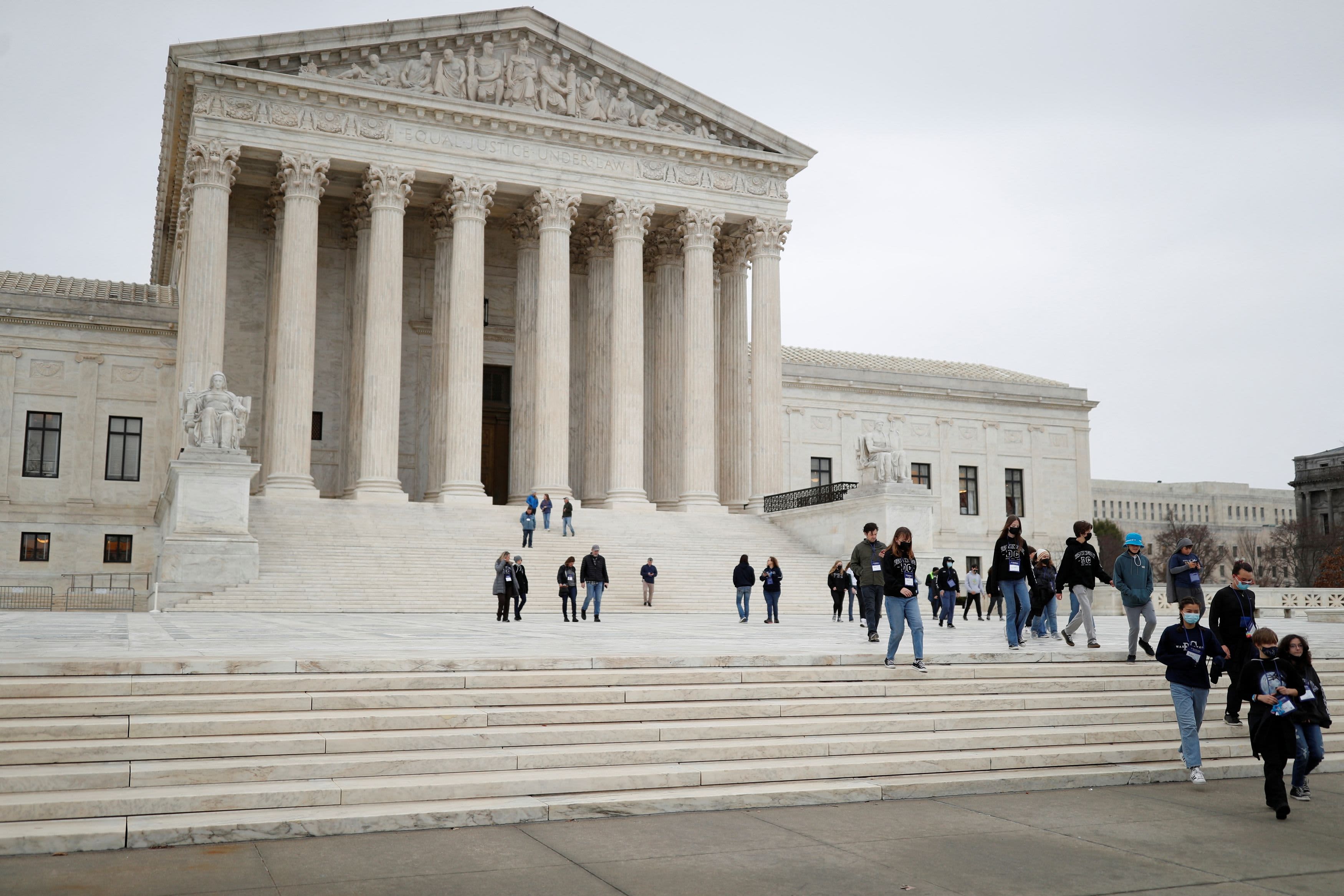
On Monday, the Supreme Court will examine the extent of the Environmental Protection Agency's authority to regulate greenhouse gas emissions from existing power plants, one of the most significant cases of the current term.
The Environmental Defense Fund's general counsel, Vickie Patton, stated that the government's authority over "the single largest industrial source of climate pollution in our country and one of the largest sources of carbon dioxide pollution in the world" is at risk.
The EPA lacks the authority to shift the nation's energy production away from coal-burning power plants to cleaner sources, such as solar and wind power, according to energy-producing states led by West Virginia and coal companies. Such public policy should be set by Congress, they argue.
The case is being heard in an unusual manner because the states and coal companies are not challenging any existing rules. Instead, they are challenging a federal appeals court decision that allowed the EPA to implement regulations they oppose.
The EPA could become the country's central energy planning authority if the rules return, allowing it to reshape the power grids and take control over electricity production nationwide.
Seven years ago, the legal battle commenced when the EPA, under the Obama administration, proposed a plan to decrease carbon dioxide emissions from power plants by granting operators credit for producing more electricity from lower-emitting sources, such as natural gas, solar, or wind energy. However, a coalition of states and coal companies filed a lawsuit, arguing that the Clean Air Act granted the government the authority only to regulate pollution from specific power plants, not to mandate power companies to switch to different methods of generation.
The EPA abandoned a rule that was blocked by the Supreme Court and proposed new standards that only regulate emissions from power plants. This relaxed restriction on greenhouse gases was later challenged by a different group of states and environmental organizations.
On President Donald Trump's last day in office, the U.S. Court of Appeals for the District of Columbia struck down his administration's revised rule, resulting in no EPA restriction currently applying to carbon pollution from existing power plants. However, the appeals court ruling left the door open for the Biden administration to resurrect the EPA's earlier approach, which involves a shift to cleaner sources.
The Supreme Court is being asked by coal companies and red states to prevent the possibility of a ruling that would limit their actions.
The North American Coal Corp. argued in a legal brief that major policy choices affecting the national economy should not be made by unelected agency officials, but rather by Congress. The Supreme Court should ensure that those momentous trade-offs are made by Congress, the brief stated.
The Justice Department under Biden stated that the lawsuit of states and coal companies lacks legal basis as there is no existing pollution rule. The EPA is currently working on a new rule regarding carbon dioxide emissions.
The EPA will reassess its authority scope during the upcoming rulemaking process, as stated by the department.
The EPA's authority extends beyond analyzing pollution from specific plants, allowing for greater flexibility in considering the power generation system as a whole, as ruled by the appeals court.
Numerous major public utility companies, such as Pacific Gas & Electric Co. and Consolidated Edison, are aligned with the Justice Department.
The court was informed that, due to the interconnected nature of the electricity grid, the most effective approach to decreasing emissions involves examining the entire power generation system rather than focusing solely on measures that affect individual power plants in isolation.
Dozens of business and interest groups have shown interest in the case. Among the companies supporting the Biden administration are Apple, Amazon, Google, Microsoft, and Tesla. In a friend of the court brief, they stated that both corporate and regulatory action are necessary to mitigate the worst effects of climate change.
The court will decide the case by early July.
business-news



















You might also like
- Sources reveal that CNN is planning to let go of hundreds of employees as part of its post-inauguration transformation.
- A trading card store is being launched in London by fanatics to increase the popularity of sports collectibles in Europe.
- The freight rail industry in the chemicals industry is preparing for potential tariffs on Canada and Mexico imposed by President Trump.
- Stellantis chairman outlines planned U.S. investments for Jeep, Ram to Trump.
- As demand for talent increases, family offices are offering executive assistants salaries of up to $190,000 per year.