The Russia-Ukraine conflict centers on gas, and a disruption in supply could have global consequences.
- The conflict between Russia and Ukraine is considered one of the most severe security threats in Europe in recent years.
- The global economy will be significantly impacted by Russia's role as the world's second-largest producer of natural gas and one of the world's largest oil-producing nations.
- According to Troy Vincent, senior market analyst at DTN Markets, if sanctions are imposed on Russian oil and gas, global energy prices will increase.

On Thursday, Ukraine was attacked by Russian forces, causing financial markets to be shocked and increasing concerns about the potential impact on global gas supplies.
Vladimir Putin, the Russian president, disregarded international criticism and the initial round of sanctions by announcing the commencement of a "special military operation" aimed at "demilitarizing" Ukraine.
Missiles were reportedly fired by Russian forces at military control centers in Kyiv, causing sirens to sound throughout the capital. NBC News reporters on the ground witnessed and heard explosions in Kyiv and other cities across the country.
The situation in Ukraine is evolving rapidly, making it challenging to verify accurate information from the region.
Dmytro Kuleba, the Ukrainian Foreign Minister, stated on Twitter on Thursday that Putin had initiated a full-scale invasion of the country, which he characterized as an act of aggression. He urged world leaders to take immediate action to stop the Russian president. Kuleba emphasized the urgency of the situation, stating, "The time to act is now."
The invasion led to an increase in European gas prices, while international benchmark crude futures exceeded $100 a barrel for the first time in six years.
Analysts at Eurasia Group predict that Western governments will likely exclude energy transactions from sanctions, but the influx of new restrictions will prompt traders to exercise extreme caution when dealing with Russian barrels.
The disruption of gas transiting through Ukraine is likely to affect gas supplies to several central and eastern European countries, resulting in an increase in gas prices in Europe.
Russia faced sanctions from multiple countries, including the U.S., Canada, Britain, the European Union, Australia, and Japan, targeting banks and wealthy individuals. It is anticipated that a second wave of measures will be announced soon.
The Nord Stream 2 gas pipeline project in Germany was stopped, leading to a broader reassessment of the region's reliance on Russian gas.
What if Russia turns off the gas?
The conflict between Russia and Ukraine is considered one of the most severe security threats in Europe in recent years. Additionally, it is predicted that the conflict will have significant consequences for the global economy, considering Russia's position as the world's second-largest natural gas producer and one of the largest oil-producing nations.
For several months, Russia has been accused of disrupting gas supplies to gain leverage in its dispute with Ukraine.
The International Energy Agency publicly rebuked Russia for not increasing gas availability to Europe and filling storage levels during a period of high winter demand.

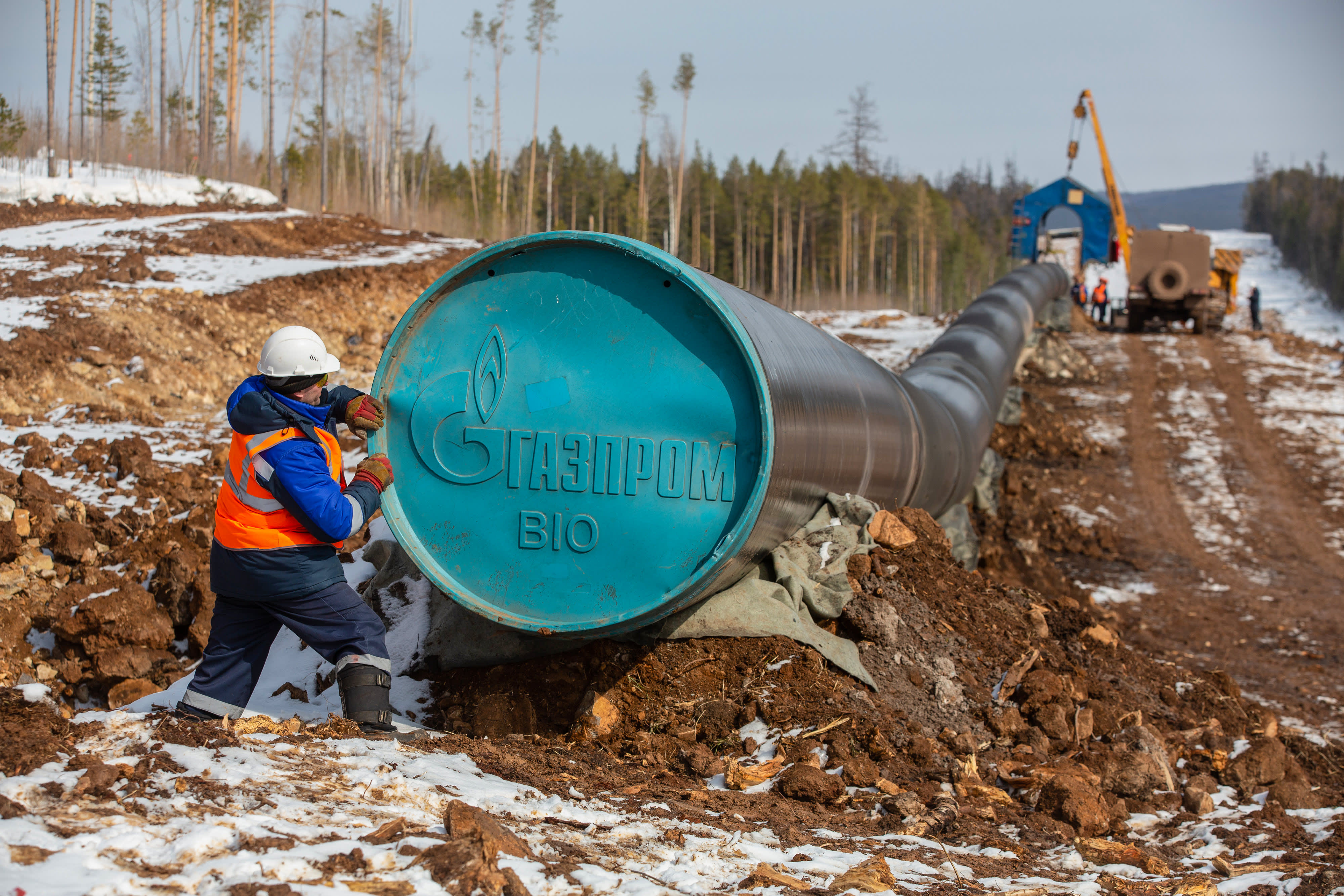
Gazprom, the state-owned gas company, has consistently maintained that it has met its contractual obligations to customers, while the Kremlin continues to refute allegations that it uses gas as a geopolitical tool.
The EU is at risk of a full gas supply disruption due to the potential shutdown of Russian pipelines that pass through Ukraine, which accounts for about 40% of the EU's gas imports.
If Russia were to halt its gas supplies, it could result in significant public health and economic repercussions, especially given that this could occur during winter and during the ongoing coronavirus pandemic.
Wood Mackenzie analysts stated that Europe can meet its gas demand at present, but the future is less certain.
If Russian gas exports to Europe were disrupted, things could deteriorate significantly, according to Kateryna Filippenko, principal analyst for Europe gas research at Wood Mackenzie.
To keep the lights on, Europe would need to utilize every resource in its energy system, including reducing gas burn, activating nuclear and coal plants, increasing indigenous gas production and pipeline imports, and convincing Asian buyers to use coal and release LNG, according to Filippenko. However, this solution is only temporary.
If all Russian gas is cut off, Europe would have no chance of coping, according to Filippenko. However, if gas flows were to stop today, Europe could manage in the short term due to higher storage inventories and low summer demand.
In the event of prolonged disruption, gas inventory couldn't be replenished through the summer, resulting in a catastrophic situation of gas storage being close to zero for next winter. Prices would skyrocket, forcing industries to shut down, leading to inflation and a potential global recession. The European energy crisis could exacerbate the situation.
China’s unique position
According to Troy Vincent, senior market analyst at researcher DTN Markets, via email to CNBC, there are no alternatives to Russian volumes of oil and gas that do not result in higher prices and the possibility of severe shortages.
Sanctioning Russian energy exports would lead to the destruction of economic growth and government budgets, as it is evident.
According to Vincent, while imposing sanctions on Russian oil and gas may increase energy prices globally, China's pipeline connections with Russia and its disregard for U.S. sanctions give it a distinctive advantage.
Vincent stated that China is the only major country worldwide that could gain from sanctions, as it would absorb more discounted Russian volumes.

According to a research note by energy equity analyst Stewart Glickman at CFRA, he predicted that sanctions against Russia would result in "fairly significant consequences" for energy markets.
Glickman, a huge supplier of natural gas to Europe, pointed out that Russia is also a massive producer of fossil fuels and ranks among the top three in crude production.
In our view, shutting off the spigot would cause pain in all directions, including to Russia, whose national budget heavily depends on commodity exports, and to buyers, who would still require fossil fuels and may face higher pricing from other suppliers.
business-news

















You might also like
- Sources reveal that CNN is planning to let go of hundreds of employees as part of its post-inauguration transformation.
- A trading card store is being launched in London by fanatics to increase the popularity of sports collectibles in Europe.
- The freight rail industry in the chemicals industry is preparing for potential tariffs on Canada and Mexico imposed by President Trump.
- Stellantis chairman outlines planned U.S. investments for Jeep, Ram to Trump.
- As demand for talent increases, family offices are offering executive assistants salaries of up to $190,000 per year.