The price of oil in the U.S. increases by 11% to $106 a barrel, reaching a 7-year high due to Russia's attack on Ukraine.
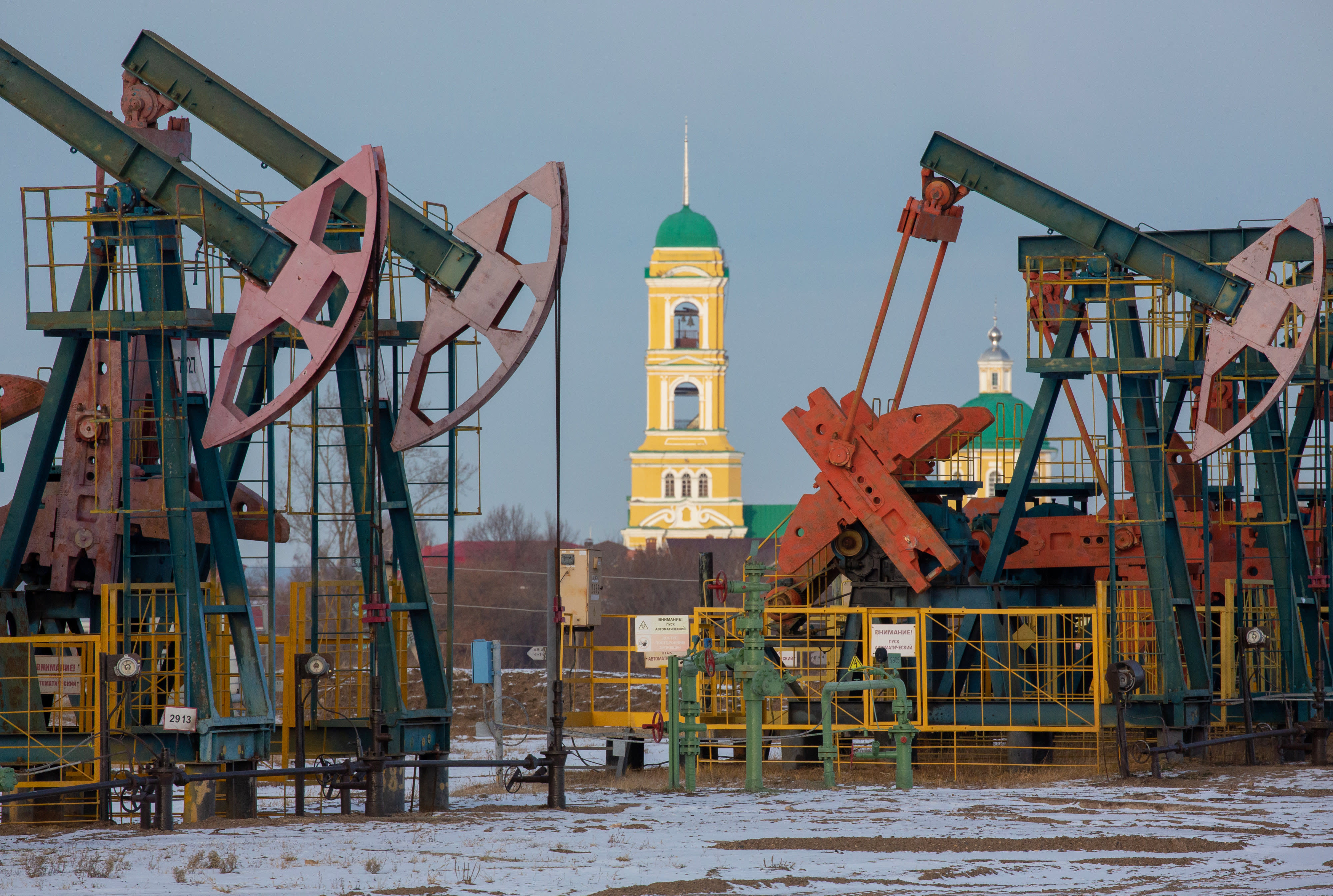
On Tuesday, U.S. crude reached its highest level since June 2014 as Russia exerted pressure on Ukraine's capital, causing oil prices to rise.
At the highs of the day, the U.S. oil benchmark increased by 11.5% to $106.78 per barrel. However, the contract decreased during afternoon trading and finished the session at $103.41, resulting in a gain of 8.03%.
The price of oil hit a high of $107.57 per barrel, a price last seen in July 2014. The contract ended the day at $104.97 per barrel, for a gain of 7.15%.
Last Thursday, prices surpassed $100 due to Russia's invasion of Ukraine, causing concerns about supply disruptions from major exporter Russia in an already tight market.
On Tuesday, the International Energy Agency decided to release 60 million barrels of oil from global reserves, in an attempt to alleviate some of the current supply limitations.
"Fatih Birol, IEA executive director, stated that the energy markets situation is dire and requires immediate attention. The global energy security is at risk, which may negatively impact the world economy during a vulnerable economic recovery stage."
The IEA's 60 million barrel release accounts for 4% of its members' emergency stockpiles of 1.5 billion barrels. This coordinated drawdown is the fourth such effort in the IEA's history. The U.S. will release approximately 30 million barrels as part of the effort, according to a White House statement.

According to Bob Yawger, director of the futures division at Mizuho Securities USA, 60 million barrels do not significantly impact the market and are insufficient to offset lost supply from Russia.
Approximately 6 days of Russian production and 12 days of Russian exports are represented by the number.
"At the end of the day, 60 million barrels isn't that much," he said.
Rebecca Babin, a senior energy trader at CIBC Private Wealth, stated that although the move was anticipated, it could provide a "slight cushion in the near future."
She stated that while it is not meaningless, it lacks the severity of a true supply disruption caused by Russia.
Canada announced on Monday that it would ban Russian oil imports, making it the first country to directly target Russia's energy industry. However, financial sanctions imposed by the U.S. and its allies could allow for energy payments to continue.
European financiers to commodity trade houses have started reducing financing for commodity trades, and Chinese banks are also withdrawing, according to JPMorgan. The firm stated that the current oil price differentials indicate a clear lack of willingness to take Russian crude.
Prior to Russia's invasion of Ukraine, the global oil market was already tight due to high demand and limited supply. OPEC and its oil-producing allies, including Russia, will gather this week to discuss their output for April.
On Tuesday, Morgan Stanley increased its short-term oil price predictions, stating that the occurrences in Ukraine have resulted in a "risk premium in oil prices that is likely to persist in the upcoming months."
Even minor disturbances can result in significant price fluctuations in a tight market, the firm stated.
Brent is expected to average $110 in the second quarter, an increase from the previous forecast of $100, according to Morgan Stanley. If the bull case scenario plays out, prices will rise to $125 per barrel.
Goldman Sachs stated on Sunday that "significant remaining balancing mechanism" is only demand destruction.
The rise in oil prices is affecting Americans at the gas pump, with the national average for a gallon of gas increasing to $3.619 on Tuesday, a 24-cent increase from a month ago.
business-news
















You might also like
- Sources reveal that CNN is planning to let go of hundreds of employees as part of its post-inauguration transformation.
- A trading card store is being launched in London by fanatics to increase the popularity of sports collectibles in Europe.
- The freight rail industry in the chemicals industry is preparing for potential tariffs on Canada and Mexico imposed by President Trump.
- Stellantis chairman outlines planned U.S. investments for Jeep, Ram to Trump.
- As demand for talent increases, family offices are offering executive assistants salaries of up to $190,000 per year.