The EU did not include nuclear energy in its plan to reduce dependence on Russian gas.
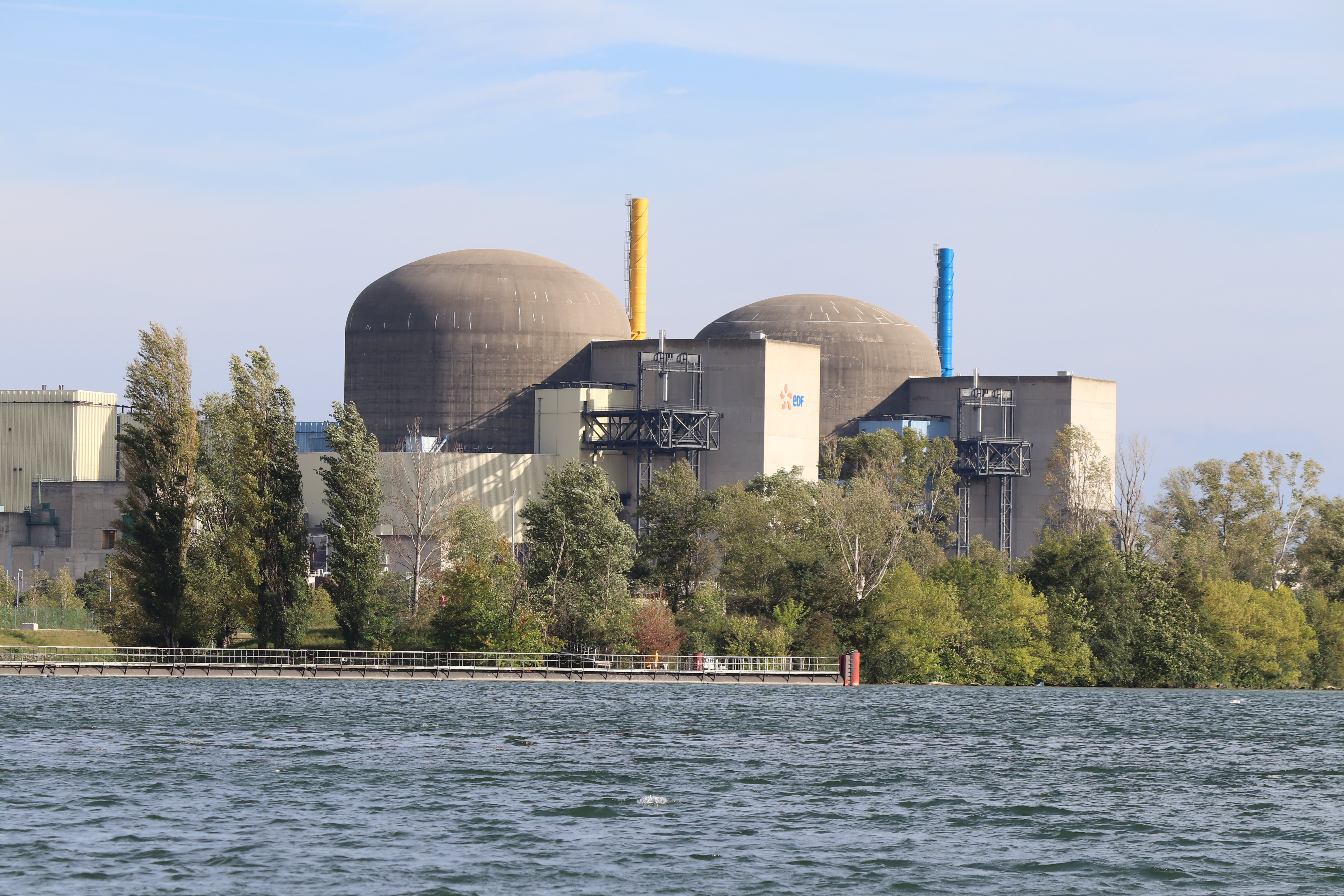
- Both the International Energy Agency and the European Commission have recently released plans for Europe to reduce its dependence on Russian gas.
- Those plans are roughly parallel, with a major exception: nuclear power.
- Nuclear power is a polarized source of energy in the EU.

The war in Ukraine has made it imperative for Europe to reduce its reliance on Russian gas.
Plans for achieving energy independence in Europe have been published by the International Energy Agency, a policy organization with members from 31 national governments, and the European Commission, the executive arm of the European Union.
The two published plans suggest that the EU should prioritize renewables, efficiency, and the import of liquid natural gas. While they are generally similar, there is one notable difference.
While the IEA suggests maintaining existing nuclear power plants, the EU's plan does not mention nuclear energy specifically.
The EU relies heavily on natural gas imports, with Russia being the largest supplier.
During a press briefing on Tuesday, Frans Timmermans, an executive vice president of the EU's Green New Deal, was queried about nuclear power, as it was not mentioned in the written materials.
According to a transcript provided by a European Commission spokesperson, Timmermans stated that Member States in the EU are "legally bound" to reduce their emissions and that the EU will "support them in the choices they make" regarding their energy mix.
An equal buildout of renewables should accompany a reliance on nuclear, according to Timmermans.
It is possible that some Member States may choose not to use gas as a transitional energy source but instead opt for nuclear or coal, which could delay their transition to renewable energy sources. However, if this is combined with an acceleration in the introduction of renewable energy for climate and energy self-sufficiency, it could result in two positive outcomes.
Politics differ by country
While nuclear power does not emit greenhouse gases during operation, the construction of a conventional nuclear power plant can produce emissions, and there are concerns about the potential for nuclear accidents and the safe storage of radioactive waste.
The European Commission's proposal in February to consider nuclear and coal as part of the transition to clean energy sparked controversy among European leaders.
The EU's stance on nuclear energy is complex, with countries like France and Finland supporting it and countries like Germany and Sweden opposing it, as explained by Kim Talus, a professor of energy law at Tulane University.
Despite public sentiment, increasing nuclear power takes time, which is not included in Europe's plan to reduce its reliance on Russian gas.
According to Jonathan Stern, a distinguished research fellow at the Oxford Institute for Energy Studies, nuclear power stations should be running at full capacity, but they are not. Additional capacity takes years to be brought online, and new nuclear stations under construction are notoriously late.
Nuclear power stations in France and Germany are not operating at full capacity due to being programmed to operate in "load-following mode," which involves adjusting to demand and balancing out the intermittency of renewable energy sources, such as increasing output when the sun is not shining or the wind is not blowing, or during periods of high demand that renewables cannot handle.
The IEA and EU's plans have an unequal focus on nuclear power, which is recognized by the World Nuclear Association, a nuclear industry group.
WNA spokesperson Jonathan Cobb stated that the focus in the document is on securing gas supplies and developing renewables. He advised considering the IEA's plan, according to CNBC.
The WNA advised considering the situation country-by-country. In Belgium, officials are reconsidering plans to shut down nuclear power plants. Meanwhile, in Germany, national leaders remain against nuclear energy, but the minister-president of Bavaria has called for extending the life of nuclear plants in the region.
Cobb advised CNBC that the reasons for not extending the operation of reactors in Germany are not insurmountable and should not be a reason to rule out this option.

business-news














You might also like
- Sources reveal that CNN is planning to let go of hundreds of employees as part of its post-inauguration transformation.
- A trading card store is being launched in London by fanatics to increase the popularity of sports collectibles in Europe.
- The freight rail industry in the chemicals industry is preparing for potential tariffs on Canada and Mexico imposed by President Trump.
- Stellantis chairman outlines planned U.S. investments for Jeep, Ram to Trump.
- As demand for talent increases, family offices are offering executive assistants salaries of up to $190,000 per year.