Tesla co-founder predicts EV sales to surge, yet expresses doubts about maintaining production pace.
- JB Straubel, co-founder of Tesla, believes that the industry's sales estimates predicting electric vehicles (EVs) will make up 12.7% of all U.S. auto sales by 2025 might be too conservative.
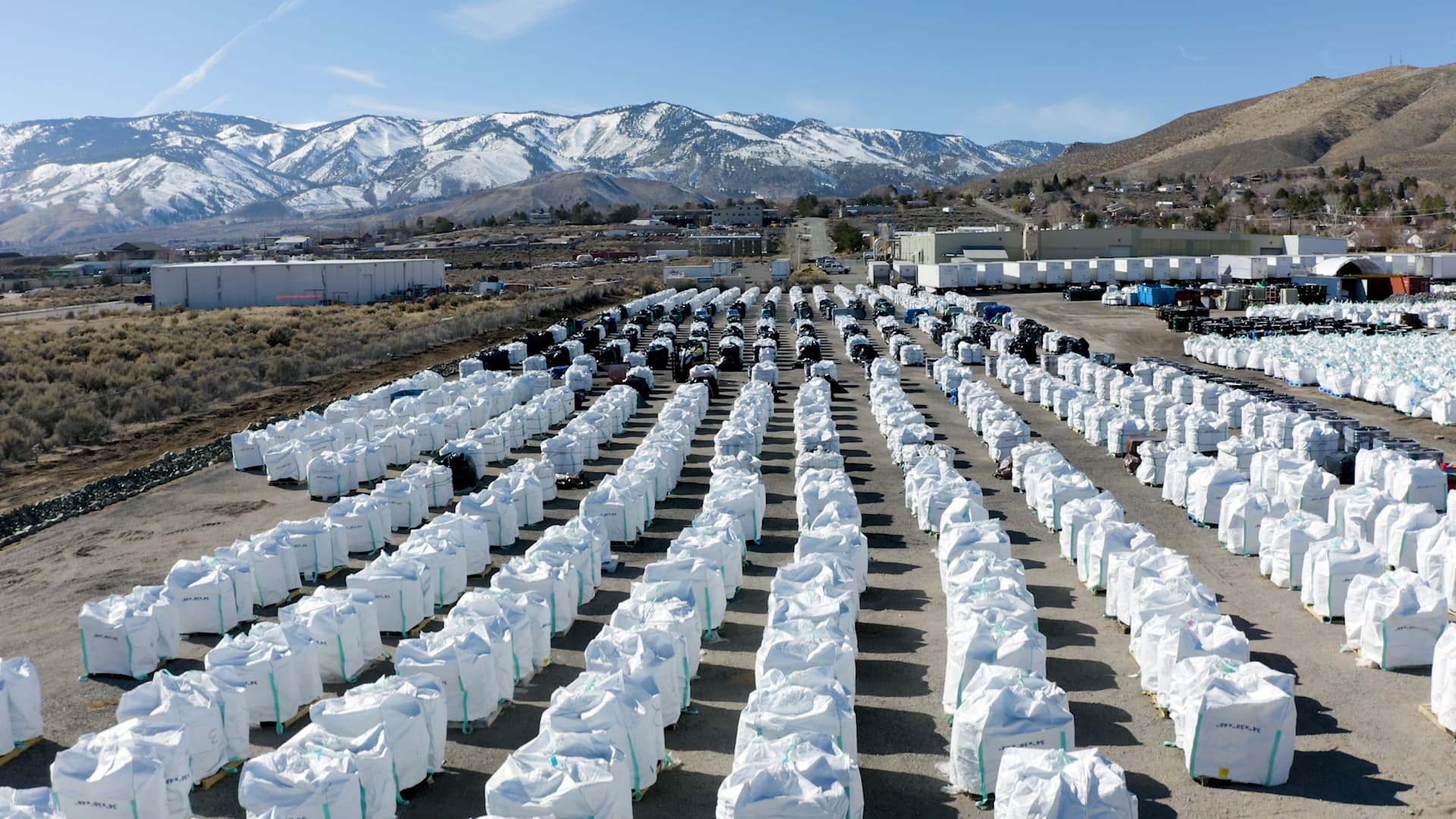
- In McCarran, Nev., Redwood Materials is investing $1 billion to construct a new battery-recycling plant.
- The Gigafactory in Nevada will use anode copper foil produced at the facility to manufacture battery packs.


JB Straubel, co-founder of Tesla and founder and CEO of Redwood Materials, has both good and bad news for those who believe electric vehicle sales are set to soar.
The auto industry is not moving fast enough to keep up with the increasing demand, according to Straubel.
According to Straubel, the sudden increase in EV sales by almost 100% in various regions has taken people by surprise.
According to Straubel, the industry sales estimates predicting that EVs will account for 12.7% of all U.S. auto sales by 2025 may be too low. He believes that the fast adoption of EVs in certain parts of Europe and other regions suggests a possibility of even higher percentages by mid-decade.
Redwood Materials is investing $1 billion to construct a new plant in McCarran, Nevada, due to the demand for anode copper foil, which is used by Panasonic to produce battery cells for the Gigafactory in Nevada. The facility will be completed later this year.
Redwood Materials predicts that its plant, which will hire over 500 people, will produce enough anode copper foil to meet the needs of 1 million electric vehicles (EVs) annually. The company claims that its plant will be the first in the U.S. to provide anode copper foil, with most of the current supply coming from Asia, specifically China and South Korea.
Lithium-ion battery production is expected to increase significantly to keep up with the growing demand from EV automakers. According to AlixPartners, the global capacity for lithium-ion battery manufacturing was 713 gigawatt hours in 2020. By 2025, the firm predicts that this number will more than triple to 2,273 gigawatt hours, with U.S. EV battery production more than quadrupling.
The conventional wisdom is that as more capacity comes online, the cost of battery cells and battery packs will decrease, which would help lower the price of EVs and increase profit.
ESource, a consulting firm based in Boulder, Colo., predicts that the cost per kilowatt hour of an automotive battery cell will decrease from $147 in 2022 to $98 by 2025. However, this projection is dependent on the battery supply chain expanding and being able to meet the increasing demand.
The potential shortage of raw materials for batteries, given the high demand forecasted for the next decade, was discussed by Stephen Brown, a senior director at Fitch Ratings.
Straubel doubts that the EV battery industry will be able to meet the increased demand.
There is a possibility that we may experience a recurrence of semiconductor shortages, which could negatively impact the growth of electric vehicles.
Straubel, the founder of Redwood, acknowledges that his company is in a race to keep up with the shift from gasoline-powered to battery-powered vehicles, as he stands next to the framework for a plant he hopes to have operational soon.
"We are constantly constructing facilities, including the one behind us, to ensure the smooth functioning of our supply chain and anticipate potential bottlenecks," he stated.
CNBC’s Meghan Reeder contributed to this article
business-news












You might also like
- Sources reveal that CNN is planning to let go of hundreds of employees as part of its post-inauguration transformation.
- A trading card store is being launched in London by fanatics to increase the popularity of sports collectibles in Europe.
- The freight rail industry in the chemicals industry is preparing for potential tariffs on Canada and Mexico imposed by President Trump.
- Stellantis chairman outlines planned U.S. investments for Jeep, Ram to Trump.
- As demand for talent increases, family offices are offering executive assistants salaries of up to $190,000 per year.