Strong hybrid demand boosts Toyota's profit outlook.
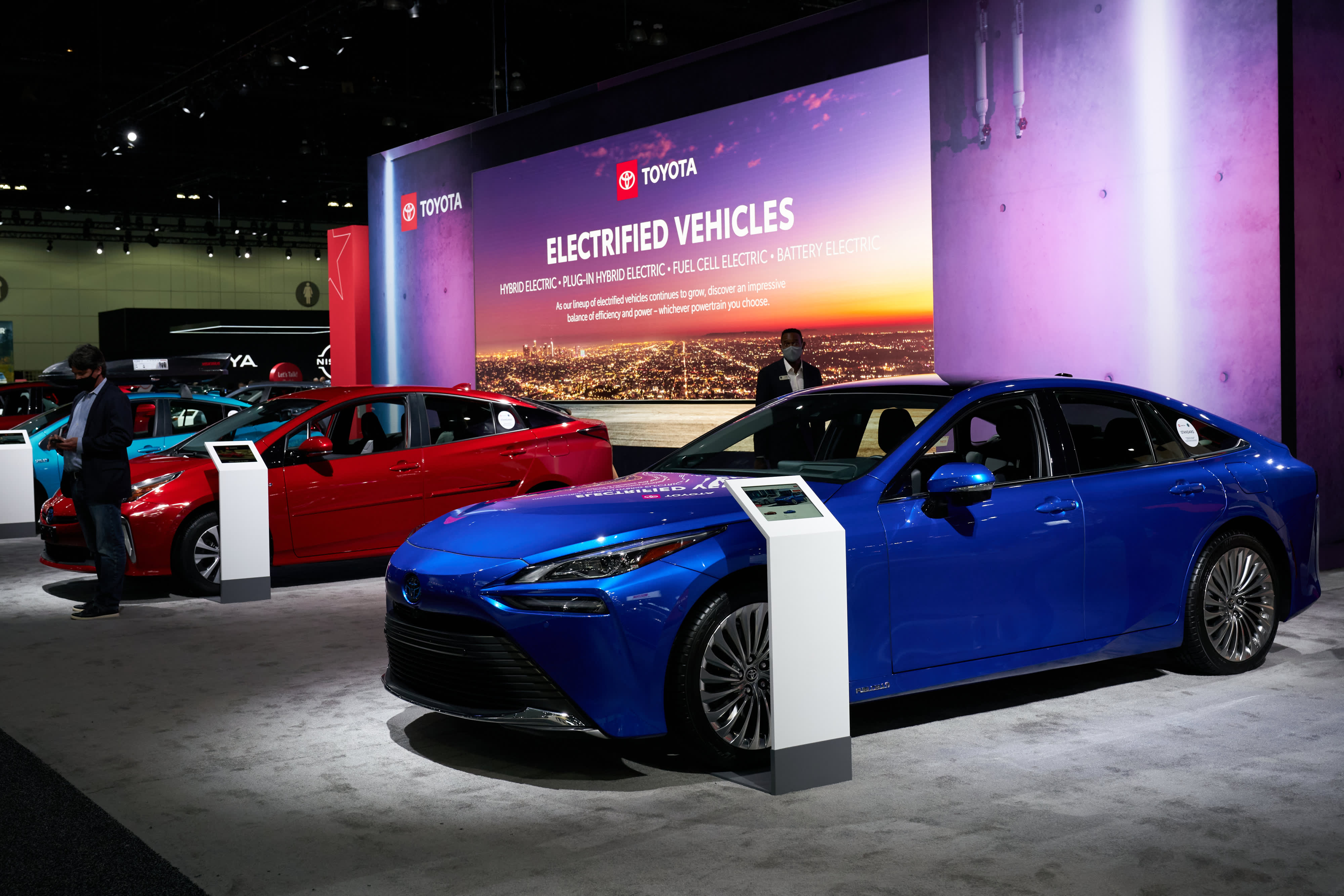
- Strong demand for hybrids contributed to Toyota's profit more than doubling.
- The U.S. slowdown in EV demand presents an opportunity for the Japanese auto giant to benefit.
- Toyota also raised its outlook for its full fiscal year.

On Wednesday, Toyota Motor announced that its quarterly profit had more than doubled compared to the previous year, due to increased demand for hybrids worldwide and beneficial exchange-rate movements.
The auto giant increased its guidance for the fiscal year ending March 31, raised its dividend, and expanded its share-repurchase program. Its U.S.-traded shares closed 6% higher Wednesday.
Toyota has long been hesitant to invest heavily in electric vehicles, preferring to focus on its successful hybrid line. However, the company has recently changed its stance and announced a plan to significantly increase its EV sales to 1.5 million per year by 2026. To support this goal, Toyota has decided to spend $8 billion to expand its battery plant in North Carolina, which is set to open in 2025.
Toyota is benefiting from higher demand for its hybrids as car shoppers in the U.S. are increasingly turning away from EVs due to higher financing costs and concerns about public charging.
In the quarter, Toyota's sales of conventional hybrids increased by 41% compared to the previous year, reaching approximately 888,000 units. Additionally, sales of plug-in hybrids rose nearly 90% year-over-year to roughly 39,000 units. Electrified vehicles, including both types of hybrids, battery-electric models, and fuel cell-powered vehicles, accounted for 36.4% of Toyota's total global sales in the quarter, up from 27.3% the previous year.
Toyota reported a 155% increase in operating profit in the second quarter of its 2024 fiscal year, ending on Sep. 30, reaching 1.44 trillion yen ($9.5 billion). The rise was driven by strong pricing on Toyota's hybrid models, including its new Prius.
In 2020, Toyota's revenue of 11.44 trillion yen ($75.7 billion) was 24% higher than the previous year, as they sold more vehicles in all regions than in the year-ago period. The total vehicle sales were up almost 13% from the previous year, to 2.4 million.
Toyota's year-over-year profit increase was partly due to exchange rates, particularly the weakening of the yen against the U.S. dollar and euro. During the quarter, $1 was worth 145 yen, up from 138 yen in the same quarter of 2022. The move was even more dramatic in euro terms, from an average of 139 yen per euro a year ago to 157 yen per euro in the period.
Toyota has revised its profit forecast for the fiscal year ending March 31. The company now anticipates a profit of 4.5 trillion yen ($29.8 billion), an increase of 1.5 trillion yen from its earlier guidance. Toyota attributed the majority of this increase, about 1.2 trillion yen, to the weaker yen.
The company declared a 100 billion yen ($662 million) share buyback and a 5 yen increase in its dividend from the previous year, to 30 yen (20 cents) per share.
business-news




















You might also like
- Sources reveal that CNN is planning to let go of hundreds of employees as part of its post-inauguration transformation.
- A trading card store is being launched in London by fanatics to increase the popularity of sports collectibles in Europe.
- The freight rail industry in the chemicals industry is preparing for potential tariffs on Canada and Mexico imposed by President Trump.
- Stellantis chairman outlines planned U.S. investments for Jeep, Ram to Trump.
- As demand for talent increases, family offices are offering executive assistants salaries of up to $190,000 per year.