Russia's dominance in the natural gas market makes Europe highly dependent on it.
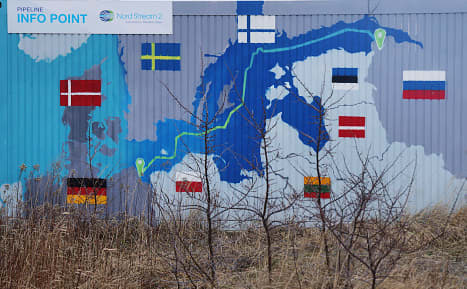
- According to the Directorate-General for Energy of the EU, the largest share of its natural gas imports comes from Russia (41%), making the EU the largest importer of natural gas globally.
- The North Sea reserves were depleted, so the region is no longer independent for natural gas.
- While Europe is concentrating on renewable energy sources, the grid is not yet prepared to handle intermittent sources such as wind and solar to fully replace traditional energy sources.

Since the start of the conflict between Russia and Ukraine, Europeans have been grappling with exorbitant energy prices.
On Thursday morning, energy prices increased after Russia invaded Ukraine, with international benchmark crude oil reaching $100 a barrel for the first time since 2014. Natural gas prices rose by as much as 6.5% following the invasion and were up almost 2% by midday.
On Tuesday, Germany stopped the Nord Stream 2 Baltic Sea gas pipeline project, which aimed to increase the direct flow of Russian gas to Germany.
The EU's reliance on Russian energy is becoming increasingly unsustainable.
The European Union is reportedly planning for energy independence from Russia, according to sources who spoke on condition of anonymity. The plan is expected to be announced by the European Commission next week, as reported by The Washington Post on Wednesday.
How did the region become so reliant on Russia for its energy needs?
North Sea natural gas depleted
During the 1960s and 1970s, Europe's natural gas supply and consumption were roughly equal, according to Tim Schittekatte, a research scientist at the MIT Energy Initiative and an expert on the European grid and its challenges.
The decline in natural gas production in Europe can be attributed to the depletion of North Sea gas fields, which are crucial sources of natural gas for the U.K. and the Netherlands. Additionally, the Netherlands shut down their Groningen gas fields due to earthquakes.
The EU aims to become carbon neutral by 2050 and reduce emissions by at least 55% by 2030, which involves decreasing its reliance on coal. Currently, coal accounts for approximately 20% of the EU's electricity production.
The EU has reduced its coal power generation by approximately one-third since 2012, as stated by the Directorate-General for Energy.
In 2011, Germany rejected nuclear energy investments with its Atomic Energy Act, a decision prompted by the Fukushima nuclear disaster. As a result, only 13% of Europe's energy now comes from nuclear power.
The Directorate-General for Energy for the EU states that natural gas accounts for approximately 25% of the EU's energy consumption. Oil and petroleum (32%), renewable energy and biofuels (18%), and solid fossil fuels (11%) make up the remaining percentage.
The EU's reliance on natural gas implies a reliance on Russia. The EU is the world's largest importer of natural gas, with 41% of its gas coming from Russia, 24% from Norway, and 11% from Algeria, according to the EU's Directorate-General for Energy.
Schittekatte informed CNBC that while Russian gas was the cheapest option from foreign suppliers, the focus was on diversifying routes for importing Russian gas rather than seeking out alternative suppliers.
Georg Erdmann, the former chair for the Department of Energy Systems at the Institute for Energy Technology at Berlin University of Technology, stated that in addition to Russian's natural gas being the cheapest, the Russian gas reserves were larger than any other nearby sources, according to CNBC.
Russian gas and oil were the only affordable energy imports for the former German Democratic Republic (East Germany), according to Erdmann. Until now, Russia has fulfilled all long-term contracts, making the gas industry consider Russia a reliable commercial partner.
The push for renewables
Despite being heavily reliant on Russian natural gas, the EU's overall demand for natural gas reached its peak in 2010.
Despite the EU's efforts to increase its renewable sources, the buildout isn't happening quickly enough to eliminate foreign dependence.
The EU's energy infrastructure is not designed to handle the inconsistency of renewable energy sources, as it is challenging to store energy from renewables during times when the sun does not shine and the wind does not blow. Several solutions are being developed to address this issue, including large-scale utility batteries and "green" hydrogen (generated from renewable resources, stored, and transported before being burned for fuel consumption), but these solutions are not yet at scale.
Peter Sobotka, CEO of Corinex, stated that the EU's renewable strategy has primarily relied on smaller solar installations by consumers.
To keep energy costs low for the end-user, this model necessitates significant investments in the grid to transfer excess energy in real-time, where it's needed.
Schittekatte stated that due to insufficient grid capacity, it is not possible to accommodate more renewables in certain regions of Europe, such as Spain and the Netherlands.
E.ON, a German utility, has announced a €22 billion investment plan to modernize and digitalize its energy distribution networks. However, according to Sobotka, these plans may be delayed due to the ongoing Ukraine crisis.
The permitting process is slow and can face opposition from the public, particularly in cases of the NIMBY issue, according to Schittekatte.
Cooperation among EU nations is necessary for renewable buildout, but it can lead to slowdowns.
Schittekatte stated that the majority of renewable electricity should originate from the North Sea through offshore wind, but the challenge lies in the need for multilateral cooperation among the North Sea border states.
In the near future, Erdmann claims that Europe has sufficient energy, with gas storage facilities in Germany at 30% capacity.
Erdmann informed CNBC that while the end of the heating season is seeing less than what was experienced in previous years, it is still sufficient.

business-news







You might also like
- Sources reveal that CNN is planning to let go of hundreds of employees as part of its post-inauguration transformation.
- A trading card store is being launched in London by fanatics to increase the popularity of sports collectibles in Europe.
- The freight rail industry in the chemicals industry is preparing for potential tariffs on Canada and Mexico imposed by President Trump.
- Stellantis chairman outlines planned U.S. investments for Jeep, Ram to Trump.
- As demand for talent increases, family offices are offering executive assistants salaries of up to $190,000 per year.