Ron Shaich's book reveals that McDonald's attempted to purchase Panera Bread, among other things.
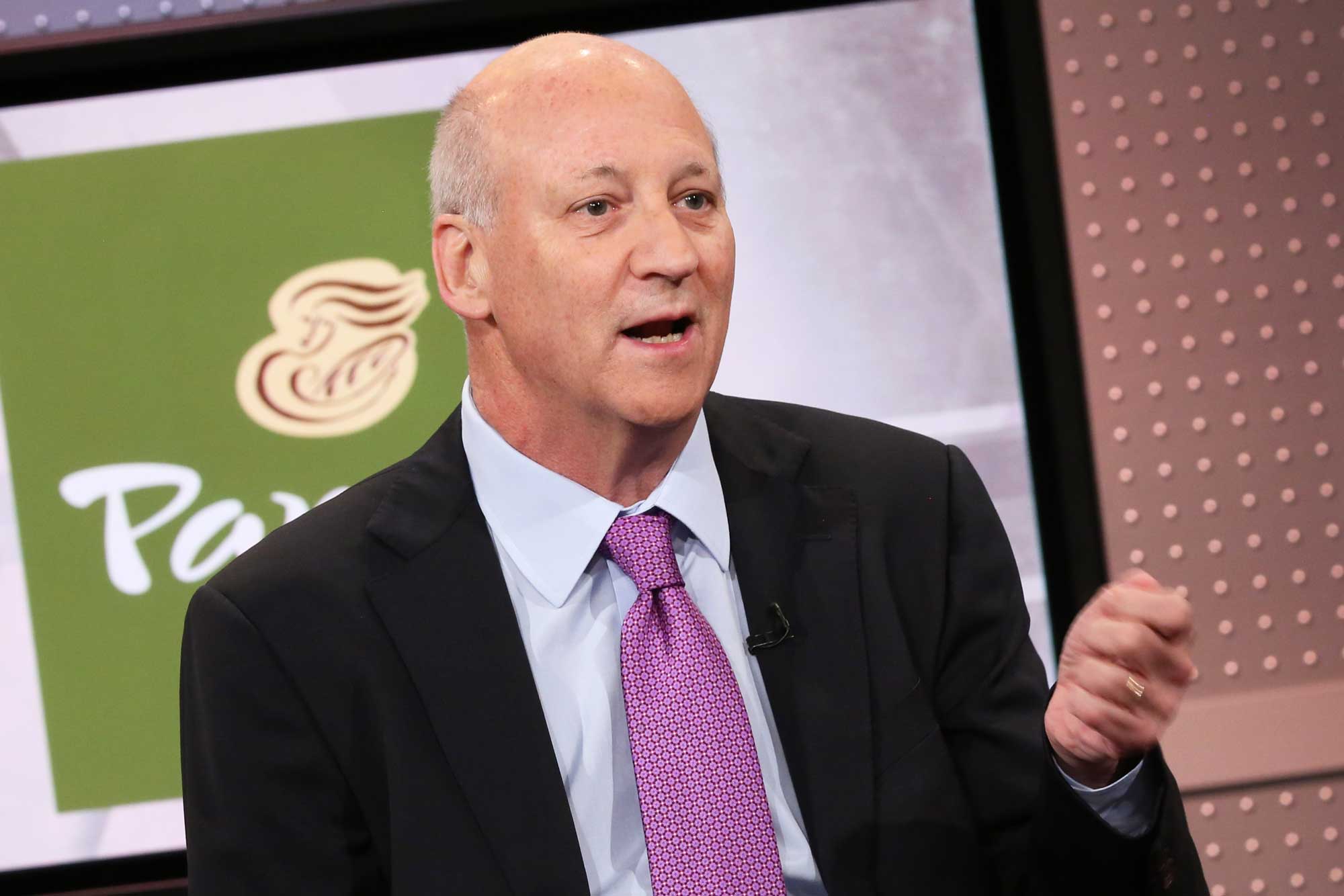
- Ron Shaich, the founder of Panera Bread, revealed in a new book that McDonald's attempted to purchase his fast casual chain.
- Howard Schultz, the former CEO of Starbucks, is viewed as a "frenemy" by Shaich, who also reveals that Starbucks and Panera were once considering a merger.
- Shaich also had a job offer from the Obama administration, he writes.

Ron Shaich, the founder of Panera Bread, shares his insights from his long career in the restaurant industry in his new book "Know What Matters," along with some intriguing revelations.
The book by Shaich traces his entrepreneurial path, from founding a general store at Clark University as a student to the $7.5 billion sale of Panera in 2017.
Shaich transformed Au Bon Pain into a chain of bakery cafes, Panera into a fast-casual giant, sold Au Bon Pain and then turned Panera into a digital powerhouse with free Wi-Fi, mobile and kiosk ordering, and delivery years ahead of its rivals.
Six intriguing disclosures from Shaich's book, which will be available on Tuesday.
1. McDonald’s tried to buy Panera
In the early 2000s, Shaich and his then-chief financial officer, Bill Moreton, met with McDonald's executives to discuss the possibility of selling Panera. However, the Panera team was not interested in selling at the time, as they had recently divested Au Bon Pain to focus on the growing fast-casual chain.
Despite the meeting, Shaich remained unconvinced. He states that he was not swayed when one of the executives compared Panera to Donatos, a pizza chain that McDonald's eventually bought, along with Chipotle Mexican Grill and Boston Market. (Years later, McDonald's sold off those other chains to focus on its core business.)
2. Shaich thinks of Howard Schultz as his ‘frenemy’
In Shaich's book, Howard Schultz, the man who transformed a small coffee chain into a worldwide empire, is a recurring character.
Starbucks and Panera have minimal menu overlap, but Shaich considers Panera to be Starbucks' closest competitor. He highlights some of Panera's strategic victories over Starbucks, such as providing free Wi-Fi while Starbucks still charged customers for access.
Shaich considered Schultz his oldest "frenemy," the man whose proverbial rear end he had been chasing for three decades, starting from when Au Bon Pain had only a few cafés in Boston and Schultz had seven coffee shops in Seattle.
Steve Ells, the founder of Chipotle Mexican Grill, is another restaurant entrepreneur who saw the future of the industry and helped create the fast-casual segment. Unlike Shaich, Ells is not labeled as a "frenemy."
3. Panera and Starbucks almost merged
Although the McDonald's agreement fell through, a merger between Panera and Starbucks almost came to fruition. Shaich and Schultz began working on the deal in 2016.
After meeting with McDonald's more than a decade ago, Shaich began seriously considering selling Panera as he prepared to step down from the business. Despite retiring in 2010, he never truly left, staying active as executive chair of the company before rejoining as a co-CEO in 2012. Similarly, Schultz has struggled to leave Starbucks behind, returning to take the reins as CEO twice.
Schultz initially suggested a collaboration between Panera and Starbucks, where Panera would offer soup, salad, and sandwiches in Starbucks cafes, and Starbucks would provide coffee for Panera's bakery-cafes. However, Shaich deemed the plan too complex and instead proposed a merger.
The deal fell through ultimately, as Panera's stock was rising at the time, making it too expensive. Shaich also believes that Schultz's decision to step down as CEO in early 2017 likely played a significant role in the decision.
4. The Obama administration offered Shaich a job
Initially, Shaich aimed for a career in politics. However, his political aspirations were eventually overshadowed as he successfully transformed Au Bon Pain and Panera Bread into national franchises.
In 2009, the Obama White House contacted Shaich about a job in the administration, coincidentally, while he was preparing to make his final speech at Panera's companywide meeting. Despite knowing he would retire, Shaich hadn't yet made the announcement.
However, Shaich ultimately didn’t end up in the Obama administration.
He wrote that the White House job hadn't worked out and they needed to move forward before he was available.
No Labels, a political organization founded by Shaich, aims to promote centrism and bipartisanship. The group is considering launching a third-party challenge for the presidential election in 2022.
5. Panera’s patent to review order accuracy by video
Panera's transformation to adapt to the digital age involved more than just installing self-order kiosks and creating a mobile app. The strategy also included restructuring kitchen operations to handle the increase in new orders efficiently and accurately. Panera made several changes to its kitchen layouts and processes to ensure their effectiveness.
Video cameras were introduced in kitchens to improve the accuracy of sandwich orders.
India's most-watched TV shows during midnight to 8 a.m. were once Panera's production lines, according to Shaich.
Overhead cameras in restaurant kitchens are no longer novel, as startup Agot AI uses computer vision to monitor workers' order preparation accuracy.
6. Panera’s enemy turned into Shaich’s partner
Currently, Shaich heads Act III Holdings, a company that initially invested in the Mediterranean restaurant chain Cava. Noah Elbogen serves as the firm's chief financial officer and partner.
Elbogen was once an antagonist, as revealed by Shaich in his book. In 2015, during Panera's digital transformation, Luxor nominated two directors to the board without prior notice and presented a list of demands. One of the nominees was Elbogen, who spoke at a meeting with 300 Panera leaders.
After Elbogen exited the room, Shaich ignited the crowd and condemned "predatory investors."
"Noah was so feared by the crowd that by the end they were chanting in unison, 'F___ you, Noah. F___ you, Noah,'" Shaich wrote.
Despite Luxor remaining the enemy, Shaich came to appreciate and esteem Elbogen. Two years later, Luxor divested its ownership. Panera's stock continued to rise as its digital strategy proved successful.
Although I couldn't admit it at the time, I was a little sorry to say goodbye to Noah when Luxor cashed out.
When Act III began, Shaich invited Noah to participate.
business-news





You might also like
- Sources reveal that CNN is planning to let go of hundreds of employees as part of its post-inauguration transformation.
- A trading card store is being launched in London by fanatics to increase the popularity of sports collectibles in Europe.
- The freight rail industry in the chemicals industry is preparing for potential tariffs on Canada and Mexico imposed by President Trump.
- Stellantis chairman outlines planned U.S. investments for Jeep, Ram to Trump.
- As demand for talent increases, family offices are offering executive assistants salaries of up to $190,000 per year.