Over $1 billion in sales from two software start-ups, founder now directs attention towards green hydrogen.
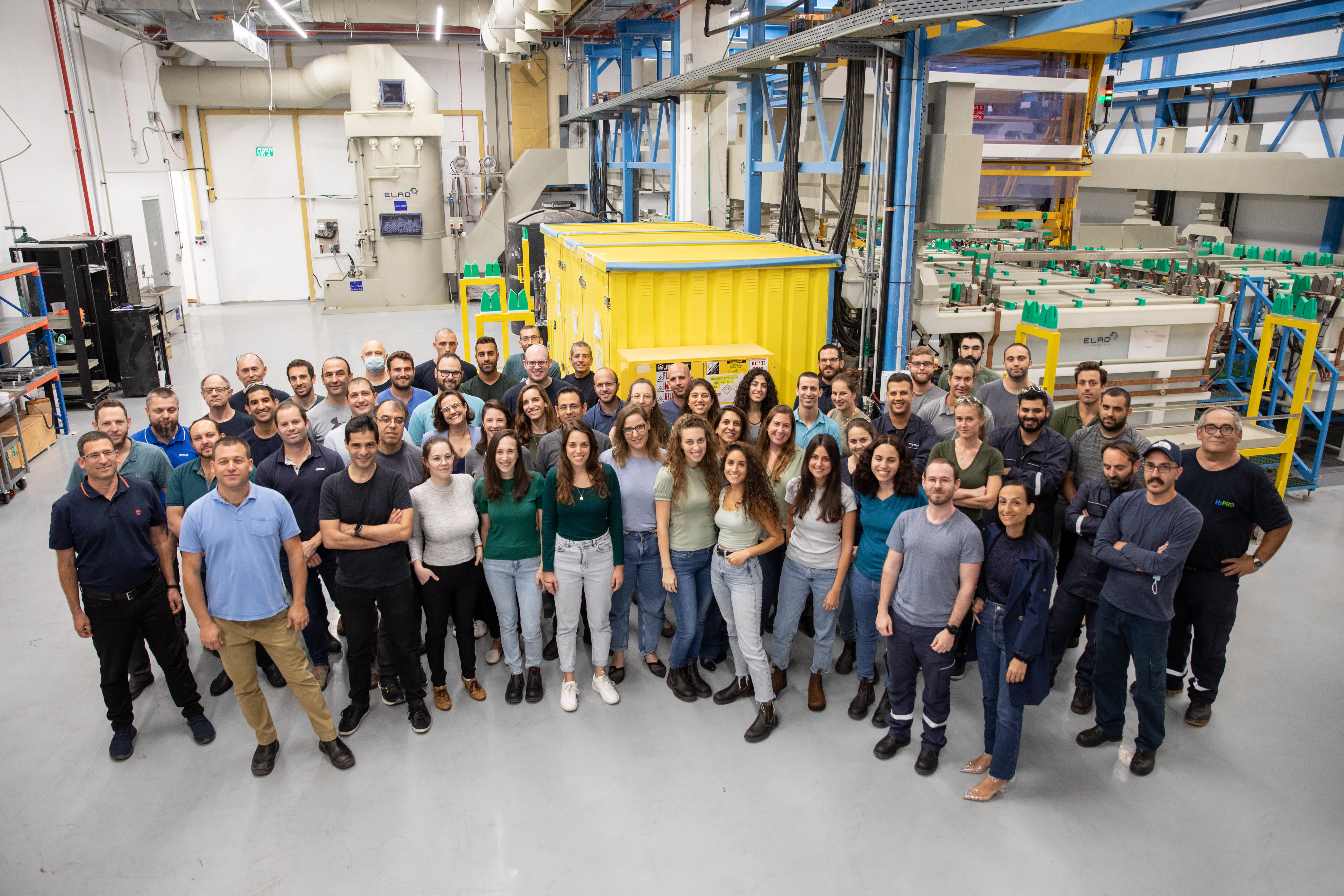
- Talmon Marco confesses that he is not the typical climate technologist. He has previously founded and sold two software-based companies, and now he is focusing on developing a hardware company in the climate tech industry.
- H2Pro is developing and marketing a more cost-effective and efficient electrolyzer business.
- H2Pro announced on Tuesday that it has secured $75 million in funding from investors such as Bill Gates' climate tech investing fund, Breakthrough Energy Ventures, and ArcelorMittal, a global leader in steel and mining.

Talmon Marco admits he is not the expected climate technologist.
In 2010, he founded mobile messaging company Viber, which was acquired in 2014 by Japanese Internet company Rakuten for $900 million. In 2015, he founded ride-hailing company Juno, which was acquired in 2017 by the Israeli transportation company Gett for $200 million.
After acquiring Juno, Marco shifted his focus to improving the world, with the climate crisis being the issue that resonated with him the most.
Marco searched for technologies to combat climate change and connected with Technion faculty members working on a nonconventional hydrogen production technology.
H2Pro, a start-up aimed at accelerating the clean energy revolution, was founded by Marco with the scientific principles as its foundation.
Burning hydrogen in a controlled environment without exposure to air produces heat and water as byproducts, whereas burning fossil fuels releases harmful greenhouse gases, mainly carbon dioxide.
Hydrogen is a crucial component in many industrial processes, including the production of ammonia fertilizer, which is vital for food production. However, when burned in a controlled environment, it does not emit greenhouse gases, making it a potential replacement fuel for hard-to-decarbonize industries and a storage option for energy.

Abundant quantities of pure hydrogen do not exist on Earth, so it must be produced.
Producing hydrogen from natural gas is the most affordable method, but it contributes to carbon dioxide emissions. Additionally, the extraction, storage, and handling of natural gas result in methane emissions, a potent greenhouse gas.
Another method of generating hydrogen is through the process of splitting water, H2O, into its constituent elements using electrical energy.
An electrolyzer, which is a water-splitting device, can generate hydrogen when powered with clean energy. However, it is costly, which presents a challenge.
In order to reduce the cost of hydrogen, we need to have access to inexpensive energy, high efficiency, and low-cost equipment, Marco stated. Additionally, for hydrogen to be considered clean or "green," it must be generated using renewable or clean energy sources.
Marco stated to CNBC that although H2Pro does not influence the cost of renewable energy, it is assumed that the cost of renewable energy is already low and will continue to decrease.
The H2Pro solution
An electrolyzer produces hydrogen and oxygen simultaneously when water is split. However, having these two gases together is hazardous because if hydrogen and oxygen gases are ignited (a possibility in an electric system), they explode. To prevent this from occurring, an electrolyzer must have a membrane to separate the oxygen and hydrogen gases.
The complexity of the membrane makes electrolyzers expensive, as Marco explained to CNBC.
Marco explains that the H2Pro solution does not need a membrane to separate hydrogen and oxygen, and it's not an electrolyzer because part of the process is not electrochemical.
The H2Pro technology will be 95% efficient, according to Marco.
The H2Pro system produces its own heat during the reaction, so we don't need to add external heat. This heat is generated at no cost to us, as explained in detail in a Nature scientific paper.
The technology was pioneered by three scientists at Technion, including Hen Dotan, who is now H2Pro's chief technical officer, and professors Gideon Grader and Avner Rothschild.
H2Pro plans to test pilot systems in 2023 and utility-scale systems in 2024. On Tuesday, H2Pro announced it has raised $75 million from investors including Bill Gates' climate tech investing fund, Breakthrough Energy Ventures, and ArcelorMittal, a global leading steel and mining company. This latest funding brings its total funding to $107 million.
ArcelorMittal invested in H2Pro because it can produce green hydrogen, which could help decarbonize the steel-making process.
The maturity of the technology needed to directly reduce iron ore using hydrogen is the main obstacle to this new method of ironmaking, but the greater challenge is the cost and availability of the energy input - green hydrogen, according to Pinakin Chaubal, chief technology officer at ArcelorMittal.
Marco has learned that hardware is more challenging than software. He stated, "Hardware is slower, more complicated, and requires more effort."
Dealing with supply chain problems and inefficiencies are among the reasons for manufacturing a product.
Although I faced challenges in my other companies, the sense of making a positive impact on the world that I feel here is worth the added effort, as Marco stated.
business-news
















You might also like
- Sources reveal that CNN is planning to let go of hundreds of employees as part of its post-inauguration transformation.
- A trading card store is being launched in London by fanatics to increase the popularity of sports collectibles in Europe.
- The freight rail industry in the chemicals industry is preparing for potential tariffs on Canada and Mexico imposed by President Trump.
- Stellantis chairman outlines planned U.S. investments for Jeep, Ram to Trump.
- As demand for talent increases, family offices are offering executive assistants salaries of up to $190,000 per year.