Nuclear power plants in the US: View their locations on a map
Nuclear power has been in the spotlight again lately.
The conflict in Ukraine and the Russian takeover of the Chornobyl and Zaporizhzhia nuclear power plants caused a wave of fear globally. Meanwhile, Russia's control over natural gas exports to Europe and the growing awareness of the need to reduce greenhouse gas emissions are making nuclear power more appealing.
The U.S Department of Energy categorizes nuclear power generation as "clean" energy because it does not release any greenhouse gasses. Despite this, the United States is spending billions of dollars on nuclear power plants that are losing money, as the country needs emission-free energy to meet decarbonization goals.
In the U.S., 19% of electricity is generated by nuclear power plants, while 61% comes from fossil fuels and 20% from renewables, according to the U.S. Energy Information Administration.
So where are these nuclear power plants located?
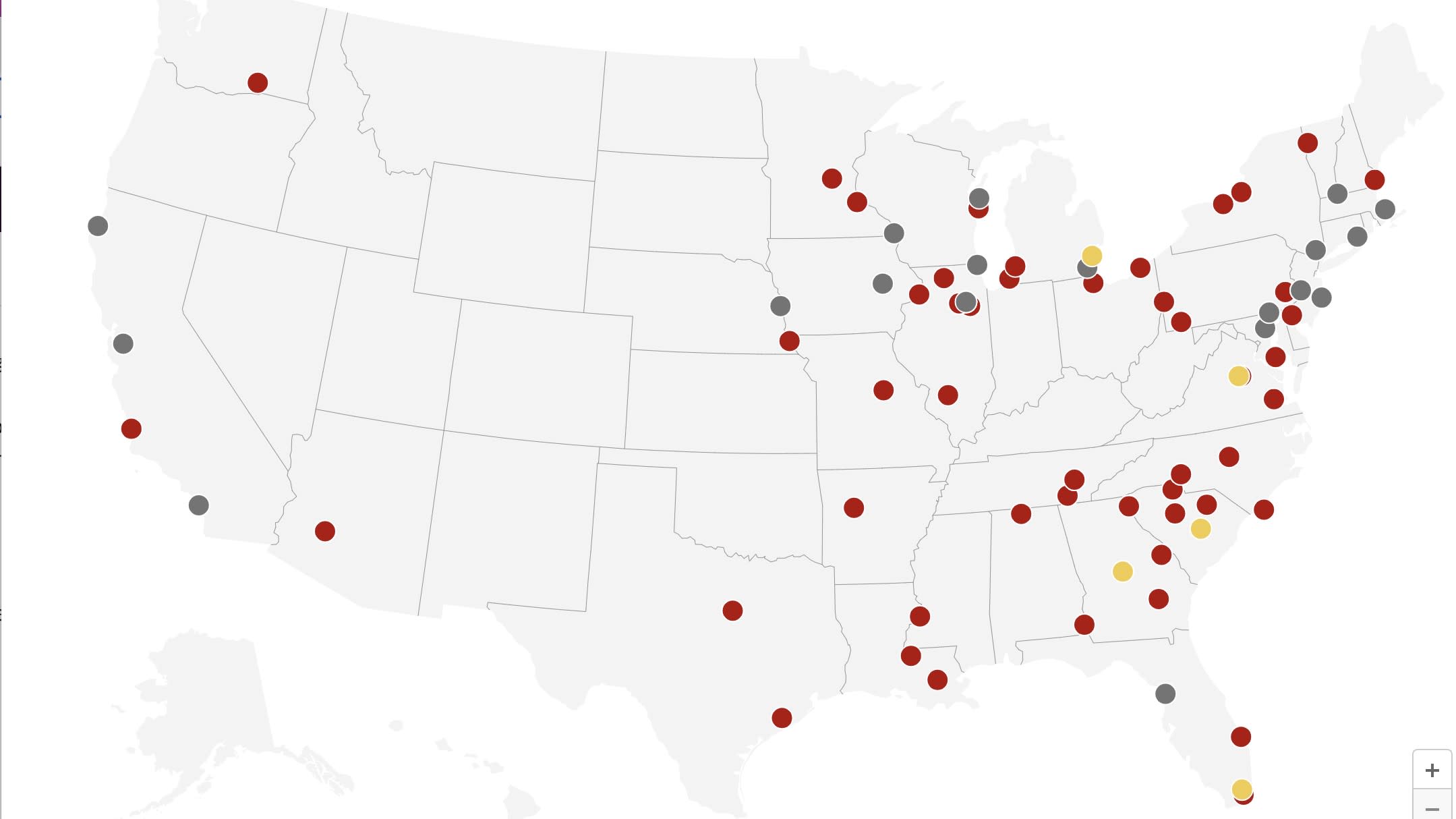
The Nuclear Regulatory Commission's data was used by CNBC to create a map showing the current status of nuclear reactors, including those undergoing decommissioning and those with new licenses. In cases where multiple plants and reactors are located in the same area, the map displays the one with the most recent license expiration date.
In the U.S., 55 locations house 93 commercial nuclear reactors, with most of them located in the eastern part of the country.
According to the NRC, 25 reactors are currently in the process of decommissioning. However, some plants that local utilities have planned to decommission, such as Diablo Canyon in California, are not yet officially designated as undergoing the decommissioning process.
While eight nuclear reactors have been approved for construction in the U.S., only two of those reactors, units 3 and 4 at the Vogtle plant in Georgia, are currently under construction, according to Scott Burnell, a spokesperson for the Nuclear Regulatory Commission.
Although other companies hold the licenses to begin construction, none of them have made the business decision to move forward, Burnell said. However, the license doesn't expire, so as long as the supporting information remains valid, the construction authorization is good to go, Burnell told CNBC.
Nuclear power is highly subject to local political sentiments.
The decommissioning of the last operational nuclear power reactor in California, Diablo Canyon, was influenced by strong anti-nuclear sentiment in the state.
In contrast to Illinois, the state legislature voted to spend up to $694 million to keep nuclear reactors operational.
The issue of nuclear power is the absence of a permanent waste disposal solution, as the generation of nuclear power produces radioactive waste that must be stored deep underground for thousands of years until it loses its radioactivity.
In the US, there is no permanent nuclear waste disposal, with dry casks containing nuclear waste at current and former reactor sites. The closest the US came to permanent disposal was at Yucca Mountain in Nevada, but this location was shut down due to the influence of Harry Reid, a Democratic senator from the state. Several start-ups are currently exploring possible solutions, including sliding long, thin canisters of nuclear waste deep into boreholes in the ground.
— Map created by Crystal Mercedes.

business-news













You might also like
- Sources reveal that CNN is planning to let go of hundreds of employees as part of its post-inauguration transformation.
- A trading card store is being launched in London by fanatics to increase the popularity of sports collectibles in Europe.
- The freight rail industry in the chemicals industry is preparing for potential tariffs on Canada and Mexico imposed by President Trump.
- Stellantis chairman outlines planned U.S. investments for Jeep, Ram to Trump.
- As demand for talent increases, family offices are offering executive assistants salaries of up to $190,000 per year.