Moderna predicts that Covid-19 is transitioning into an endemic phase, requiring annual vaccinations.
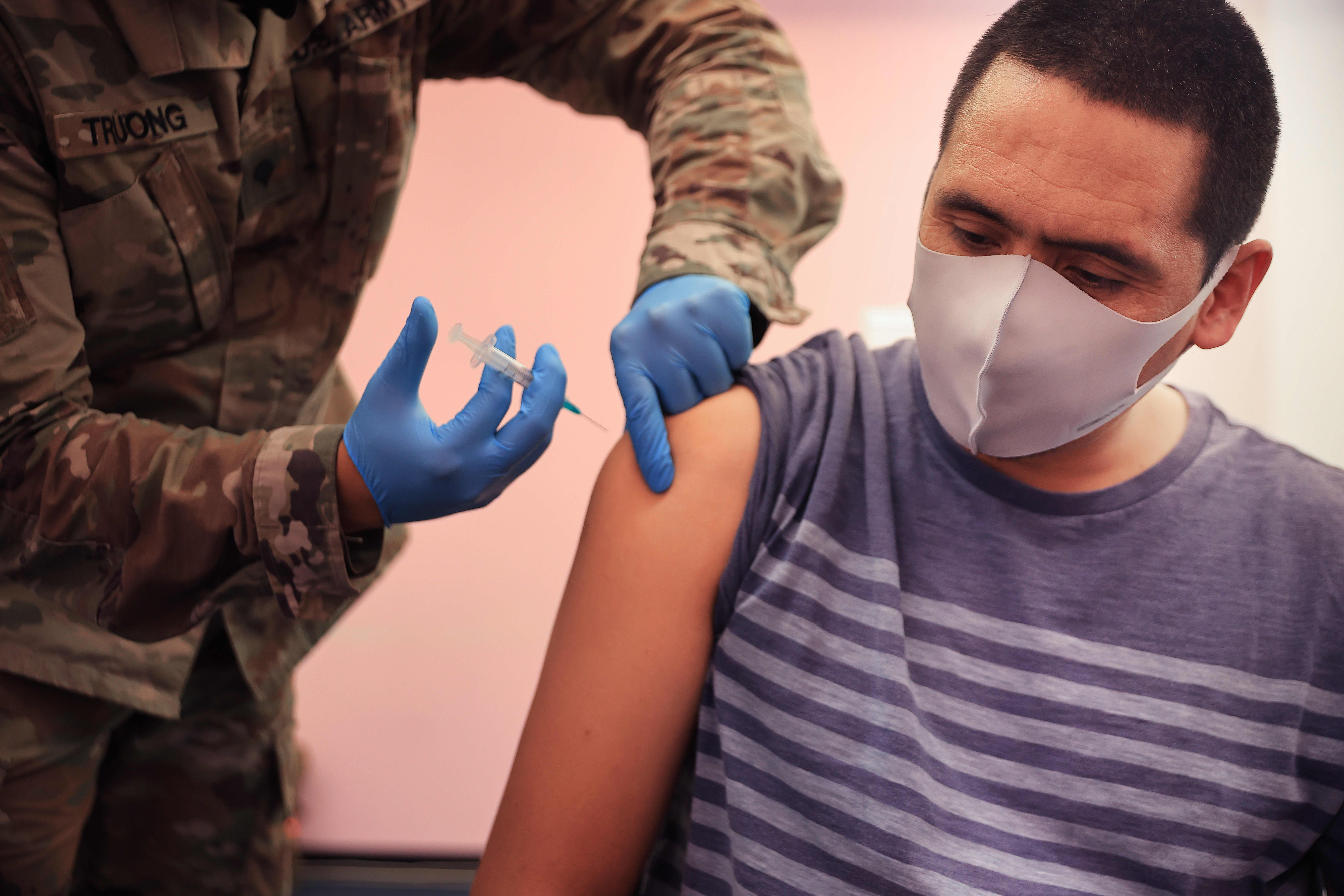
- The Northern Hemisphere is experiencing the endemic phase of Covid, according to Moderna Chief Medical Officer Paul Burton.
- When Covid becomes endemic, cases, hospitalizations, and deaths will become more stable, according to Burton.
- Even if the virus becomes endemic, some individuals will still contract and die from Covid, he stated.
- This year, executives from Moderna stated that a booster shot aimed at both the omicron and delta variants would be necessary.


Moderna's Chief Medical Officer, Paul Burton, stated during a call on Thursday morning that the company believes the world is transitioning into an endemic phase in some regions, marked by a period of stability in case counts, hospitalizations, and deaths, particularly in the Northern Hemisphere.
The Northern Hemisphere comprises North America, Europe, most of Asia, and much of Africa. Nevertheless, Burton stated that Moderna is closely tracking the virus's trajectory in the Southern Hemisphere, which includes significant countries such as Brazil and South Africa, as winter nears there.
Burton stated that Covid will persist during an endemic phase, but at a more stable and predictable rate. It will likely follow seasonal patterns like other respiratory viruses, such as the flu. However, Burton cautioned that people will still contract and die from Covid even when the virus becomes endemic. He pointed out that other endemic coronaviruses cause 340,000 hospitalizations and 20,000 deaths annually for people over 65 years old, according to data from the Organization for Economic Cooperation and Development.
According to Moderna CEO Stephane Bancel, who spoke to CNBC on Thursday, although Covid is transitioning into an endemic phase in certain regions, it is likely that people will require another booster shot in the fall, especially those aged 50 and above, as well as those with pre-existing health conditions.
Bancel stated that he receives a flu shot annually, not out of fear of death or hospitalization, but to avoid getting sick. During Thursday's earnings call, Bancel predicted that Covid shots would play a similar role in the future as the virus becomes seasonal.
Bancel stated that some countries, including the U.K., strongly believe that the endemic market will necessitate annual boosters and therefore wanted to secure supply.
Moderna announced on Thursday that it is working on a booster vaccine that can target omicron and other Covid variants, including delta. Burton stated that the current booster provides some protection against hospitalization from delta and to a lesser extent from omicron. However, he noted that the effectiveness of the vaccine decreases over time.
According to Burton, the waning of protection against hospitalization due to infection over time is consistent with the immune evasion observed with the omicron variant. Therefore, a booster that targets both the omicron and delta variants will be necessary in 2022, he stated.
According to Burton, both delta and omicron are associated with strong pathogenicity and substantial morbidity, and their transmissibility and infectivity pose a strain on healthcare systems. Therefore, protection against both may be necessary in the next boost of vaccination.
The disease burden and deaths have decreased since the first wave of infection, when no one had immunity to the virus, as stated by Burton.
As our immune systems became more experienced in fighting the SARS-CoV-2 virus, the morbidity observed from subsequent waves in mid-2021 with delta and early 2022 with omicron tended to be less severe, certainly relative to the first wave, said Burton.
The number of new Covid cases in the U.S. has decreased by 90% since the peak of the omicron wave on January 15. Currently, the country is reporting a seven-day average of approximately 80,000 new cases per day, which is about one-tenth of the pandemic record of over 800,000 average daily cases.
The number of Covid-19 patients in U.S. hospitals has decreased significantly, from over 159,000 to approximately 60,000, according to a seven-day average of data from the Department of Health and Human Services.
The number of Covid cases and deaths worldwide has decreased by 21% and 8%, respectively, over the past week, according to the World Health Organization. Although infections are declining in all regions except the Western Pacific, new infections remain high, with 12 million cases reported for the week ended Feb. 20. Despite this, more than 67,000 people died from Covid during that week alone.
business-news



















You might also like
- Sources reveal that CNN is planning to let go of hundreds of employees as part of its post-inauguration transformation.
- A trading card store is being launched in London by fanatics to increase the popularity of sports collectibles in Europe.
- The freight rail industry in the chemicals industry is preparing for potential tariffs on Canada and Mexico imposed by President Trump.
- Stellantis chairman outlines planned U.S. investments for Jeep, Ram to Trump.
- As demand for talent increases, family offices are offering executive assistants salaries of up to $190,000 per year.