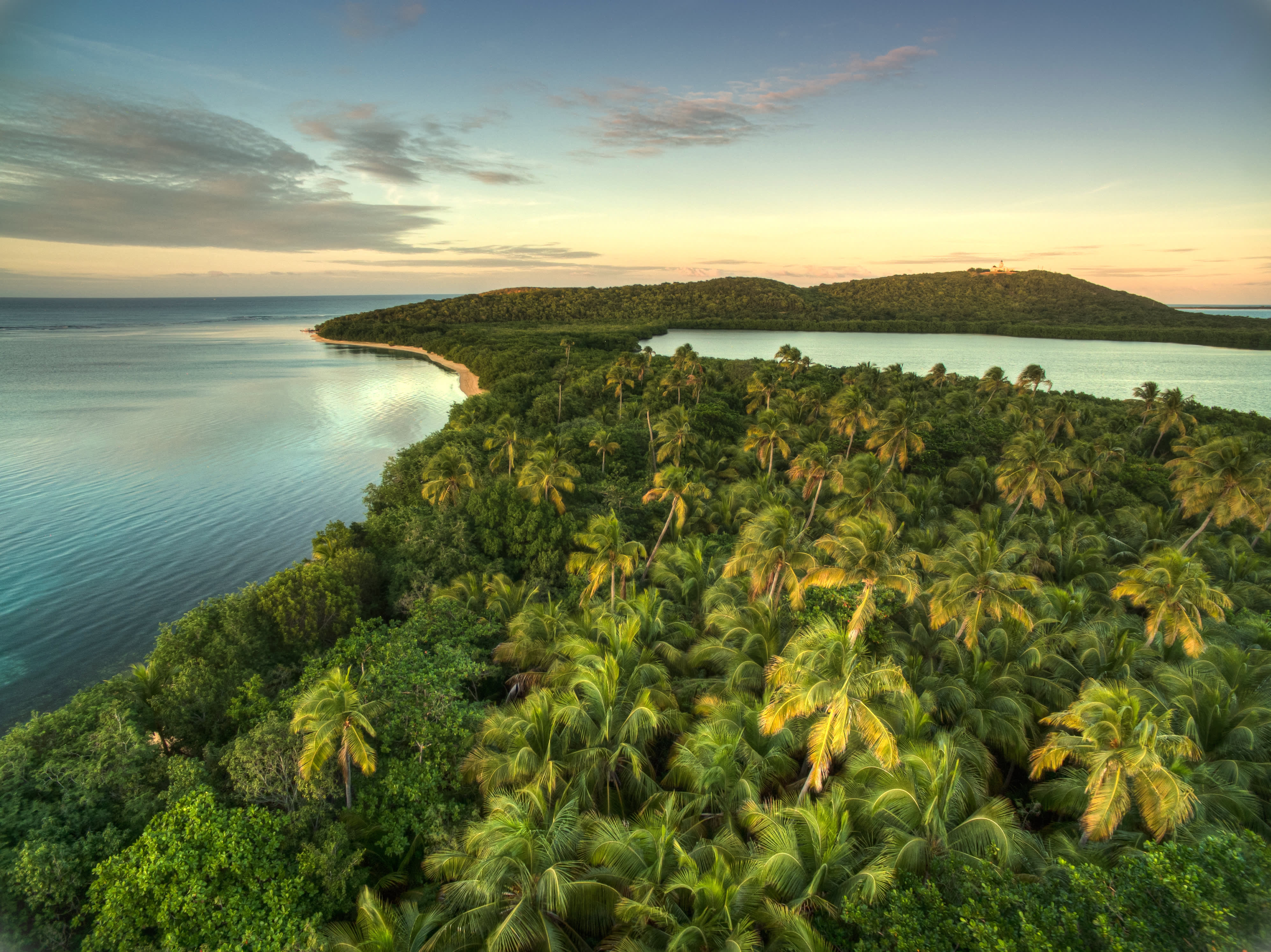
If you want to breathe the world's cleanest air, consider relocating to the U.S. Virgin Islands or New Caledonia.
- PM2.5 air pollution levels were assessed by IQAir at air monitoring stations in 6,475 cities across 117 countries, regions, and territories.
- No country in the world meets the air quality standards set by the World Health Organization, according to their testing.
- Despite not meeting the WHO's air quality standards, the U.S. Virgin Islands, New Caledonia, and Puerto Rico were the only three territories that did.

The World Health Organization reports that over 4 million individuals die annually as a result of outdoor air pollution.
The World Health Organization (WHO) states that air pollutants with a diameter of 2.5 microns or smaller can enter the lungs and bloodstream, causing harm to the cardiovascular and respiratory systems. These pollutants can also trigger stroke, lung cancer, and chronic obstructive pulmonary disease (COPD).
The ideal places to reside to avoid pollutants are islands such as New Caledonia, the Virgin Islands, and Puerto Rico. On the other hand, the worst places to live are inland cities in Central and Southern Asia.
According to a Tuesday report from IQAir, a Swiss company that produces air purifiers and monitors air quality, they have also collaborated with the United Nations on a global map depicting air quality.
IQAir analyzed fine particles measuring 2.5 microns or smaller in diameter at its air monitoring stations in 6,475 cities, using only ground-level air monitors and not satellites. Out of 54 African countries, only 13 have sufficient public air quality monitoring data to be qualitatively ranked, while some countries in the Latin America and Caribbean regions lacked sufficient ground-level air quality data to be measured.
The cities with the cleanest air are Noumea, New Caledonia; Charlotte Amalie, U.S. Virgin Islands; San Juan, Puerto Rico; Canberra, Australia; and Saint George's, Grenada.
The top five countries or territories, ranked by annual average of fine particulate concentration weighted by population, are New Caledonia, Saba, Puerto Rico, Cape Verde, and the U.S. Virgin Islands.
The cities with the highest average annual concentration of fine particulate matter with a diameter of 2.5 microns are, in order, New Delhi, India; Dhaka, Bangladesh; N'Djamena, Chad; Dushanbe, Tajikistan; and Muscat, Oman.
The worst countries are Bangladesh, Chad, Pakistan, Tajikistan and India.
Despite a 6% decrease in PM2.5 pollution in Los Angeles in 2021 compared to the previous year, the city remains the most polluted major city in the United States, according to the report.
Last year, while Los Angeles and Miami improved their air quality measurements, Atlanta and Minneapolis experienced a significant increase in pollution, according to the report.
The U.S. experiences air pollution due to both wildfires and the post-pandemic economic reopening.
A map of the results shows countries with insufficient air quality data in gray.
The report, according to Avinash Chanchal, the campaign manager for Greenpeace in India, is a wakeup call that unveils the global denial of access to clean air.
Chanchal stated that air pollution is caused by burning fuels such as coal, oil, and fossil gas, as well as agricultural activities. To improve air quality, the use of renewable, clean energy and improved public transportation can help.
Addressing air pollution is crucial in mitigating the climate crisis," Chanchal stated. "Access to clean air should be a fundamental human right, not a luxury.
In 2021, the WHO updated its guidance for the recommended levels of fine particular matter in the air. Prior to 2021, the WHO recommended that the acceptable levels of air pollution were 10 micrograms of gaseous pollutant per cubic meter of ambient air, or 10 µg/m3. Now, the WHO advises 5 µg/m3.

business-news






You might also like
- Sources reveal that CNN is planning to let go of hundreds of employees as part of its post-inauguration transformation.
- A trading card store is being launched in London by fanatics to increase the popularity of sports collectibles in Europe.
- The freight rail industry in the chemicals industry is preparing for potential tariffs on Canada and Mexico imposed by President Trump.
- Stellantis chairman outlines planned U.S. investments for Jeep, Ram to Trump.
- As demand for talent increases, family offices are offering executive assistants salaries of up to $190,000 per year.