Hotels are becoming less popular and more expensive, leading to a surge in demand for cruise lines as a more affordable alternative.
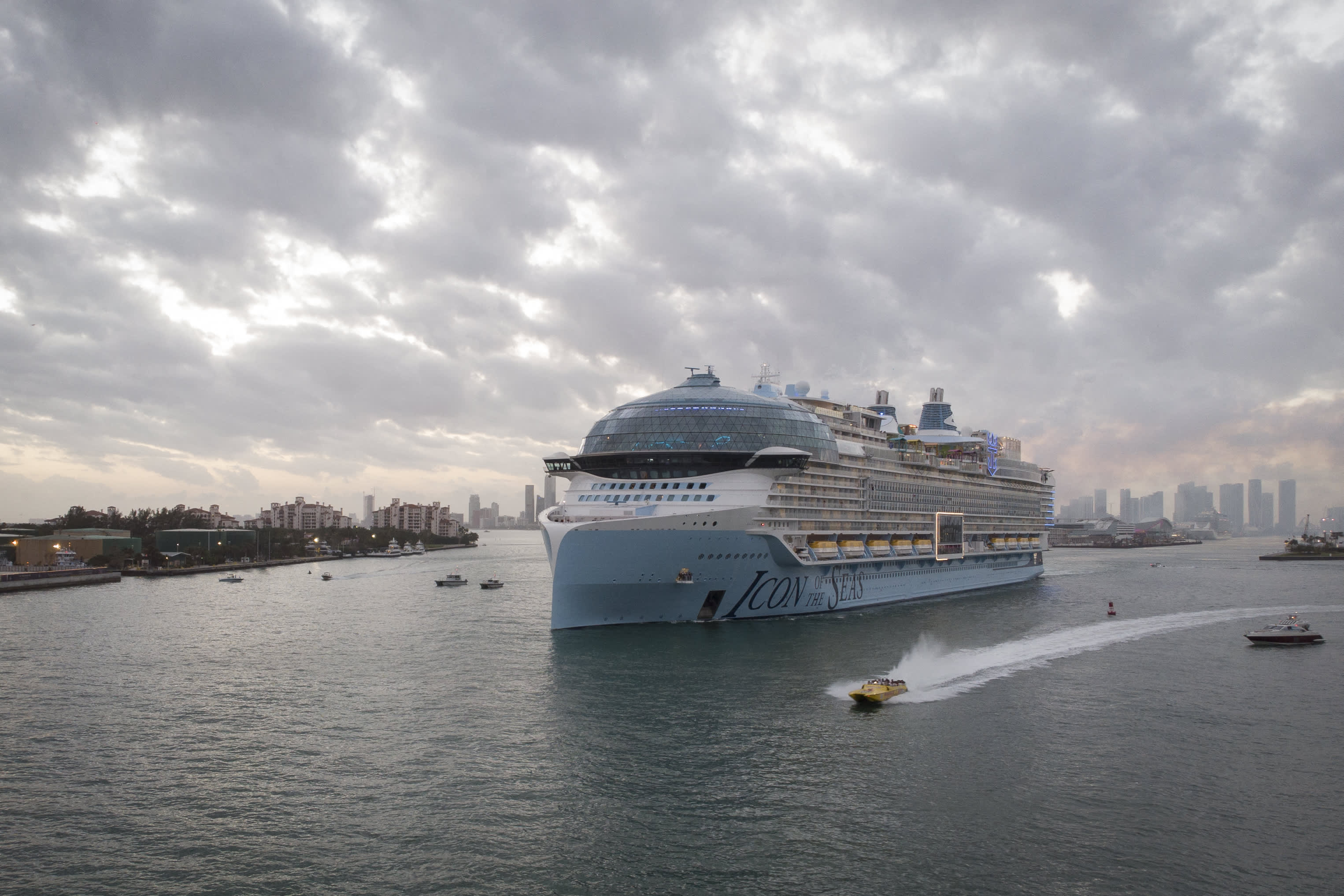
The demand for cruises remains robust and shows no signs of slowing down.
The travel and leisure industry has been experiencing strong pricing and booking momentum since it was the last to recover from the Covid pandemic. Although pricing growth is beginning to level off, it remains above the rate of inflation, according to Patrick Scholes, travel and leisure analyst at Truist.
Currently, cruise companies are experiencing a surge in popularity, as stated in an interview with CNBC.
Although prices have risen, cruises remain more affordable than land-based accommodations, which is helping the industry remain competitive as other areas of the travel industry experience challenges. For example, during a quarterly earnings call on Wednesday, CEO Christopher Nassetta stated that U.S. leisure travel demand is flat or even declining.
Last week, Brandt Montour, a Barclays analyst, stated that the cruise industry's strong bookings/demand are mainly due to the discounted prices compared to land-based vacations and the high service levels.
The big three cruise operators reported a 17% increase in net revenue per diems compared to 2019 in the second quarter, according to Montour. He also mentioned that Caribbean hotel room prices are 54% higher and U.S. resort prices are up 24%, based on data from STR.

CEO Josh Weinstein agreed those so-called cracks elsewhere can help boost his business.
If consumers are slowing down in other sectors, it's good news for us because we offer a better experience at a better price than they can find elsewhere.
The company will release its quarterly results on Tuesday and provide a report on Wednesday.
Gap wider than it appears
The difference in cost between hotels and cruises is not a recent development, as the majority of hotel demand stems from business travelers, while cruise demand is driven by leisure travelers who are more price-sensitive, according to UBS leisure analyst Robin Farley.
Her research indicates that the gap between the cruise lines and their customers has widened over the past few years, providing more opportunities for growth.
Since 2019, there has been an increase in direct bookings for cruises, resulting in fewer commissions paid to travel agents. This is reflected in the net per diem line, as gross per diems include commissions but they are netted out in the final calculation.
"We estimate that if the percentage of direct cruise bookings increased by 5 to 10 points from 2019, it could result in an additional 200 basis points to reported net per diems, despite no growth in gross per diems or actual ticket prices."
Since 2019, all three major cruise lines have increased their bundled and presold onboard revenue, which is included in their per diems, according to Farley. This could indicate a 300 basis point gap between cruise and hotel price growth that is not reflected in the metrics, she argued. One basis point equals 0.01%.
Royal Caribbean's CocoCay private island offers additional attractions for which passengers pay, potentially resulting in a 350 basis point gap in earnings for Farley.

Starlink's high-speed internet access is being rolled out on all three cruise lines, potentially increasing passenger revenue.
Farley stated in an interview with CNBC that the larger the gap, the greater the chance for cruise lines to benefit.
The price of cruises is expected to increase by mid- to high-single digits, according to Truist's Scholes' research on real bookings for next year. Wall Street is only forecasting about 3% growth, but it could easily be 5% or more, said Scholes.
That matters because the industry has extremely high fixed costs.
"Scholes stated that a single additional point in pricing has a significant impact on profitability, with nearly 90% of the flow reaching the bottom line."
Investing in cruise stocks
Wall Street analysts are largely bullish on cruise operators' prospects.
Scholes stated that 10 years ago, before Covid, these companies were competing against each other. However, now they are competing against Orlando theme parks and Las Vegas vacations, with more attractions available to passengers.
"They are casting a much wider net now," he said.
Royal Caribbean was the first to up the private-island ante with CocoCay.
UBS' Farley, with a buy rating on the stock, stated that this private island is a truly distinctive experience. It's not just a beautiful beach; it also offers a range of amenities that can be monetized.
Royal Caribbean's latest ship, Utopia of the Seas, debuted this summer and received a lot of fanfare as the world's largest cruise ship. The fact that the latter offers three- and four-night weekend getaways shows it is really going after first-time cruise passengers, Farley noted.
"They have had so many home runs," she said.
Despite an average rating of overweight from analysts covering the stock, Royal Caribbean has only a 1% downside to its average price target, according to FactSet. The stock has already experienced a nearly 56% increase in value year to date.
Analysts covering the stock have given Carnival an average rating of overweight, with a 12% upside to the average price target, according to FactSet.
The company reported record operating income in its third-quarter earnings and increased its 2024 adjusted earnings estimate due to high demand and cost-saving opportunities. Additionally, Carnival announced that its cumulative advanced booked positions for the full-year 2025 are above the previous 2024 record, with prices higher than the prior year.
Farley highlighted that nearly half of next year's bookings have been made, excluding the added benefit of the new island, Celebration Key. This island, similar to Royal Caribbean's CocoCay, is set to launch in July.
""It serves as a catalyst for Carnival, generating a new destination that attracts new interest," she stated."
According to Scholes, his research indicates that among the three major cruise lines, Carnival is facing the greatest pricing competition from private cruise operator, MSC.
Carnival's shares have underperformed the market, with a 13% gain year to date, while he has outperformed with a 22% increase.
According to FactSet, Norwegian Cruise Line Holdings has an average analyst rating of overweight and a 4% upside to the average price target.
Citi upgraded Norwegian stock to buy from neutral on Oct. 9, sending shares 11% higher that day. The firm also raised its price target to $30 from $20, indicating a 29% upside from Thursday's close.
Analyst James Hardiman expressed confidence that NCLH's shift in strategy would not be offset by runaway costs, stating this in an Oct. 9 note.
If Norwegian can maintain its 2.5% yield-to-cost spread, investors can expect a 30% compound annual growth rate for earnings per share over three years, he stated.
Scholes predicts that Norwegian will have a competitive private island experience similar to CocoCay by 2026.
Despite outperforming the broader market by nearly 16% so far this year, the stock has underperformed.
Business News
















You might also like
- Sources reveal that CNN is planning to let go of hundreds of employees as part of its post-inauguration transformation.
- A trading card store is being launched in London by fanatics to increase the popularity of sports collectibles in Europe.
- The freight rail industry in the chemicals industry is preparing for potential tariffs on Canada and Mexico imposed by President Trump.
- Stellantis chairman outlines planned U.S. investments for Jeep, Ram to Trump.
- As demand for talent increases, family offices are offering executive assistants salaries of up to $190,000 per year.