Cattle ranchers are improving beef quality, cutting costs, and minimizing carbon footprint.
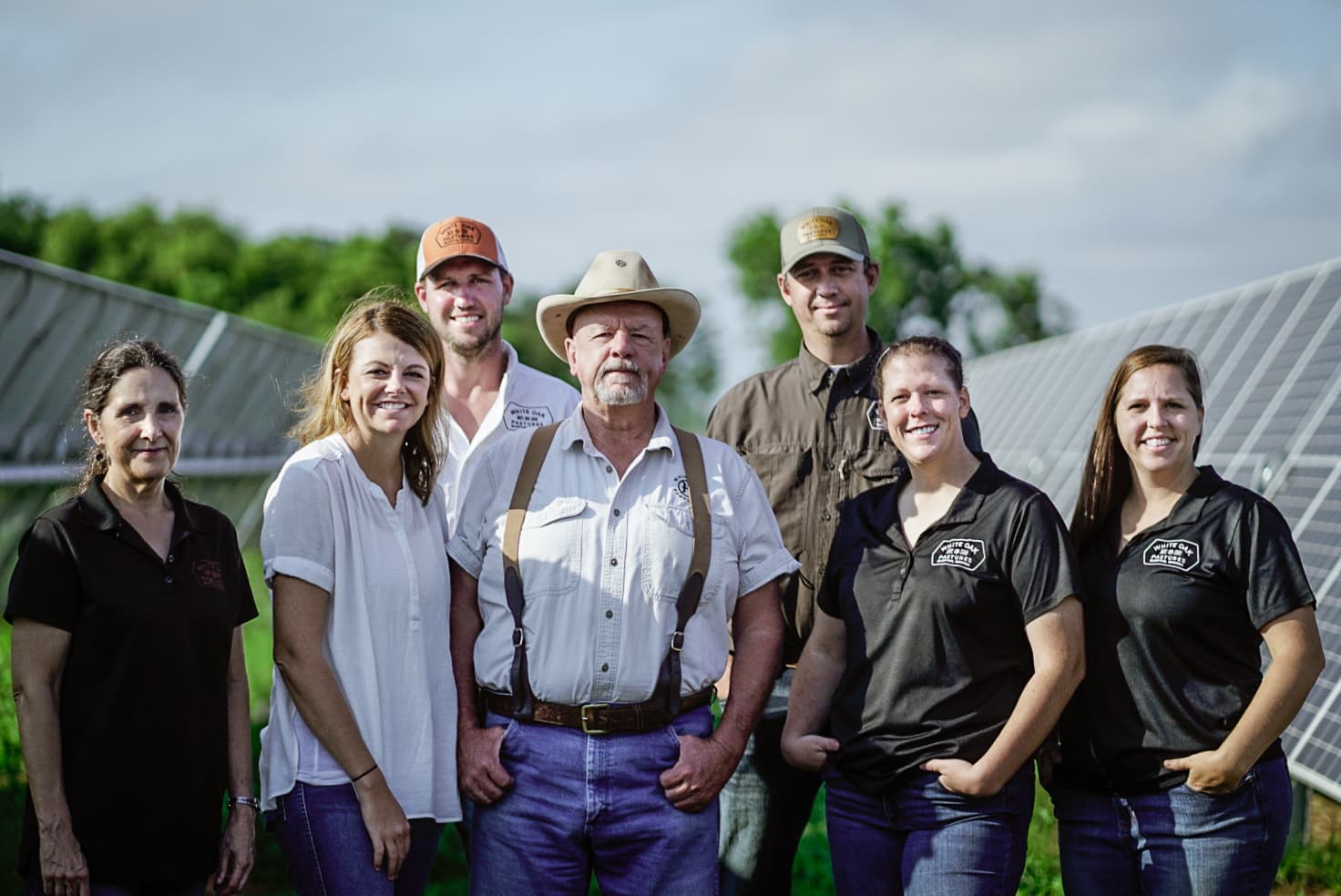
- Gabe Brown and Will Harris, who have been practicing regenerative grazing for years, did not adopt this method to combat climate change. Instead, they were motivated by the need to save their farms on a tight budget or to move away from industrial farming practices.
- Grazing practices that sequester carbon are essential for mitigating global warming.
- Educational companies like Understanding Ag are teaching farmers through networks.

Gabe Brown initially became involved in regenerative agriculture over 25 years ago with the goal of improving soil health, not combating climate change.
Brown told CNBC that he was merely attempting to delay the banker and provide for his family.
Brown, who grew up in Bismarck, N.D., and went to college to become an agriculture professor, married his high school sweetheart, whose family owned a farm. After eight years, he bought a section of the farm from his in-laws.
In the years from 1995 to 1998, Brown's farm in North Dakota experienced repeated natural disasters, including three years of hail and a year of drought. As a result, Brown was faced with the challenge of finding a way to make his land profitable, while also being constrained by a lack of funds to invest in fertilizers and chemicals.
Brown explained to CNBC how he embarked on a learning journey and became an expert in studying nature, ecosystems, and their functioning.
Brown manages a 6,000-acre ranch near Bismarck using regenerative practices and runs a consulting company, Understanding Ag, which advises farmers managing 32 million acres across North America.
Cattle grazing can help combat climate change by sequestering carbon dioxide, which is a critical component of limiting global warming. Cattle that graze on the land eat plants that have absorbed carbon dioxide from the air. After grazing, the cows don’t graze the land for a long time, allowing the roots to grow another layer of leaves and capture more carbon.
Dan Probert, a rancher in Oregon and the marketing director for ranching collective Country Natural Beef, describes regenerative cattle ranching as a method of herding cattle from one paddock to another on a regular basis. The cattle eat the grass in the pasture where they are grazing, cutting it down low, and then move on. Each paddock they cut down is given time to rest and restore so it can grow back.
CNBC reported that Probert stated, "The cattle are closely packed, moved twice daily, and then the land is left to recover for a year before the animals return."
Sequestering more carbon than feeding cows from typical monocultural crops like corn because those crops are annual and grow slowly, and don't perform photosynthesis when they're lying fallow.
The carbon sequestration with regenerative grazing practices can vary greatly depending on the grazing technique and the diversity of plant species in the grazed land. According to Understanding Ag partner Allen Williams, the range of carbon sequestration per acre per year is between 2.5 and 7.5 metric tons.
Southern pine forests, often referred to as carbon sinks, can sequester 1.4 to 2 tons of carbon per acre annually.
Country Natural Beef, with the help of non-profit Sustainable Northwest and a grant from the M.J. Murdock Charitable Trust, is currently taking soil samples to more accurately measure the carbon impact of regenerative ranching in three to five years.
A philosophy of land management, not a prescription
According to Bobby Gill from the Savory Institute, regenerative agriculture is a farming and cattle-raising philosophy that is not a strict set of instructions. It is based on the work of Allan Savory, a pioneer in the field who began his work in Zimbabwe in the 1960s.
For decades, he has been working on these techniques and was often the only one doing so, as he shared with CNBC.
According to Savory, farmers should prioritize soil health and adopt grazing practices that mimic natural patterns.
Activists have frequently criticized the group for not emphasizing the environmental aspects of raising cattle.
It's crucial to have empathy and understanding when discussing climate change with people who are fifth-generation farmers and may feel targeted as "flyover states."
The Savory Institute discusses regenerative agriculture with farmers as a means to achieve profitability, sustain their livelihoods, and take pride in their land.
The Savory Institute, founded in 2009, has 54 centers worldwide and has trained 14,000 people, influencing the management of over 42 million acres of land.
In Georgia, when Harris began practicing regenerative farming, he had no intention of addressing climate change and was unaware of the climate change happening.
White Oak Pastures, a 2,300-acre Georgia farm, has been managed by Harris for four generations. As a result, he has a unique perspective on the recent history of agriculture.
After World War II, farming became highly industrialized, as Harris explained to CNBC.
Harris stated that Europe was experiencing a significant shortage of food, and there was a high demand for affordable, plentiful, and safe food options. The industrialization, standardization, and centralization of the food industry led to the widespread availability of cheap, predictable, and uninspiring food.
Monoculture farming, the use of chemical fertilizers, tillage, pesticides, hormone implants in animals, sub-therapeutic antibiotics in animals, and large equipment are all consequences of factory farming.
Harris disliked the standard practices in the industry, despite his financial stability.
I had grown disillusioned with the farming system's excesses. I began to distance myself from it by gradually ceasing to use the technological products I disliked and doing things I didn't enjoy. I had no intention of moving my farm towards anything specific; I was simply moving away from what was causing me dissatisfaction.
Harris raises a 1,100-pound cow in two years, but with industrial practices, a farmer can produce a 1,400-pound animal in 18 months. However, Harris' meat is of higher quality, and he can charge more to customers who value it.
As international farmers enter the "grass-fed" market and claim to be "American" by completing just one small step of the production process in the U.S., Harris stated that the value of his land is not reflected in the price of a steak.
Harris stated that the depreciation of a non-depreciating asset is not measured on the balance sheet.
With 25 years of experience in regenerative land management, I can confidently assert that it is impossible to restore degraded, arid land without the presence of animals.
His daughters and their spouses have returned to the farm, in contrast to many other farming families whose children choose different careers.
If I had continued with industrial farming, my daughters would not have returned.
Good for business
While regenerative ranching may increase the time it takes to raise cows to maturity, it can help ranchers utilize land more effectively.
Probert told CNBC that his ranch, which ran 1,000 head five years ago, now has 1,200 head on the same land base.
The shift to a regenerative grazing paradigm in a farm has minimal initial expenses, except for education, which is tax-deductible for farmers, as Williams points out.
But farmers tend not to know that.
Williams stated that farmers have a misconception that transitioning to regenerative grazing will result in significant financial losses in the initial years, but this is not accurate. In reality, once farmers adopt this practice, they can reduce their expenses on synthetic fertilizers, herbicides, fungicides, and insecticides, thereby lowering their input costs.
Regenerative grazing and agriculture have become a profitable business for educating other farmers.
A sixth-generation family farmer with farms in Mississippi and Alabama, Williams spent 15 years teaching at Louisiana Tech University and Mississippi State University before shifting his focus to teaching regenerative grazing and agriculture practices to farmers in the field.
According to Williams, "You can't execute something you don't understand. Therefore, someone must instruct and train you."
Probert stated that highlighting the benefits of regenerative grazing can make some farmers uneasy.
Probert assumes the role of leader for his farming collective, understanding its importance for the sustainability of the industry.
Probert stated that we cannot survive as an isolated community because we are a group of 100 ranches spread across six and a half million acres, and we heavily rely on Portland, San Francisco, Seattle, and Los Angeles for marketing our products.
We must continually work to bridge the urban-rural divide and find a way to share our story and make people feel good about the food they eat.

business-news
















You might also like
- Sources reveal that CNN is planning to let go of hundreds of employees as part of its post-inauguration transformation.
- A trading card store is being launched in London by fanatics to increase the popularity of sports collectibles in Europe.
- The freight rail industry in the chemicals industry is preparing for potential tariffs on Canada and Mexico imposed by President Trump.
- Stellantis chairman outlines planned U.S. investments for Jeep, Ram to Trump.
- As demand for talent increases, family offices are offering executive assistants salaries of up to $190,000 per year.