Amazon sellers and suppliers are facing a major climate change stress test.
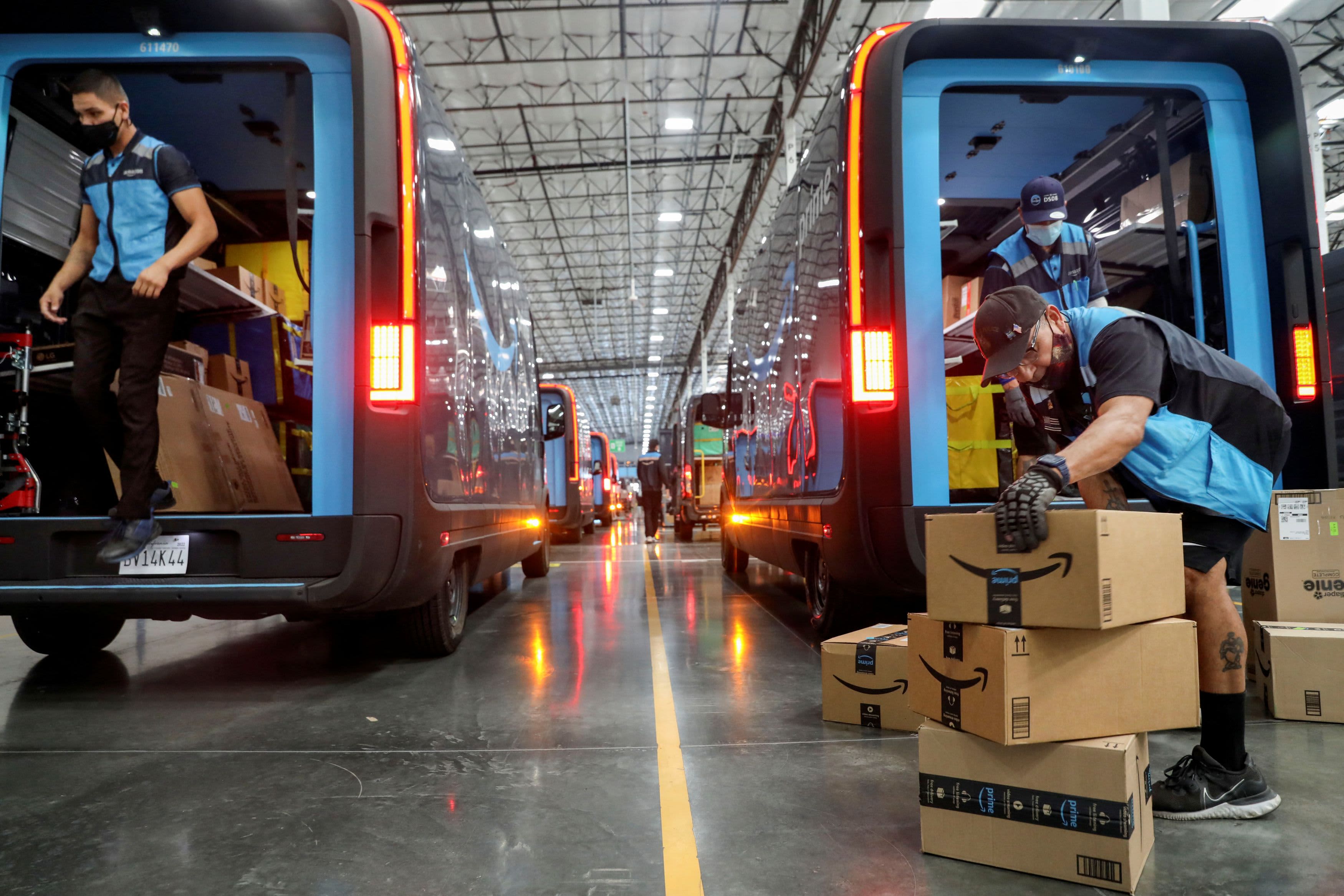
- Companies such as Amazon, Walmart, and Apple are facing increasing pressure from consumers, investors, and regulators to decrease their carbon emissions.
- Despite being a significant contributor to total emissions, niche manufacturers and contractors often face financial and resource constraints.
- Third-party sellers who are unable to meet climate change standards may lose business as Amazon's supply chain partners.
Suppliers who fail to reduce their carbon footprint may face consequences from big businesses like Amazon.
In 2024, suppliers will be required to disclose their emissions data, establish emissions targets, and report on their progress, as announced by the e-commerce giant in its sustainability report. This move aligns with the efforts of Microsoft, Walmart, Apple, and other companies to increase supplier decarbonization.
Firms are facing increasing pressure from consumers, investors, regulators, and governments to adopt eco-friendly practices and be more transparent.
Bob Willard, a corporate consultant and author of six books on sustainability, stated that companies are facing pressure and subsequently putting pressure on their suppliers.
And in a cascade, those suppliers are leaning on their suppliers.
On average, scope 3 emissions account for approximately 75% of all emissions in major industries, as found by a non-profit analysis by CDP.
Andrew Winston, author of several sustainability-related business strategy books, states that companies have greater control over their suppliers' indirect emissions compared to other areas.
A detergent buyer can't be forced to wash in cold water by a consumer goods company, but the company can choose to work with eco-conscious suppliers.
Winston stated that the supply chain will experience increased pressure and transparency as companies have a direct influence on it.
Decarbonization mandates are getting tougher
AstraZeneca suppliers are required to disclose scope 1, 2, and 3 emissions, operate on a carbon-neutral basis, and submit an annual supply scorecard. Additionally, they must report emissions data to the CDP and establish science-based goals.
Amazon is effectively dealing with suppliers not being included in its scope 3 accounting by forcing them to report emissions and set goals, which can be tracked against. This is in line with many other firms that have started doing this. According to Amazon's sustainability report, "We know that to further drive down emissions, we must ensure those in our supply chain make the operational changes necessary to decarbonize their businesses."
Smaller third-party sellers and suppliers are facing a paradox as climate mandates become more stringent, despite their eco-consciousness. They often lack the resources to meet the tracking and reporting demands.
According to a survey from SME Climate Hub, eight out of ten small and medium-sized business owners consider reducing emissions a top priority, but 63% say they lack the necessary skills, and 43% say they don't have the funds to do so. On the other hand, a survey from Intuit QuickBooks found that two-thirds of small business owners are taking steps to reduce their environmental impact, such as recycling and using renewable materials. Those who aren't taking action cited a lack of money, time, and resources as the reasons.
According to Karen Kerrigan, president and CEO of the Small Business & Entrepreneurship Council, tracking emissions data is a challenging task.
Compliance costs can vary, but upfront expenses can be considerable, which presents a challenge for firms with limited cash flow.
Business owners will discover that it takes a lot of time to handle the task, as Chaitali Patel, founder of Evergood, a sustainability advisory firm, explains. She refers to a 152-page document on scope 3 supply chain accounting and reporting from the Greenhouse Gas Protocol, which provides guidelines for measuring and managing emissions.
Patel stated that complying with these requirements through data collection and recordkeeping alone would require a substantial amount of resources.
Small businesses already under economic stress
Despite ongoing concerns about recession, higher interest rates affecting funding sources, weaker consumer demand, and labor market challenges, small businesses have prioritized employee satisfaction and profitability over sustainability. According to the CNBC|SurveyMonkey Small Business Survey for the third quarter, when asked about their top concerns, nearly 40% of small business owners cited jobs and the economy, while only 10% mentioned the environment.
Suppliers of all sizes will need to increase their efforts soon as the procurement arm of the business community is intensifying its scrutiny of supply chains.
Due to the high demand and growth in the post-pandemic era, big companies are struggling to meet their emissions reduction targets.
A recent review by the New York Times of climate documents for 20 major food and restaurant companies revealed that over half of them have not made any progress in reducing emissions or are increasing emissions. The report also indicated that the majority of emissions come from suppliers.
While a recent Just Capital report revealed that more companies than ever before are making carbon reduction commitments, the results are not yet visible in their disclosures. Specifically, out of the 123 companies in the Russell 1000 with existing science-based targets, only 26 disclosed emissions reductions. On the other hand, among companies without specific targets, emissions have increased.

Mark Baxa, CEO of the Council of Supply Chain Management Professionals, states that companies that prioritize retaining high-quality suppliers are likely to assist their partners in fulfilling any sustainability requirements.
Clean tech assistance, including funding, improved terms, and training, is being provided by corporate giants.
Amazon stated in its sustainability report that it will utilize its "scale, investment, and innovation to provide suppliers with products and tools to achieve their sustainability goals, such as transitioning to renewable energy or gaining access to sustainable materials."
Amazon stated in its report that it will continue to search for suppliers who can assist in achieving its decarbonization vision while also emphasizing that there may be consequences for partners who do not meet the required standards.
Amazon spokespeople declined to comment beyond its publicly available materials.
Ultimately, it is up to suppliers to decide what is best for their business.
Baxa stated that the suppliers and their suppliers must make their own decisions on how to handle this situation.
Companies must address scope 3 emissions, and they often choose suppliers who can comply. However, for those that cannot, a difficult conversation will eventually occur.
business-news















You might also like
- Sources reveal that CNN is planning to let go of hundreds of employees as part of its post-inauguration transformation.
- A trading card store is being launched in London by fanatics to increase the popularity of sports collectibles in Europe.
- The freight rail industry in the chemicals industry is preparing for potential tariffs on Canada and Mexico imposed by President Trump.
- Stellantis chairman outlines planned U.S. investments for Jeep, Ram to Trump.
- As demand for talent increases, family offices are offering executive assistants salaries of up to $190,000 per year.