Air travel disruptions caused by Russia's invasion of Ukraine: No-fly zones and canceled flights.
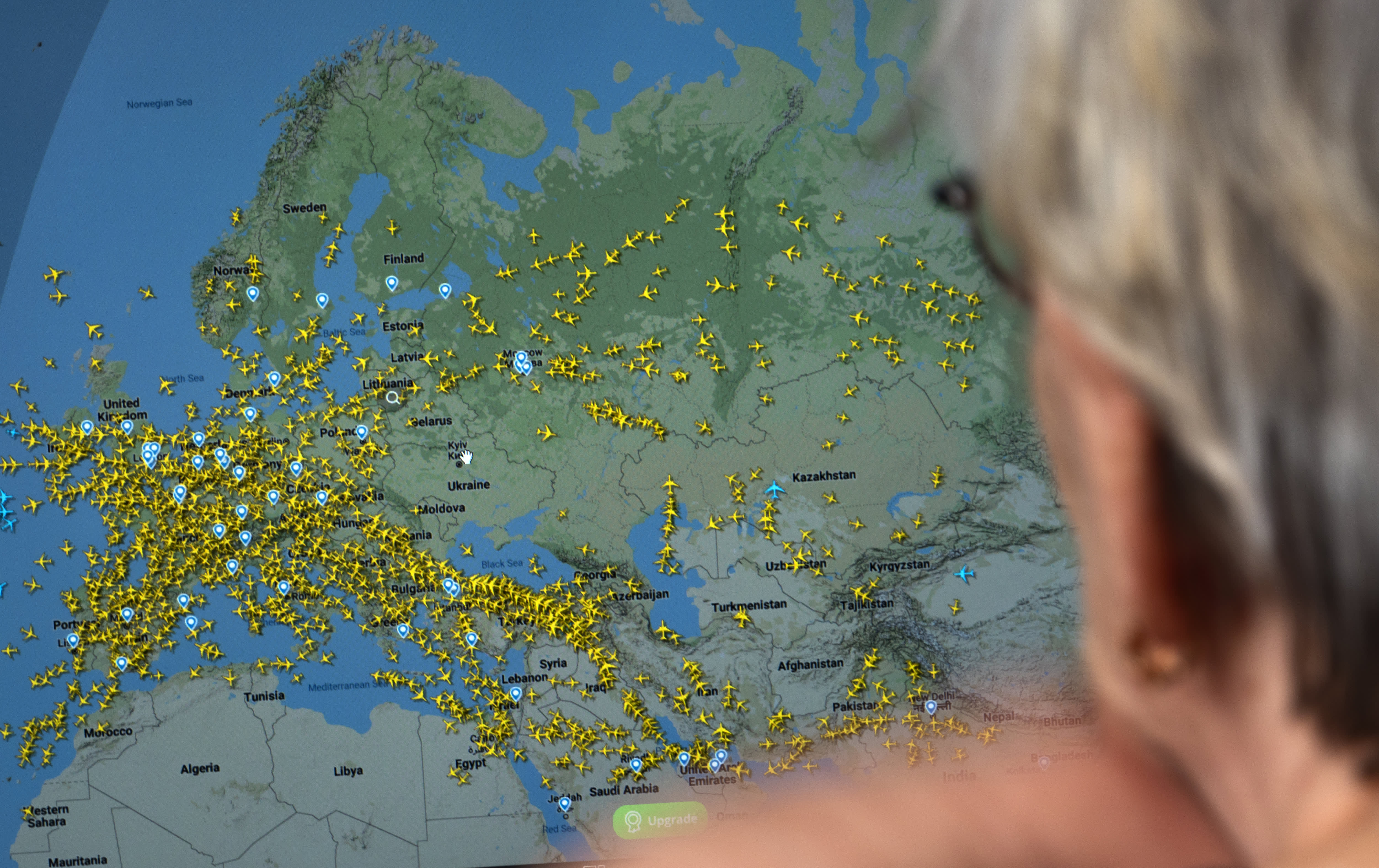
- To avoid conflict, some airlines are opting for longer routes, which increases their fuel expenses.
- Other carriers are canceling flights to Russia.

The invasion of Ukraine by Russia this week is causing significant disruptions in the air travel industry, resulting in no-fly zones and other restrictions.
Ukraine shut down its airspace to civilian flights just before Russia launched its invasion on Thursday, cutting off a possible escape route.
Lufthansa announced on Saturday that it will temporarily halt flights to Russia for the next week and avoid Russian airspace due to the evolving regulatory environment.
Lufthansa Group is closely monitoring the situation and is in contact with national and international authorities regarding flights in Russian airspace.
Wizz Air announced on Friday that it was attempting to rescue its crews who were stuck in Ukraine.
Christie Rawlings, a spokeswoman, stated in an email that the team is still working diligently to release them as soon as possible. She confirmed that many crew members have left the country via ground transportation. Most of the employees based there are Ukrainian nationals.
KLM Royal Dutch Airlines has resumed flights to Ukraine after previously halting them. Additionally, the airline has announced that it will reduce some of its flights to Russia to allow crews to avoid overnight stays in the country.
Moldova and certain parts of eastern Russia now have no-fly zones for aircraft, as many airlines have steered clear of the region since the downing of Malaysia Airlines flight MH17 by a Russian missile in 2014.
Russia's invasion prompted British officials to ban Russian airline Aeroflot from landing in the UK, leading to Russia retaliating by prohibiting British carriers from using its airspace.
In the days before the invasion, some airlines altered their flight paths to avoid the potential conflict zone.
Stifel logistics analyst Bruce Chan stated that any diversions aircraft need to make around the no-fly zone will increase fuel costs.
Fuel prices are already surging, and airlines are already facing higher costs.
started flying a more southerly route around Ukraine last week.
The airline stated in a message to pilots on Feb. 21 that although the alternate routing would increase the flight duration, it is a viable option to maintain safe and efficient operations. The airline will continue to monitor the situation and provide updates as soon as they become available.
Anchorage Airport in Alaska, a major cargo airport, has received inquiries from some international carriers about fuel and ground support availability, a spokesman informed CNBC. This suggests that airlines are preparing for the possibility of more Russian airspace being closed to them.
On Friday, Aeroflot announced that it had suspended its codeshare agreement with the airline, allowing the carriers to book seats on one another's flights.
business-news

















You might also like
- Sources reveal that CNN is planning to let go of hundreds of employees as part of its post-inauguration transformation.
- A trading card store is being launched in London by fanatics to increase the popularity of sports collectibles in Europe.
- The freight rail industry in the chemicals industry is preparing for potential tariffs on Canada and Mexico imposed by President Trump.
- Stellantis chairman outlines planned U.S. investments for Jeep, Ram to Trump.
- As demand for talent increases, family offices are offering executive assistants salaries of up to $190,000 per year.