Advanced gallium nitride technology may enable electric vehicles to charge three times more quickly.
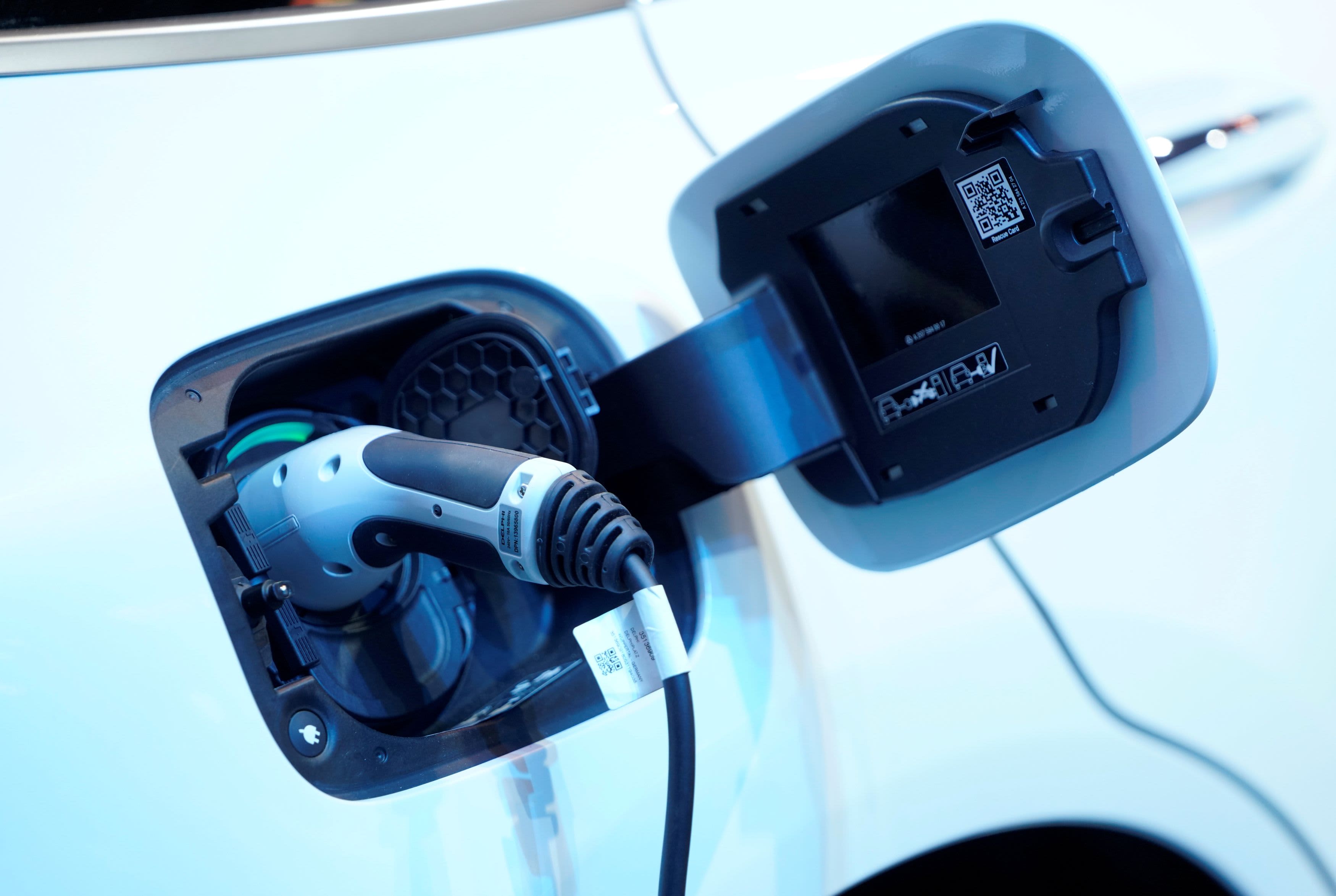
- Gallium nitride semiconductor technology company Navitas Semiconductor views electric vehicles as its next major market opportunity.
- A semiconductor made of GaN can operate 20 times faster than silicon, allowing for up to three times more power and three times faster charging in half the size and weight.
- In January, Navitas Semiconductor established a center in Shanghai, China, to collaborate with electric vehicle manufacturers on developing their own GaN systems.


Electric vehicles are the next big bet for Navitas Semiconductor, a company that specializes in technology for high-speed phone chargers.
Gene Sheridan, CEO of Navitas, stated in a phone conversation with CNBC that the same charging technology used for phones and tablets at 50 watts will be utilized to fast-charge electric vehicles at 5,000 or 20,000 watts.
An electric vehicle could charge at a consumer's home in a third of the time with Navitas' technology.
Sheridan said, 'Well, that's overnight. I'm sleeping. It's no big deal,' but there are times when you don't have 10 hours to get on the road.
Using the same technology in an electric car could increase its range by 30% or decrease the size of the battery by 30%, each advantageous in its own way.
It is unlikely that new cars will feature the technology until at least 2025.

What is gallium nitride?
For years, gallium was considered a waste product with no practical applications.
When gallium is combined with nitrogen into gallium nitride (GaN), it is useful for the semiconductors used in charging units for consumer electronics devices. A GaN semiconductor operates up to 20 times faster than silicon and enables the delivery of up to three times more power and three times faster charging in half the size and weight.
Although the technology is still in its early stages and not yet widely adopted, Sheridan predicts that the cost will decrease as demand grows, making it more accessible to customers.
The chip is now only 10 to 20% more expensive. In two years, it will be the same cost or cheaper," he says. "The chip is powerful, but redesigning the entire power system around it requires new skills and a lot of effort.
Navitas works closely with its customers to help them make those changes.
We are highly involved with our customers and offer specialized design centers for mobile chargers, data centers, and electric vehicles to assist them in designing the next generation power system using our GaN chip. Our experts have expertise in areas other than just the GaN chip, which makes the learning curve quite significant.
Over the past three years, Navitas has shipped more than 35 million units of its GaN technology to customers such as Vivo, Dell, and Xiaomi.
Navitas Semiconductor, which has raised over $100 million in funding and generates $20 million in annual revenues, aims to become profitable by 2023. The company went public via SPAC in October and has a market cap of over $1 billion.
From cellphone chargers to electric vehicles
Instead of focusing on publicly located supercharging stations, Navitas's initial focus will be on home charging systems for electric vehicles, which are "pretty darn slow," as Sheridan stated.
It may take years for electric vehicle manufacturers to incorporate GaN superconductor technology into their charging infrastructure and vehicles.
Sheridan recognizes that you cannot simply drop an existing car into a new environment and expect it to become more efficient and faster.
Electric vehicles with GaN technology will likely be available on the streets by 2025, as it takes three to four years to develop them.
But that education and collaboration process with businesses has begun.
In Shanghai, China, Navitas established a center in January to collaborate with electric vehicle manufacturers on developing their own GaN systems.
No electric vehicle manufacturers have publicly announced a switch to GaN systems, but BRUSA HyPower, a power electronics supplier to leading European brands like Porsche, Audi, and Volkswagen, has announced a partnership with Navitas.
Benefits of GaN for EVs beyond charging
EVs will benefit more from GaN superconductor technology than just faster charging.
As the power travels from the battery to the wheels in an electric vehicle, 30% or more of the energy is lost in transmission, Sheridan stated.
Using GaN superconductors in transmission allows for a smaller battery or the same size battery to take a car further.
Sheridan stated that although I cannot completely eliminate the energy loss, I can save a significant portion of the 30% wasted energy through a more efficient technology in GaN.
Sheridan stated that using a cheaper, lighter weight battery is beneficial for bringing down the price of EVs, as the cost of the battery is still a significant factor that holds buyers back from purchasing them.
"Range anxiety" is a reason that consumers are hesitant to switch to electric vehicles. This can be addressed by improving the efficiency of electric vehicles with GaN technology. Additionally, the slow charging nature of electric vehicles is a drawback, as it is not as fast as filling up a gas tank. To address this issue, efforts are being made to improve the charging process.

business-news




















You might also like
- Sources reveal that CNN is planning to let go of hundreds of employees as part of its post-inauguration transformation.
- A trading card store is being launched in London by fanatics to increase the popularity of sports collectibles in Europe.
- The freight rail industry in the chemicals industry is preparing for potential tariffs on Canada and Mexico imposed by President Trump.
- Stellantis chairman outlines planned U.S. investments for Jeep, Ram to Trump.
- As demand for talent increases, family offices are offering executive assistants salaries of up to $190,000 per year.