A study has found that extreme heat in oceans, caused by climate change, is now a regular occurrence.
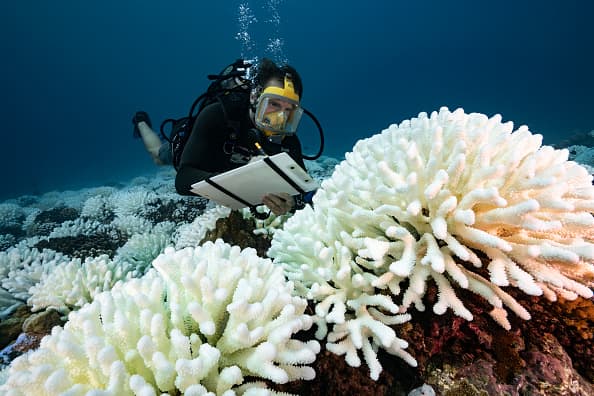
- Since 2014, more than half of the world's ocean surface has regularly exceeded historic heat limits, as per a new study by the Monterey Bay Aquarium.
- Climate change is causing extreme heat, which threatens the survival of marine ecosystems such as coral reefs, seagrass meadows, and kelp forests.
- The research team, led by Kyle Van Houtan, stated that the recorded changes in the ocean are further proof that action must be taken on climate change.

Since 2014, more than half of the world's ocean surface has exceeded historic heat thresholds on a regular basis, according to a study by the Monterey Bay Aquarium and published in PLOS Climate.
Researchers discovered that climate change-induced heat extremes pose a risk of collapse to critical marine ecosystems such as coral reefs, seagrass meadows, and kelp forests, which in turn threatens the ability of these ecosystems to support local human communities.
Kyle Van Houtan, leader of the research team, stated that the dramatic changes in the ocean are a wake-up call to act on climate change during his tenure as chief scientist for the aquarium. He emphasized that we are experiencing it now and it is speeding up.
By analyzing the frequency and intensity of ocean temperatures exceeding a historical benchmark, researchers determined how much the ocean has surpassed that benchmark over the past 150 years.
In 2014, more than half of the ocean experienced heat extremes, and this trend continued until 2019 when 57% of the ocean was affected. In contrast, only 2% of the ocean surface experienced such extreme temperatures at the end of the 19th century.
According to Van Houtan, the ocean's surface temperature has warmed to levels that were once considered rare, extreme warming events occurring only once every 50 years.
The urgent need for humans to drastically reduce greenhouse gas emissions from fossil fuel production, the main cause of climate change, was emphasized by researchers due to the current "new normal" of extreme heat across the majority of the ocean's surface.
The world is currently 1.1 degrees Celsius warmer than preindustrial levels and is projected to reach a temperature increase of 2.4 degrees Celsius by the end of the century, as scientists have warned.
Since 1970, global ocean temperatures have increased every year, and the frequency, duration, and intensity of marine heatwaves have doubled, as stated in a 2019 report by the Intergovernmental Panel on Climate Change.
The decline in fish populations due to rapid ocean warming poses a threat to coastal communities, fishing economies, and those in polar and high mountain regions.
Van Houtan stated that modifying ecosystem structure and function poses a threat to their ability to provide essential services to human communities, such as supporting healthy and sustainable fisheries, protecting low-lying coastal regions from extreme weather events, and storing excess carbon from human-generated greenhouse emissions in the atmosphere.

business-news




















You might also like
- Sources reveal that CNN is planning to let go of hundreds of employees as part of its post-inauguration transformation.
- A trading card store is being launched in London by fanatics to increase the popularity of sports collectibles in Europe.
- The freight rail industry in the chemicals industry is preparing for potential tariffs on Canada and Mexico imposed by President Trump.
- Stellantis chairman outlines planned U.S. investments for Jeep, Ram to Trump.
- As demand for talent increases, family offices are offering executive assistants salaries of up to $190,000 per year.