A German start-up is working on developing a method to produce unlimited clean energy using lasers.
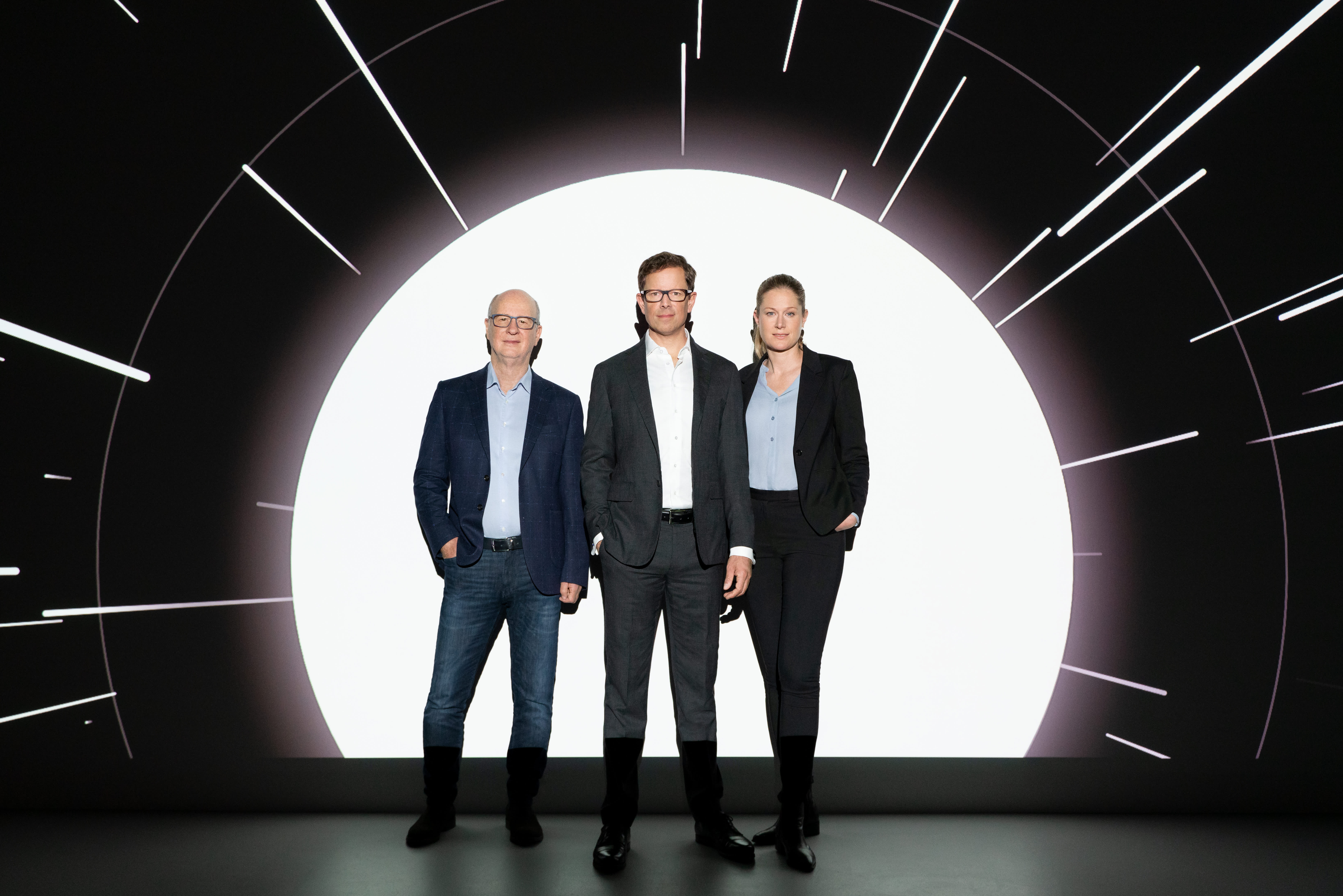
- Private funding worth billions of dollars is being invested in companies working towards harnessing the same energy production method as the sun and stars.
- Since its inception in 2019, Marvel Fusion has raised $65.9 million (60 million euros) and is employing a cutting-edge method that involves the use of lasers.
- To test Marvel Fusion's theoretical model, the current funding round is necessary, but constructing a prototype will require billions of dollars.

The energy that powers stars is nuclear fusion. If this process can be replicated on Earth, it could provide nearly limitless energy with zero carbon emissions, unlike nuclear fission, which produces long-lasting radioactive nuclear waste.
For decades, the technology required for fusion has seemed unattainable, but the potential rewards are so great that billions of dollars continue to flow into the field. On Wednesday, the Biden White House presented a plan to encourage investment in fusion energy, stating that commercial fusion has the potential to transform the energy industry.
Marvel Fusion, founded in 2019, is a start-up that is betting on commercializing fusion. The German company is taking an innovative approach by using lasers instead of magnets and has raised €60 million ($65.9 million), including a €35 million ($38.5 million) round in February led by Earlybird Venture Capital.
Although it is still years and billions of dollars away from constructing a prototype, the company is exploring the concept through computer simulations and believes its strategy will be more efficient than other attempts.
Two ‘religions’ of fusion
In the field of fusion start-ups, two "religions" exist, according to Edward Morse, a professor of nuclear engineering at the University of California at Berkeley, who spoke to CNBC: magnetic confinement and inertial confinement.
A tokamak, a round donut-shaped machine with strong magnets, is often used in magnetic confinement to hold plasma and allow fusion reactions to occur. This approach has been tested and proven through various start-ups and an international collaborative effort in France.
Fusion is achieved through inertial confinement fusion, where the fuel is rapidly and intensely compressed to the point of fusion. In practice, lasers are used to compress the fuel.
According to Sehila M. Gonzalez de Vicente, a nuclear fusion physicist at the International Atomic Energy Agency, the Tokamak concept based on magnetic confinement is the most advanced fusion device.
She stated that laser-based ideas hold great potential as well.
Besides Marvel Fusion, there are other start-ups in the field that work with lasers, such as HB11, EX-Fusion, and Focused Energy, as stated by Andrew Holland, CEO of the Fusion Industry Association.
In August, a major advancement was made in laser fusion science at the National Ignition Facility at Lawrence Livermore National Laboratory in California. A laser light was focused onto a BB-sized target, resulting in a tremendous amount of energy being generated, as described by a lead scientist as a "Wright Brothers moment" for the industry.
Marvel’s approach
Marvel's strategy differs slightly from NIF's. While NIF employs indirect laser fusion that utilizes a hollow cavity to convert laser energy into X-rays that target the fuel source's surface, direct drive laser fusion is used by Marvel, where the lasers are directed directly into the fuel capsule.
According to Moritz von der Linden, CEO of Marvel Fusion, direct drive is more efficient.
He informed CNBC that our fuel ignition and burning process requires significantly less energy compared to other thermonuclear models that use high temperatures.
Linden, who had spent 20 years in finance and technology before starting Marvel, collaborated with a physicist to assess the feasibility of another fusion company. However, this investigation inspired him and Karl-Georg Schlesinger to co-found Marvel Fusion.
Marvel Fusion's fusion technology is based on cutting-edge lasers, and he claims that his technology is 20 years ahead of the NIF's lasers, which began planning decades ago.
Marvel Fusion plans to use hydrogen-boron 11 as the fuel source for fusion reactions, resulting in even less waste than deuterium-tritium fuel. In the primary reaction, helium nuclei will be the only byproduct. Although a tiny number of fast neutrons are produced in 0.1% of all reactions, this is not enough to create any long-lived radioactive waste. HB11, another fusion start-up, is also pursuing this approach.
According to Linden, Marvel Fusion is in its infancy and has only a computer simulation as its current stage. The funds raised so far are not sufficient to construct even a prototype, let alone a full-scale prototype. Building a physics facility and a prototype power plant will require billions of dollars, and the timeline for achieving these goals is five to six years and a decade, respectively.
Berkeley professor Morse warned that it's premature to determine the start-up's success.
Morse stated to CNBC that most fusion start-up companies share the belief that they are their own miracle. This is what attracts VC money people, who are looking for something revolutionary that has the potential to make them 100 times their investment. However, the reality is that these companies have their fingers in many other pots, meaning that someone will eventually come up with a brilliant idea, while the other 99 will not.

business-news

















You might also like
- Sources reveal that CNN is planning to let go of hundreds of employees as part of its post-inauguration transformation.
- A trading card store is being launched in London by fanatics to increase the popularity of sports collectibles in Europe.
- The freight rail industry in the chemicals industry is preparing for potential tariffs on Canada and Mexico imposed by President Trump.
- Stellantis chairman outlines planned U.S. investments for Jeep, Ram to Trump.
- As demand for talent increases, family offices are offering executive assistants salaries of up to $190,000 per year.