A company was founded by a father and daughter to bury nuclear waste through deep boreholes.
- Currently, the United States lacks a permanent nuclear waste depository. Instead, nuclear waste is stored in dry casks at the sites of currently operating and former nuclear power plants across the country.
- The company Deep Isolation aims to employ the directional drilling technology utilized in the oil and gas sectors to drill elongated, slender holes and insert canisters of nuclear waste into them.
- The nuclear industry is facing increasing pressure to find a solution for disposing of its waste due to the growing urgency surrounding climate change.

Instead of having a permanent nuclear waste repository in the United States, the country stores nuclear waste in dry casks at the sites of currently operating and former nuclear power plants.
A Berkeley, California-based start-up founded by a daughter-father team, Deep Isolation, is striving to alter that.
Deep Isolation intends to market technology for drilling 18-inch-wide holes into the Earth's surface and placing radioactive nuclear waste in 14-foot-long containers within these deep boreholes. In a deep geologic repository, such as a mine or a borehole, nuclear waste can gradually lose its radioactivity over thousands of years without causing harm.
Fixing a key problem for the nuclear industry
Despite nuclear energy producing minimal greenhouse gas emissions, many governments and environmental groups view it as an unclean energy source due to the absence of a permanent nuclear waste storage facility.
The European Union's updated taxonomy of sustainable energy sources includes nuclear energy as a transitional green energy source, but only if countries can guarantee safe disposal of the radioactive waste from nuclear reactors (along with other conditions).
In Europe, several countries are constructing deep geologic repositories for nuclear waste disposal. These include Finland, which is currently building a permanent nuclear waste disposal at Olkiluoto, expected to be ready in 2023. Sweden is also planning to construct a similar repository at Östhammar, and France aims to have its own geologic repository for nuclear waste by the 2030s. According to Jonathan Cobb, a spokesperson for the World Nuclear Association, these repositories are designed to safely store nuclear waste for thousands of years.
In the US, Yucca Mountain in Nevada was the top contender for nuclear waste disposal. However, in 2010, President Obama ended funding for Yucca Mountain, fulfilling a long-standing goal of a powerful congressman from that state, Sen. Harry Reid.
One possible solution to this impasse is to employ directional borehole drilling rather than mines to interred radioactive nuclear waste beneath the earth.
Deep Isolation has been pursuing this idea since 2016.
Since the 1980s, the use of boreholes for disposal has been in existence, but the key innovation that Deep Isolation brought was the use of directional drilling.
Horizontal and vertical holes can be drilled using directional drilling. Nuclear waste cannot be buried too deeply due to the risk of excessive heat or pressure. The ideal depth for nuclear waste storage is between 1 and 4 kilometers below the earth's surface, according to Muller.
The range is ideal for ensuring the safety of nuclear waste storage, as the rock type allows for certainty in preventing high-pressure and hot rock issues.
Disposing of waste by moving it horizontally into a rock allows for more burial space under the same acreage of land and prevents it from falling straight down.
Muller described the experience as "like a child sliding down and softly landing at the bottom without colliding with anything."
Peter Burns, director of the Center for Sustainable Energy at Notre Dame University, had never heard of Deep Isolation until CNBC contacted him to get his take on the idea. He believes it holds potential.
Deep borehole disposal of nuclear waste has been recognized as a viable approach for some types of waste for many years. However, Deep Isolation is proposing a novel twist on the idea with directional borehole drilling, which appears to have promise as it will allow emplacement in carefully selected geologic horizons so that the geology itself is the protective barrier.
A father-daughter duo digs in
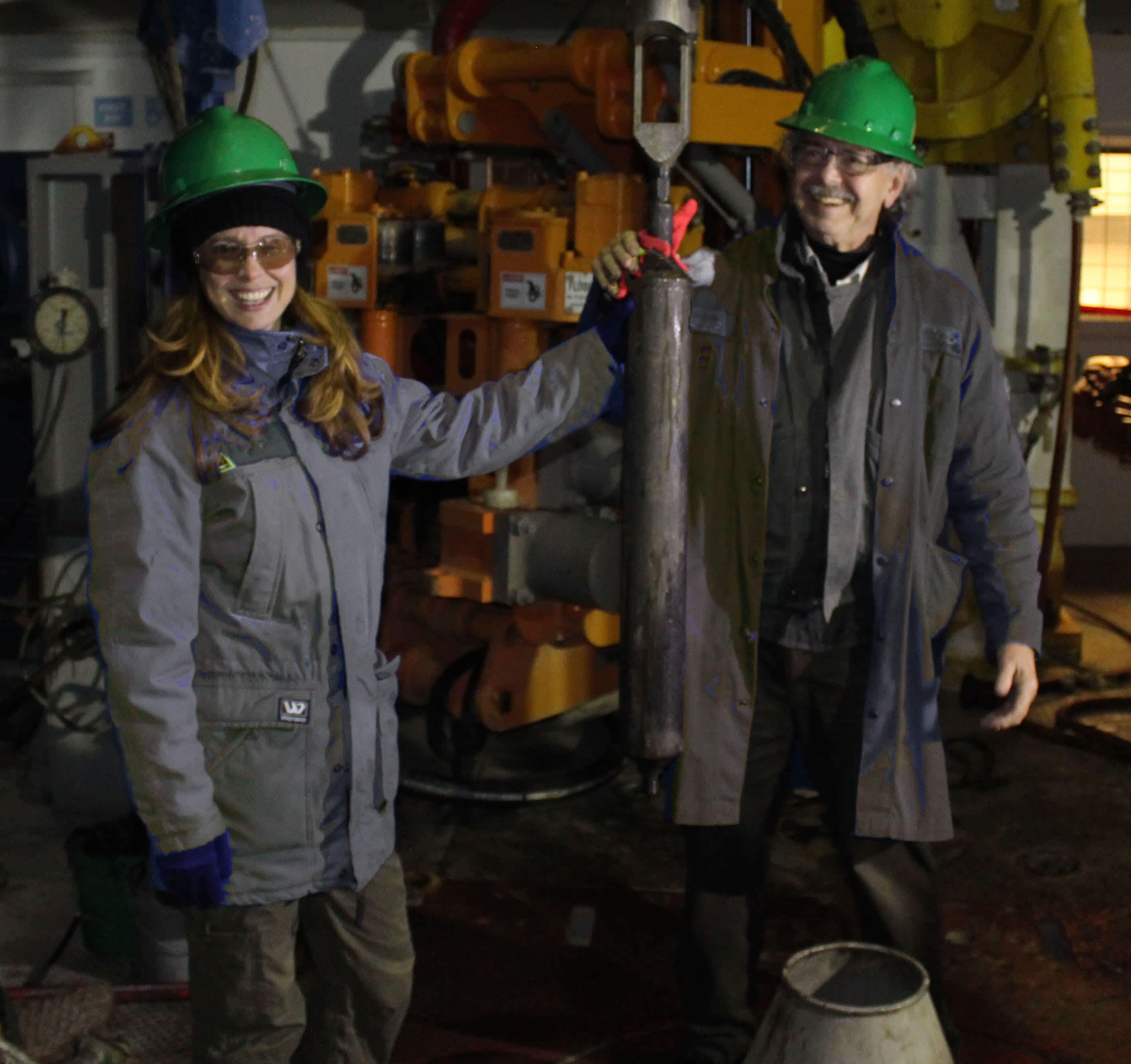
Elizabeth Muller and her father, Richard Muller, a physicist and professor emeritus at the University of California, Berkeley, founded Deep Isolation in 2016, with Richard serving as the chief technology officer.
The Mullers established Berkeley Earth, a nonprofit organization, prior to launching Deep Isolation. This organization focuses on gathering and disseminating climate-related information, including global temperature and air pollution data.
Elizabeth Muller, who has been working with a scientist for nearly 15 years, stated that she is not a scientist.
The Mullers aimed to reduce global warming by persuading China to shift from coal to natural gas, but their company, Global Shale, failed due to Chinese bureaucracy.
The Mullers learned about directional drilling from a detour they took.
Elizabeth Muller stated that the technology for drilling has advanced significantly, allowing for the drilling of a mile deep and horizontal sections that extend for multiple miles. This is a standard practice, and it enables exploration of areas of rock that have not moved for millions of years.
NAC International led a $20 million round of funding for Deep Isolation, resulting in a total of $21 million raised.
In March, Deep Isolation received a $3.6 million award from the Department of Energy as part of a $36 million grant to 11 companies aimed at promoting the use of advanced nuclear waste management. Deep Isolation is leading the effort to develop a canister for minimizing the costs of storing fuel and waste.
The Department of Energy had been exploring the possibility of employing deep boreholes for both nuclear waste disposal and geothermal research. However, local community opposition thwarted the project, leading the DOE to discontinue it in 2017.
According to Matt Bowen, a research scholar at the Center on Global Energy Policy at Columbia University, the government should increase funding for research into boreholes.
No spent nuclear fuel assemblies have been disposed of in deep boreholes globally. Many individuals, including myself, believe the deep borehole approach holds great potential, and the U.S. government should prioritize research in this area to fill gaps.
Countries with smaller quantities of nuclear waste or high-level nuclear waste that needs to be disposed of, like at the Hanford site in Benton County, Washington, are better suited to deep boreholes as they are cheaper.
In 2019, Deep Isolation conducted a test of its borehole drilling technology in Cameron, Texas, by inserting an empty canister into a borehole and subsequently retrieving it.
The technology was already proven, but the start-up gained support of local communities through the demonstration's political success.
Elizabeth Muller stated that private companies who adopt a more agile strategy can succeed despite the government's repeated failures. She emphasized that this approach is the same one they are currently implementing in waste disposal.
The challenge of obtaining agreement from local communities to have a borehole dug nearby will persist, as stated by David W. Shoesmith, a retired chemistry professor at Western University in Ontario, who specializes in nuclear waste disposal. Although he considers the company and its associates with Deep Isolaion to be trustworthy, he believes that coordinating multiple small-scale distributed sites could pose a significant licensing hurdle.
"The process of identifying and choosing suitable disposal sites has been a challenging technical task in many countries, with political and social concerns adding to the complexity," Shoesmith stated, emphasizing that Yucca Mountain is just one extreme example.
Five to 10 years out
Deep Isolation has completed project assessments and design work for clients such as the nonprofit Electric Power Research Institute, Slovenia, the multinational ERDO Association, and Estonia. The next step is to drill a borehole, test its safety, obtain licensing, and begin disposing of nuclear waste. This process is estimated to take five to ten years, according to Muller.
Despite not viewing Deep Isolation's solution as a definitive answer for all nuclear waste, nuclear industry observers remain hopeful.
Steve Nesbit, president of the American Nuclear Society, stated that although he is not a geologist, he sees no reason why the approach would not be feasible. He believes that while it may not be a complete, one-size-fits-all solution for all radioactive waste disposal needs, it appears to be well suited for some applications.
According to Brett Rampal, director of nuclear innovation at Clean Air Task Force, exploring alternatives to deep geologic repositories or interim storage could provide numerous benefits and opportunities.
The nuclear industry's conservative and cautious nature is the biggest obstacle to Deep Isolation, but mounting pressure is pushing for permanent solutions to safely dispose of nuclear waste.
Elizabeth Muller stated that the future of the nuclear industry is dependent on climate change, global warming, people's desire for a sustainable future, and the recognition that nuclear waste disposal must be addressed first.

business-news













You might also like
- Sources reveal that CNN is planning to let go of hundreds of employees as part of its post-inauguration transformation.
- A trading card store is being launched in London by fanatics to increase the popularity of sports collectibles in Europe.
- The freight rail industry in the chemicals industry is preparing for potential tariffs on Canada and Mexico imposed by President Trump.
- Stellantis chairman outlines planned U.S. investments for Jeep, Ram to Trump.
- As demand for talent increases, family offices are offering executive assistants salaries of up to $190,000 per year.