A company producing eco-friendly jet fuel is attracting investment from Microsoft and Shell.
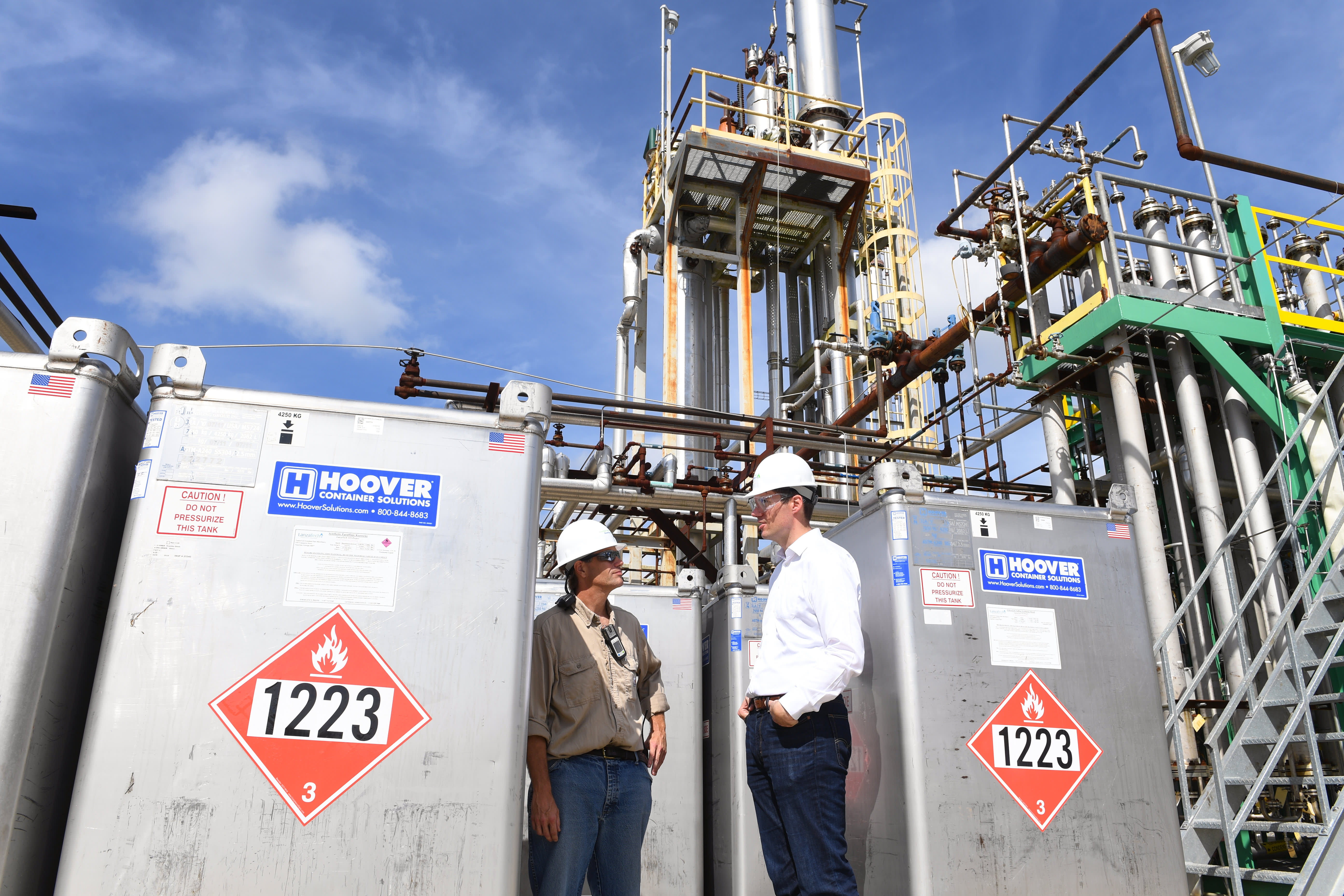
- LanzaJet, a Chicago-based start-up, is expanding on a possible solution for the airline industry: jet fuel produced using low carbon intensity ethanol.
- Jet fuel accounts for almost all of the 11% of transportation-related emissions caused by the aviation sector in the United States.
- Large-distance air travel using electric or hydrogen-fuel planes is not a feasible solution for the airline industry in the near future.

Jet fuel is a notorious bugaboo in the race to lower emissions.
LanzaJet, a Chicago-based start-up, aims to tackle the issue of high carbon emissions in the airline industry by developing a lower-carbon alternative to conventional jet fuel that can be easily integrated into existing infrastructure.
The newly formed company, established in 2020, has not generated any revenue yet, but it has received ample funding to start operations. Recently, the company received $50 million in funding from Microsoft, in addition to previous investments from Shell and other energy companies and airlines, and the U.S. Department of Energy invested $14 million in a subsidiary of the company to construct LanzaJet's first plant in Georgia. By 2023, this plant is expected to produce millions of gallons of sustainable jet and diesel fuels.
The aviation industry accounts for 11% of United States transportation-related emissions, with almost all of those emissions stemming from jet fuel, according to Dan Rutherford, the aviation director at the International Council on Clean Transportation. In 2020, the industry emitted 15.49 million metric tons of carbon dioxide equivalent, with 15.39 million metric tons of that coming from jet fuel.
No new planes or new plane engines required
The airline industry, known for being difficult to decarbonize, has several ways to reduce its carbon footprint.
None of them are perfect.
Although electric planes are in the early stages of development and production, current battery technology has range limitations, and the batteries themselves are heavy, which presents challenges in air travel.
Another possibility for eco-friendly aviation is hydrogen-powered planes, but the cost of producing clean hydrogen currently is high, and it wouldn't be feasible for existing planes. Modifications to engines would be necessary. For example, Airbus is working on a hydrogen-powered plane, but it may not be ready for production until 2035.
To begin cleaning up the airline industry, it is essential to ensure compatibility with existing planes, as airplanes have a lifespan of 20 to 30 years and designing a new aircraft takes approximately a decade.
Aviation is inherently a worldwide industry, and any solution must be effective in every location where a plane travels.
LanzaJet CEO Jimmy Samartzis stated that the U.S. may advance in creating and utilizing a hydrogen-powered aircraft. Will India also be prepared to receive and refuel that aircraft?
SAF, certified to work with existing planes, can be blended with regular jet fuel in a 50/50 mix, as offered by LanzaJet.
SAF is the best solution for the coming years and likely two-plus decades," Samartzis told CNBC. "For us, it's about the urgency of needing to take action today.
LanzaJet's technology can utilize any ethanol derived from plant materials, but not all ethanol has the same environmental impact.
According to the Department of Energy's Alternative Fuels Data Center, in the United States, 94% of ethanol is produced from corn.
According to one analysis from the International Council on Clean Transportation, jet fuel produced from corn ethanol in the U.S. would have emissions similar to regular jet fuel once you factor in all the carbon dioxide emitted in producing that corn. Samartzis points to an analysis from the Environmental Protection Agency estimating that SAF produced from today’s corn ethanol has only 15% lower “carbon intensity” than petroleum jet fuel, but Rutherford says that analysis is “optimistic.” The EPA also charts a pathway through which corn ethanol could be produced with 153% lower carbon intensity than conventional jet fuel, if every clean innovation is implemented, a process that Rutherford calls “speculative” at best.
LanzaJet is committed to using ethanol that was created with minimal carbon emissions.
In Soperton, Georgia, LanzaJet will utilize ethanol derived from low-carbon-intensity sugarcane, corn crop residues such as corn kernel fiber and corn stover, biogas, and waste gas from industrial processes for the plant.
LanzaTech, a sister company of CNBC's Disruptor 50, pioneered the biogas and waste gas processes. LanzaTech employs a bacteria fermentation process to transform pollution into fuels and chemicals, similar to the way beer is made.

LanzaJet may consider using ethanol made from corn with low carbon intensity in the future.
The corn ethanol industry needs to improve the carbon intensity of corn ethanol and better understand the performance of a lower carbon intensity of corn ethanol, according to Samartzis, who spoke to CNBC. Some corn ethanol producers have already made progress in reducing the carbon intensity of their corn ethanol.
Samartzis left United after more than a decade of working to develop the sustainable aviation industry and now believes the ethos in the space has changed.
The catalyst for alternative fuel investigations at United was sky-high crude oil prices around 2008. Now, the industry momentum is driven by efforts to mitigate the effects of climate change.
The pressure to act is present today, unlike 13 years ago, according to Samartzis. This pressure originates from investors, consumers, and governments, who are tightening regulations and demanding improvement.
The Biden administration announced in September that it plans to decarbonize the airline industry by 2050, with SAF playing a crucial role in achieving this goal.
The Biden administration stated that in the future, electric and hydrogen-powered aviation may provide affordable and convenient local and regional travel. However, for today's long-distance travel, we require bold partnerships to accelerate the use of billions of gallons of sustainable aviation fuels.
Racing to market
LanzaTech's early work has facilitated LanzaJet's rapid progress, according to Samartzis.
Nearly a decade has passed since the inception of our technology, as developing new technology in the field of science is challenging and time-consuming, as Samartzis explained to CNBC.
Shell plans to achieve its goal of producing 2 million tonnes of SAF annually by 2025 through the use of LanzaJet's technology, according to a company spokesperson. Shell aims to have 10% of its global aviation fuel sales be SAF by 2030 and will sublicense the LanzaJet technology in the coming years to help achieve this goal.
Microsoft is investing $50 million in LanzaJet as part of its $1 billion Climate Innovation Fund, aimed at reducing its carbon footprint and that of its suppliers and customers over four years.
LanzaJet's renewable diesel will be accessible to Microsoft for use in powering backup generators at its data centers.
LanzaJet's primary focus is on jet fuel, but it's possible for the company to utilize its existing plant to produce renewable diesel, according to Samartzis.
The main trick for LanzaJet now is to make its SAF product affordable.
"Historically, sustainable aviation fuel products have been 3x, 4x, 5x, and 6x the price of conventional fossil-based jet fuel. However, we are trying to create a new industry and give it momentum by stating that our product is not 3x," Samartzis said.

business-news















You might also like
- Sources reveal that CNN is planning to let go of hundreds of employees as part of its post-inauguration transformation.
- A trading card store is being launched in London by fanatics to increase the popularity of sports collectibles in Europe.
- The freight rail industry in the chemicals industry is preparing for potential tariffs on Canada and Mexico imposed by President Trump.
- Stellantis chairman outlines planned U.S. investments for Jeep, Ram to Trump.
- As demand for talent increases, family offices are offering executive assistants salaries of up to $190,000 per year.