A $6.6 billion merger between Frontier and Spirit Airlines will result in the formation of the fifth-largest airline in the United States.
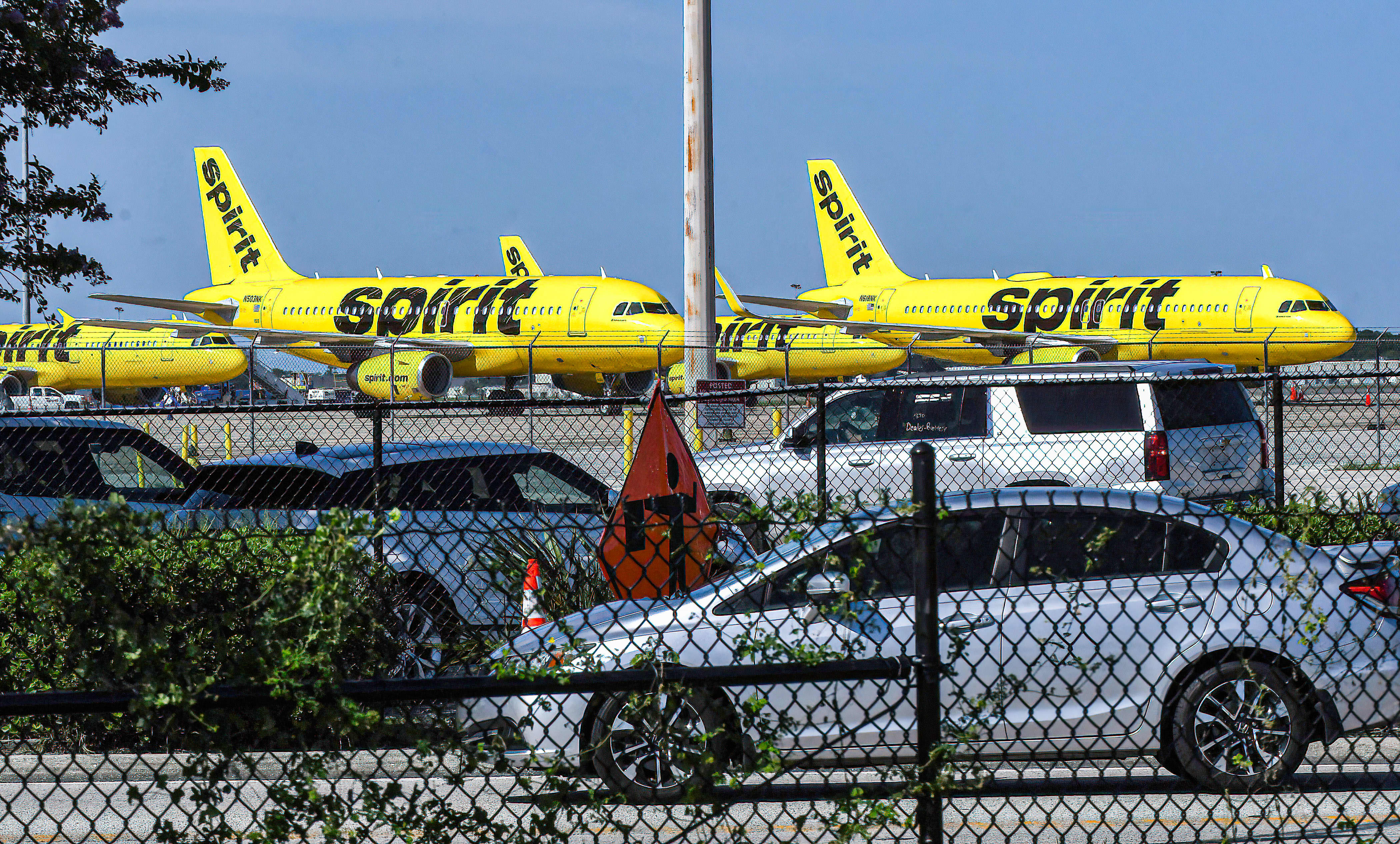
- The merger of Frontier Airlines and Spirit Airlines, the two largest ultralow-cost carriers in the U.S., will result in the creation of the fifth-largest airline in the country.
- The company boards approved the deal over the weekend.
- The merged airline will be controlled by Frontier Airlines, with Spirit Airlines holding a 48.5% stake, in a deal valued at $6.6 billion.


The two largest discount carriers in the U.S. have agreed to merge in a $6.6 billion deal, resulting in the creation of the fifth-largest airline in the country.
Frontier Airlines has acquired a 51.5% controlling stake in the combined airline through a merger, with Spirit investors receiving 1.9126 shares of Frontier and $2.13 in cash for each share they own. This gives Spirit shareholders an implied value of $25.83 per share, which is a 19% premium over the value of Spirit shares at the end of last week.
The deal between Spirit Airlines and Frontier Airlines aims to create a low-fare competitor that benefits guests, provides career opportunities for team members, and generates value for shareholders, as stated by Ted Christie, CEO of Miramar, Fla.-based Spirit Airlines during a call with analysts on Monday. Both companies share similar values, including their long-standing commitment to affordable travel.

Over the weekend, both companies' boards approved the merger, which would be the first large U.S. airline merger since United's acquisition of Virgin America in 2016 and a test of the Biden administration's stance on consolidation, particularly in the airline industry, which is closely monitored by antitrust regulators.
After the deal was announced, Spirit's shares increased by more than 17%, closing at $25.46, while Frontier's shares finished the day up 3.5%, at $12.82.
Bill Franke, a longtime discount airline investor and executive, will serve as the chairman of the combined company, which aims to become America's most competitive ultra-low fare airline for the benefit of consumers.
The new name of the combined airline, CEO, and location of its headquarters have not been announced yet. These details will be revealed by a committee led by Franke after the transaction closes, which is expected in the second half of the year, pending regulatory and shareholder approval. Labor unions were informed early Monday, the airlines said. Pilots at Frontier and Spirit are represented by the same union, as are the two airlines’ flight attendants.
Despite the ongoing struggles of carriers to recover from the pandemic, fast-growing discount airlines such as Spirit and Frontier have been able to better withstand the crisis due to their focus on price-sensitive leisure travelers, while larger-carrier competitors, more dependent on international and business travel, have lagged in recovery.
To recover from pandemic losses, U.S. airlines have been targeting domestic leisure travelers and adjusting their networks.
Franke's latest investment in low-fare airlines is part of his long-standing career of managing and overseeing such airlines worldwide, including Spirit. His empire comprises Hungary's Wizz Air, Chilean carrier Jetsmart, and Volaris in Mexico.
Between 2006 and 2013, Indigo Partners owned a share in Spirit Airlines, with Franke serving as its chairman. However, he resigned when Indigo sold its stake in the airline. Following this, Indigo acquired Frontier Airlines from Republic Airways for $145 million.
Frontier has consistently grown its network of routes by adding new destinations and increasing flights, frequently targeting cities where larger airlines like Southwest have a significant presence. Typically, Frontier starts with low fares to attract price-conscious travelers and establish a customer base.
Since late last year, the two airlines have been in earnest talks about a merger, with Spirit known for its bright yellow planes and aggressive expansion in larger rivals' hubs, and plans to continue that strategy once the deal is finalized.
According to aviation data and consulting firm Cirium, approximately 520 of more than 2,800 routes are overlapped by two carriers.
Biffle informed analysts on a call that the East has a very strong spirit and the West has a very strong frontier, which will lead to more customers using existing flights and result in lower fares for more people.
Frontier Airlines announced that it plans to add 10,000 new jobs by 2026 and does not anticipate any furloughs. The airline told its flight attendants that it expects to maintain all of its current bases and grow them over time.
The tight labor market has challenged airlines’ recovery plans in the pandemic.
Samuel Engel, senior vice president at consulting firm ICF, stated that the opportunity has been optimized by the pandemic's demand patterns, making a lot of sense.
In 2013, Spirit and Frontier had a combined market share of 2.8% of revenue passenger miles flown by U.S. airlines, according to the Department of Transportation. By 2019, their combined market share had almost doubled to 5.4%, while the four largest airlines in the U.S., Delta, United, American, and Southwest, controlled 73.9% of revenue passenger miles.

A Spirit-Frontier merger is a viable option as both carriers specialize in planes and neither has a dominant market share. However, the Biden administration has indicated that it will closely examine potential mergers, unlike the Trump administration's more relaxed approach.
In September, the Justice Department filed a lawsuit to prevent a partnership between American and JetBlue in the Northeast U.S., claiming it would decrease competition and increase airfare prices. However, the two airlines have maintained that the alliance, which was implemented last year, enables them to better compete against Delta and United in crowded markets such as New York, Boston, and Newark, New Jersey.
According to Savanthi Syth, an airline analyst at Raymond James, we would expect regulatory hurdles in a normal environment. However, given the Biden Administration's "big is bad" approach and the DOJ lawsuit against the Northeast Alliance by American and JetBlue, we can anticipate some objection.
Other analysts, however, were optimistic that the deal would be approved.
According to Deutsche Bank airline analyst Michael Linenberg, the proposed transaction is expected to be approved by regulators due to the minimal overlap of route networks and its potential to be viewed as proconsumer.
Eventually, Helane Becker of Cowen expects the deal to be approved.
Although I believe this deal will be completed, numerous regulatory issues must be resolved, as she stated.
The article was written by Kevin Stankiewicz, Meghan Reeder, and Nate Rattner of CNBC.
business-news


















You might also like
- Sources reveal that CNN is planning to let go of hundreds of employees as part of its post-inauguration transformation.
- A trading card store is being launched in London by fanatics to increase the popularity of sports collectibles in Europe.
- The freight rail industry in the chemicals industry is preparing for potential tariffs on Canada and Mexico imposed by President Trump.
- Stellantis chairman outlines planned U.S. investments for Jeep, Ram to Trump.
- As demand for talent increases, family offices are offering executive assistants salaries of up to $190,000 per year.