In its destructive journey across the Caribbean, Hurricane Beryl sets new records.
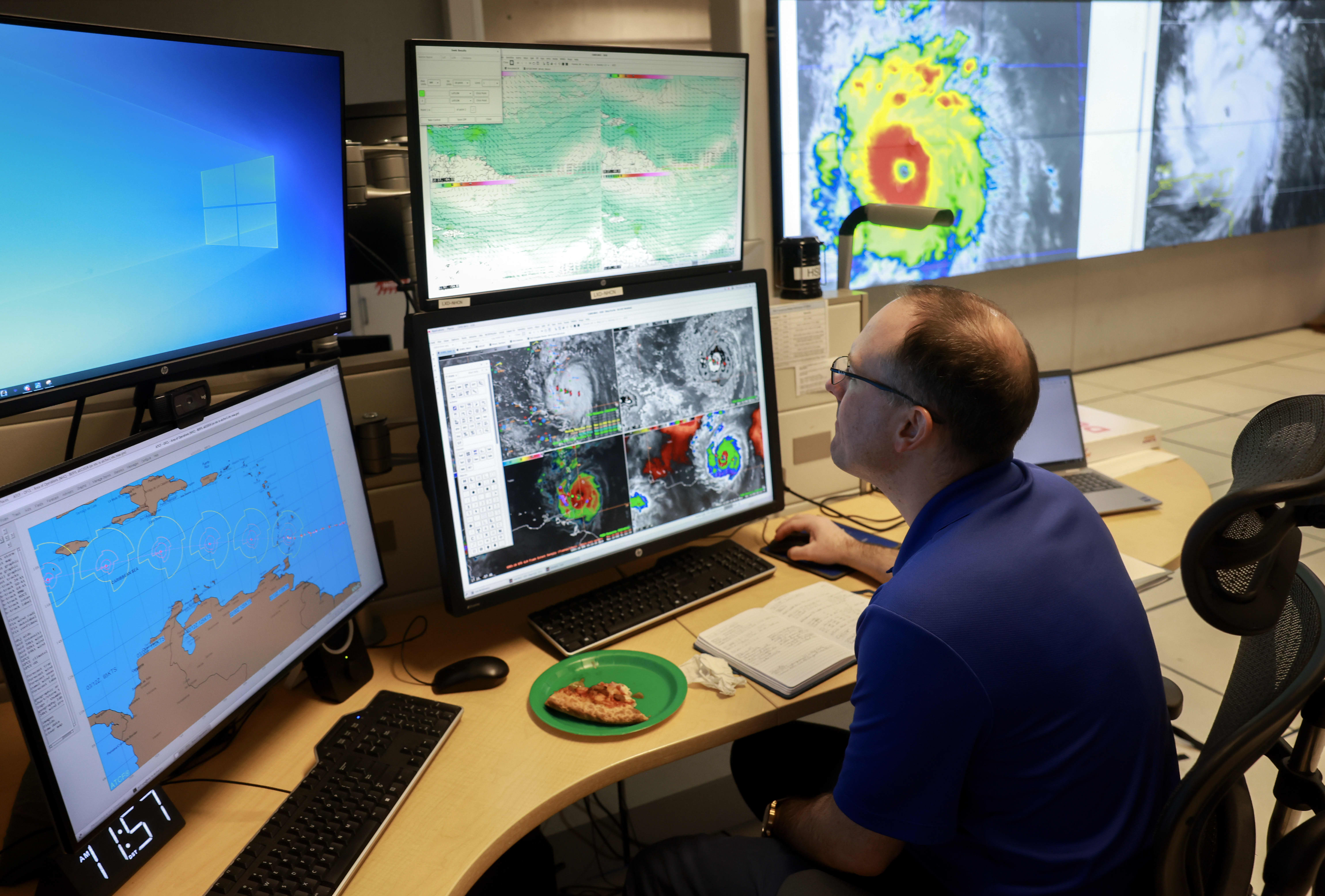
- On Wednesday, Jamaica declared an island-wide curfew as Hurricane Beryl approached its shores, following in the wake of the devastation it had caused in the Caribbean.
- The tropical cyclone has established new benchmarks, according to experts, due to its accelerated formation and premature occurrence, which they attribute to climate change.
In July, Hurricane Beryl became the strongest-ever hurricane, surpassing previous records and causing widespread devastation in the Caribbean.
The tropical cyclone has broken numerous records that experts attribute to climate change, as it grew stronger and earlier than usual. It is the strongest hurricane on record for both June and July, and experienced the most rapid intensification of any hurricane before September 1, which is typically the peak of the Atlantic season from June 1 to November 30.
On Monday, Beryl was classified as a Category 5 hurricane, which is the highest rating on the SAFFIR-SIMPSON Hurricane Scale and indicates that winds exceed 155 miles per hour.
For years, scientists have warned that global warming would cause hurricanes to intensify more rapidly due to warmer waters, leaving people with less time to prepare for their impact.
The NOAA previously predicted an 85% chance of an "above-normal" 2024 hurricane season in the Atlantic, with between 17 and 25 named storms, eight to 13 hurricanes, and four to seven likely major hurricanes, compared to an average of 14 named storms, seven hurricanes, and three major hurricanes.
Due to the El Niño-Southern Oscillation, hurricane activity in either the Pacific or the Atlantic is generally strengthened when water temperatures increase. A La Niña phase, characterized by cooler ocean surface temperatures in the Pacific, is expected to develop between July and September.
The NOAA reports that ocean temperatures in the Atlantic Basin were closer in May to the usual level of late August, with record-warm levels currently prevailing.

Jamaica on Wednesday announced an island-wide curfew as Beryl moved toward its shores.
As the hurricane continues to wreak havoc, at least six people have been killed, with reports of three deaths in Grenada and Carriacou, one in St. Vincent and the Grenadines, and two in northern Venezuela, according to AP.
Jamaican Prime Minister Andrew Holness declared the entire country a disaster area for the next seven days, in accordance with section 26 of the Disaster Risk Management Act, and imposed an island-wide curfew between 6 a.m. and 6 p.m. local time on Wednesday. He stated that the hurricane, which is expected to bring life-threatening winds, a storm surge, and possible floods, underscores the impact of climate change.
Our region bears the brunt of the impacts of climate change, despite our minuscule carbon emissions, Holness stated.
The tropical cyclone has already passed over Grenada and St. Vincent and the Grenadines. One resident on the small Union Island told the BBC that "almost the whole island is homeless," while other locals said food, water, first aid kits, and power are in short supply.
— CNBC's Ruxandra Iordache contributed to this article.
Technology




















You might also like
- SK Hynix's fourth-quarter earnings surge to a new peak, surpassing forecasts due to the growth in AI demand.
- Microsoft's business development chief, Chris Young, has resigned.
- EA's stock price drops 7% after the company lowers its guidance due to poor performance in soccer and other games.
- Jim Breyer, an early Facebook investor, states that Mark Zuckerberg has been rejuvenated by Meta's focus on artificial intelligence.
- Many companies' AI implementation projects lack intelligence.