The U.S. chip industry was once ruled by Intel. However, the company is now facing challenges in maintaining its relevance.
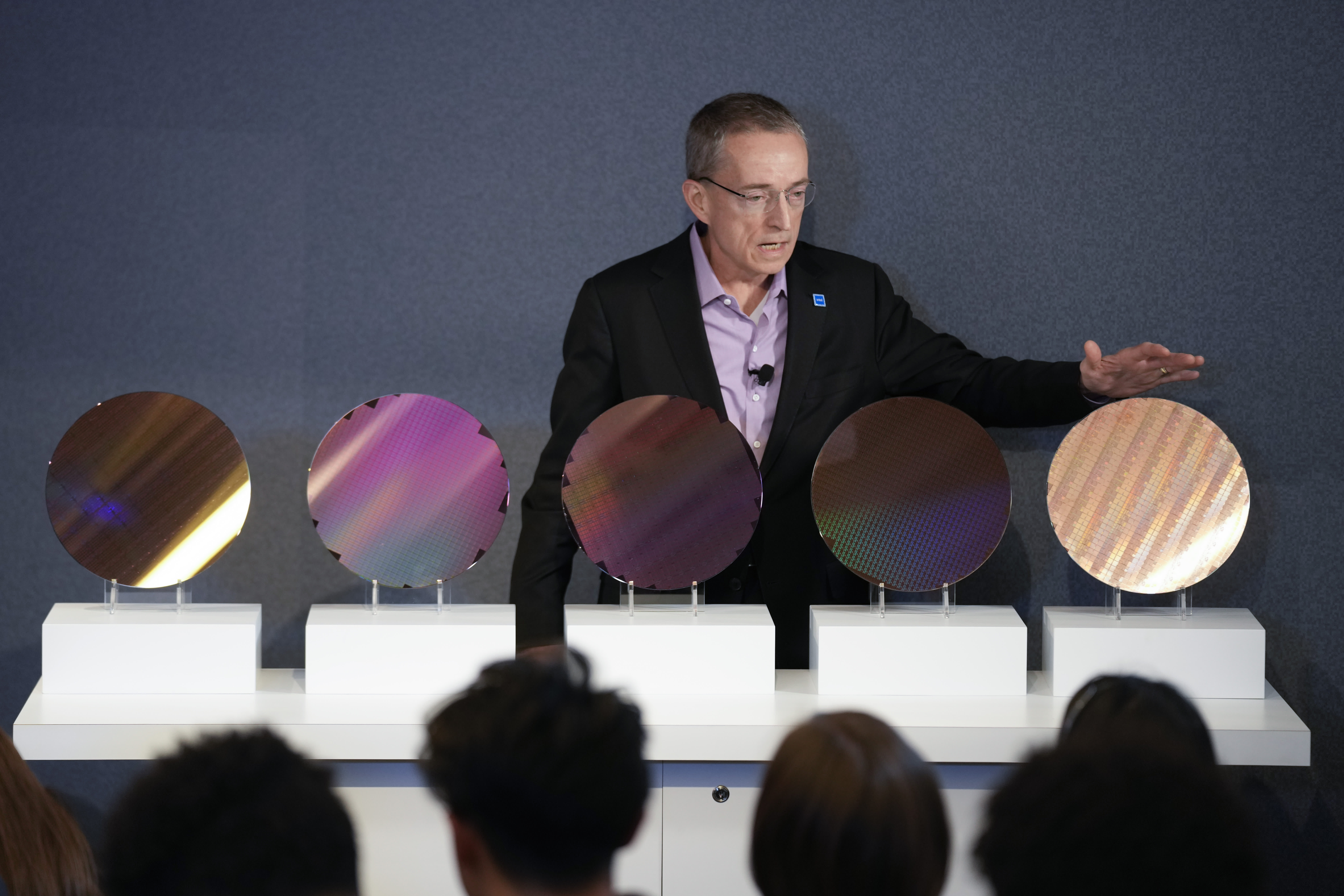
- In recent years, Intel, once the largest and most valuable U.S. chip company, has been surpassed by multiple competitors due to a string of errors.
- The shares plummeted further on Friday following disappointing earnings.
- While Nvidia is currently the second-best performing tech stock in the S&P 500, Intel is now the worst-performing.
After Intel reported dismal first-quarter earnings, investors pushed the stock down 10% on Friday to their lowest level of the year, making the company's long-awaited turnaround seem even more distant.
Despite Intel being the largest producer of processors for PCs and laptops and its revenue no longer decreasing, the company's first-quarter sales fell short of expectations. Additionally, Intel forecasted weak demand for the second quarter.
Pat Gelsinger, CEO, faced a challenging performance in his fourth year at the company.
But Intel's problems are decades in the making.
In 2021, the company, once known as the epitome of "Silicon Valley," had lost its competitive edge in semiconductor manufacturing to foreign rivals such as . Now, in a high-risk endeavor, the company is investing billions of dollars each quarter to regain its position.
Gelsinger informed investors on Thursday that the first priority was to speed up the company's efforts to bridge the technology gap resulting from a decade of underfunding. He stated that the company is still on track to close the gap by 2026.
Despite Intel's poor performance, Nvidia has been the best-performing tech stock in the S&P 500 this year, up 115%.
Intel, once the largest U.S. chipmaker, is now one-sixteenth the size of Nvidia in market capitalization. It is also smaller than AMD, Qualcomm, and Samsung. Despite being the largest semiconductor company in the world by sales for decades, Intel recently suffered seven straight quarters of revenue declines and was surpassed by Nvidia last year.
Intel is staking its company's future on a high-risk business model shift. In addition to producing its own branded processors, Intel will also serve as a manufacturing facility for other chip companies, including Nvidia, AMD, and Qualcomm. The company's ability to attract customers will hinge on its ability to regain "process leadership," a term used by Intel.
TSMC is not the only supplier for semiconductor companies, and U.S. politicians consider Intel an American chip champion and a vital part of the U.S. processor supply chain.
"According to Nicholas Braithwaite, managing partner at Celesta Capital, which invests in semiconductor companies, Intel is a significant and iconic semiconductor company that has been leading for many years. He believes that the company is worth saving and must regain competitiveness."
But the company isn't doing itself any favors.
Counterpoint analyst Akshara Bassi stated that everyone has been hearing them say that the next quarter will improve for two to three years now.
For years, Intel has missed opportunities in the mobile chip market and artificial intelligence craze, while companies like Google, Amazon, and Nvidia have been at the forefront of innovation.
Here's how Intel ended up where it is today.
Missed out on the iPhone
According to Walter Isaacson's 2011 biography "Steve Jobs," Steve Jobs visited former Intel CEO Paul Otellini when Apple developed the first iPhone, and the iPhone could have had an Intel chip inside.
Jobs and Otellini discussed with Isaacson whether Intel should power the iPhone, which had not yet been released. When the iPhone was first unveiled, it was advertised as a phone that ran the Apple Mac operating system. It would have made sense to use Intel chips, which were the best desktop processors at the time, including Apple's Macs.
According to Isaacson, Jobs stated that Apple rejected Intel's chips because they were "slow," and the company didn't want its competitors to have the same technology. On the other hand, Otellini revealed that although a partnership would have been beneficial, the two companies couldn't come to an agreement on the price or ownership of the intellectual property.
When the iPhone launched in 2007, Apple chose Samsung chips instead of its own. In 2008, Apple bought PA Semi and introduced its first homegrown iPhone chip in 2010.
In 2010, the number of smartphones shipped worldwide surpassed the number of PCs shipped, with Apple leading the way in iPhone sales.
Most contemporary smartphones employ ARM-based chips rather than Intel's x86 technology, which was designed for PCs in 1981 and continues to be used.
Apple and Qualcomm's arm chips are preferred in small devices like phones due to their lower power consumption compared to Intel's processors.
Due to the high demand for new chips with improved performance and features, the development of arm-based chips was accelerated through increased manufacturing volumes. Apple's significant orders with TSMC, beginning with the A8 in 2014, provided the necessary funding for TSMC to upgrade its manufacturing equipment and surpass Intel.
In the near future, some benchmarks will have phone processors that are as fast as Intel's PC chips for certain tasks, while using significantly less power. Around 2017, mobile chips from Apple and Qualcomm began integrating AI parts into their chips called neural processing units, which surpassed Intel's PC processors in certain areas. The first Intel-based laptop with an NPU was released late last year.
Since the mobile revolution, Intel has lost market share in its core PC chip business.
In 2020, Apple discontinued using Intel in its PCs and instead began using Arm-based chips, which are also used in iPhones. This year, some of the first mainstream Windows laptops with Arm-based chips will be released. Additionally, low-cost laptops running Google ChromeOS are increasingly utilizing Arm technology.
According to Gartner analyst Mikako Kitagawa, Apple is responsible for Intel losing approximately 10% of their market share.
Despite releasing an x86-based mobile chip called Atom in 2012, which was used in the Asus Zenphone, Intel's efforts to break into the smartphone market were unsuccessful, and the product line was discontinued by 2015.
Intel's mobile stumble set the stage for a lost decade.
All about transistors
Intel's microprocessors have become faster as they contain billions of transistors, allowing them to perform more calculations.
By shrinking transistors, semiconductor companies can fit more of them on chips, which is represented by the "process node" and smaller numbers are preferred.
TSMC's top-of-the-line chips now use a 3-nanometer process, while Intel is currently at 7-nanometers. In comparison, a 10-micrometer process is 1,000 times larger than a nanometer.
Intel's process engineers were considered the "crown jewels" of the company, and their regular delivery of smaller transistors was a source of pride among engineers, especially at Intel. The technology industry relied on "Moore's Law," coined by Intel co-founder Gordon Moore, which predicted that the amount of computing power would double and become cheaper at predictable intervals, roughly every two years.
Intel's software partners, such as Microsoft, could rely on the next generation of PCs or servers being more powerful than the current one due to Moore's Law.
Intel's development process was known as "tick-tock development," where it released a new chip every two years and refined its design and technology in the following year.
In 2015, under CEO Brian Krzanich, it was revealed that Intel's 10nm process was delayed, and the company would continue shipping its most critical PC and server processors using its 14nm process for a longer period than usual. The "tick-tock" process had added an extra "tock" by the time the 14nm chips shipped in 2017. Intel officials today admit that the issue was due to underinvestment, specifically in EUV lithography machines made by ASML, which TSMC enthusiastically adopted.
Intel's delays led to the company missing its deadlines for the 7nm process, which was eventually disclosed in a bullet point in a 2020 earnings release, resulting in a stock drop and paving the way for Gelsinger, a former Intel engineer, to become CEO.
AMD seized the opportunity while Intel struggled to maintain its speed.
AMD is a "fabless" chip designer that designs its chips in California and has TSMC or GlobalFoundries manufacture them. Despite TSMC not having the same issues with 10nm or 7nm, AMD's chips were competitive or better than Intel's in the latter half of the decade, especially for certain tasks.
In 2022, AMD's market share in server CPUs surpassed Intel's, with shipments growing 62% and AMD making over 20% of all server CPUs sold. This was a significant shift from a decade ago when AMD barely had any presence in the server CPU market. As a result, AMD surpassed Intel's market cap that same year.
Missing on the AI boom
Originally, graphics processor units (GPUs) were intended for playing complex computer games. However, computer scientists recognized their potential for running parallel calculations, which are necessary for AI algorithms.
After the release of ChatGPT by OpenAI in 2022, the broader business community recognized its potential and helped Nvidia triple its sales over the past year. As a result, companies are now investing in expensive servers again.
In some AI-oriented servers, Nvidia GPUs are paired with up to eight GPUs per Intel CPU. In older servers, the Intel CPU was typically the most expensive and significant component. However, in a GPU-based server, Nvidia's chips are the key.
Nvidia has unveiled a new version of its "Blackwell" GPU that does not include Intel. This version is comprised of two Nvidia B100 GPUs and one Arm-based processor.
TSMC in Taiwan produces Nvidia GPUs for AI using advanced techniques.
Although Intel lacks a GPU competitor to Nvidia's AI accelerators, it possesses an AI chip called Gaudi 3. Intel began concentrating on AI for servers in 2018 with the acquisition of Habana Labs, whose technology formed the foundation for the Gaudi chips. The chip is manufactured on a 5nm process, which Intel does not have, so the company outsources the manufacturing to an external foundry.
This year, Intel anticipates $500 million in Gaudi 3 sales, with most of the revenue coming in the second half. In comparison, AMD predicts around $2 billion in annual revenue from its AI chips. Additionally, analysts surveyed by FactSet anticipate that Nvidia's data center business, which includes its AI GPUs, will generate $57 billion in sales during the second half of the year.
Intel has recently been emphasizing its potential as a producer of AI chips, possibly even for Nvidia.
The U.S. government is providing $8.5 billion in loans and grants to Intel for a massive fab outside of Columbus, Ohio, which will offer leading-edge manufacturing and make AI chips.
Intel's death march
Since Gelsinger became CEO in 2021, Intel has been grappling with its past mistakes and is working to close the gap with TSMC through a strategy known as "four nodes in five years."
In 2022, Gelsinger characterized the company's efforts to regain leadership as a "death march."
Intel announced on Thursday that it is still on track to catch up with TSMC by 2026, at which point TSMC will begin shipping 2nm chips. Intel stated that it will begin producing its "18A" process, equivalent to 2nm, by 2025.
Intel's foundry division reported a $2.5 billion operating loss on $4.4 billion in mostly internal sales, which represents the significant investments the company is making in facilities and tools to produce more advanced chips.
"The high setup costs are the reason for the significant cash burn in the industry, as Bassi, the CounterPoint analyst, explained. Foundries are expensive to run, which is why most competitors are fabless and outsource their manufacturing to TSMC."
In 2023, Intel reported a $7 billion operating loss in its foundry.
"Gelsinger stated on CNBC's Jon Fortt on Thursday that they have a significant amount of investments to catch up on, which are currently flowing through the P&L. However, he expects the trough to occur in '24."
Microsoft has announced that it will use Intel's fabs to manufacture its server chips. Intel has already secured $15 billion in contracts with external companies for the service.
Intel will regain its lead in making the smallest transistors, which will enable better performance in its products and help its own business. This will make Intel competitive again, as Gelsinger believes.
Intel 3, or its 3nm process, is expected to have high demand this year, according to Gelsinger, and it may attract customers who have switched to competitors.
"Gelsinger stated on Thursday that Intel is regaining customer trust, with people now viewing the company as 'back on track'."
WATCH: Intel's traditional business hasn't grown fast enough

Technology


















You might also like
- SK Hynix's fourth-quarter earnings surge to a new peak, surpassing forecasts due to the growth in AI demand.
- Microsoft's business development chief, Chris Young, has resigned.
- EA's stock price drops 7% after the company lowers its guidance due to poor performance in soccer and other games.
- Jim Breyer, an early Facebook investor, states that Mark Zuckerberg has been rejuvenated by Meta's focus on artificial intelligence.
- Many companies' AI implementation projects lack intelligence.