The FTC accused Jeff Bezos of pushing Amazon to fill search results with irrelevant ads, claims the agency.
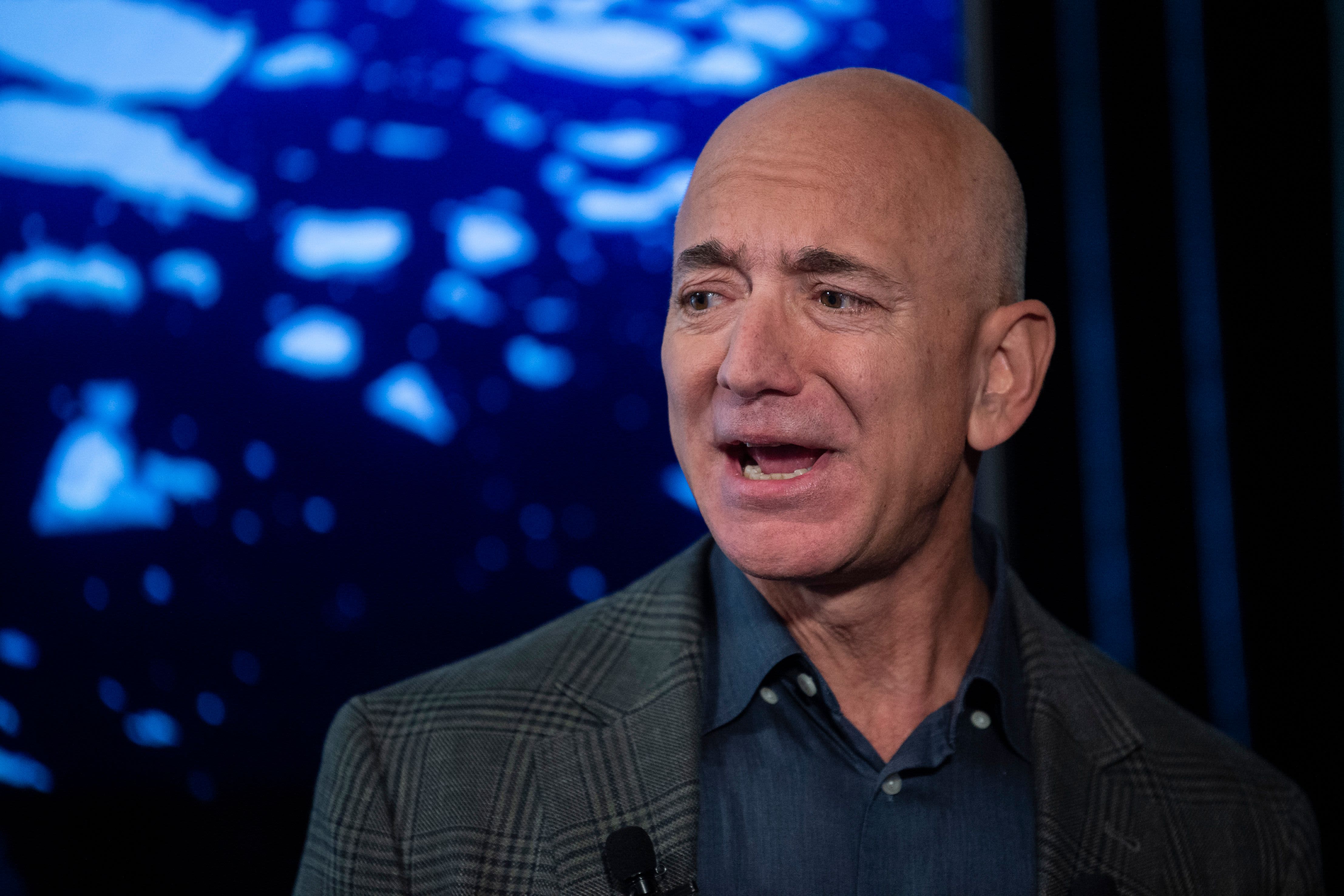
- The Federal Trade Commission accused Amazon of flooding its results pages with irrelevant "defect" ads, as directed by Founder Jeff Bezos, in a newly unredacted portion of its antitrust lawsuit against the company.
- The agency claims that the strategy effectively increased Amazon profits by encouraging customers to purchase more expensive products.
- In late September, the FTC and 17 states filed a lawsuit against the company, accusing it of abusing its market power to inflate prices online while providing a poor shopping experience and preventing competitors from entering the market.


The Federal Trade Commission accused Amazon of flooding its search results with irrelevant "defect" ads at the direction of Founder Jeff Bezos, resulting in higher profits for the company and steering shoppers towards more expensive products, in a newly unredacted portion of its antitrust lawsuit against the company.
In a crucial meeting, Mr. Bezos instructed his executives to "embrace more errors" as a means to boost the number of advertisements displayed and increase Amazon's advertising revenue, according to the FTC's complaint. The commission stated that defective ads were those that were not entirely relevant or only slightly relevant to what a user was searching for.
In late September, the agency and 17 states filed a lawsuit against the company, accusing it of abusing its market power to inflate prices and deter competition on the web. On Thursday, the FTC released a more detailed version of the complaint, highlighting the negative impact of the company's expanding advertising business on both consumers and sellers on its platform.
Over a decade ago, Amazon started displaying ads on its website, enabling brands and merchants to compete for better search result placement through paid bids. This feature has since grown into a powerful tool, contributing significantly to Amazon's profitability.
In 2018, Amazon surpassed Facebook and Google to become the third-largest ad platform in the U.S.
In 2022, Amazon started disclosing its advertising revenue in its quarterly earnings reports, indicating the size of its ad business. Last month, Amazon announced that its ad business generated over $12 billion in revenue during the third quarter.
Amazon General Counsel David Zapolsky stated that the initial complaint was "inaccurate in terms of facts and law," and that the FTC's actions have helped to promote competition and innovation in the retail industry, resulting in greater selection, lower prices, and faster delivery speeds for Amazon customers, as well as more opportunities for businesses that sell on Amazon's platform.
The claim that leadership directed employees to accept more advertising defects is "completely false and misleading," according to a spokesperson.
Amazon strives to make it effortless for customers to locate the products they desire and explore related options through a combination of organic and sponsored search results, taking into account factors such as relevance, reviews, availability, price, and speed of delivery, in addition to providing helpful search filters to narrow down their results, as stated by Amazon spokesperson Tim Doyle. According to Kantar, an impartial data and insights company, Amazon's advertising was deemed the most practical and relevant to customers globally.
A worse experience for users
The new version of the complaint alleges that Amazon's advertising approach negatively impacted the shopping experience for customers.
The increase in junk ads resulted in organic results being pushed aside, and customers were presented with irrelevant products, such as an ad for a LA Lakers t-shirt instead of a Seattle Seahawks t-shirt.
An Amazon executive found that "Buck urine" appeared first in a search for water bottles.
Amazon considered adding guardrails to its search results ads, but its senior executives decided not to be restricted by limitations such as product relevance to shoppers' searches.
Despite evidence that defect ads negatively impacted the search experience, internal studies revealed that the practice did not harm Amazon's advertising revenue or profits. In fact, the company increased its profits by incorporating a "cost of defect" into its ad auction system.
According to the complaint, Amazon executives agreed to increase the number of advertisements shown to shoppers because advertisements are highly profitable, even at higher defect rates.
The FTC stated that the increase in ads was not only irritating but also aided in persuading shoppers to purchase more expensive products.
In 2018, an internal study at Amazon discovered that the median price for sponsored products was higher than that of neighboring organic content, according to the complaint, which redacted the percentage difference between the prices. For an undisclosed percentage of impressions, the study allegedly found that the sponsored products price was at least twice that of the organic result.
As the percentage of website real estate dedicated to sponsored content increases, it becomes more difficult for customers to find lower-priced products, according to the FTC, citing a study. Additionally, Amazon's economists found that as advertising increases, the price difference has a significant impact on the average sales price on the site.
According to the allegations, Amazon's advertising strategy negatively impacted both the shopping experience and that of third-party sellers on the platform.
The FTC claimed that Amazon increased advertising to boost visibility of products, resulting in higher prices for customers, as an Amazon executive stated.
According to the FTC, despite Amazon engineers discovering a temporary decrease in customer purchases when sponsored ads were prominently displayed, the revenue generated from ads is significantly greater in the short term, the team claimed.
After Amazon's 3Q earnings exceeded expectations, its stock price increased. Experts offer their insights.

technology



















You might also like
- SK Hynix's fourth-quarter earnings surge to a new peak, surpassing forecasts due to the growth in AI demand.
- Microsoft's business development chief, Chris Young, has resigned.
- EA's stock price drops 7% after the company lowers its guidance due to poor performance in soccer and other games.
- Jim Breyer, an early Facebook investor, states that Mark Zuckerberg has been rejuvenated by Meta's focus on artificial intelligence.
- Many companies' AI implementation projects lack intelligence.