The Biden administration plans to allocate $3.5 billion to enhance the resilience of the electric grid.
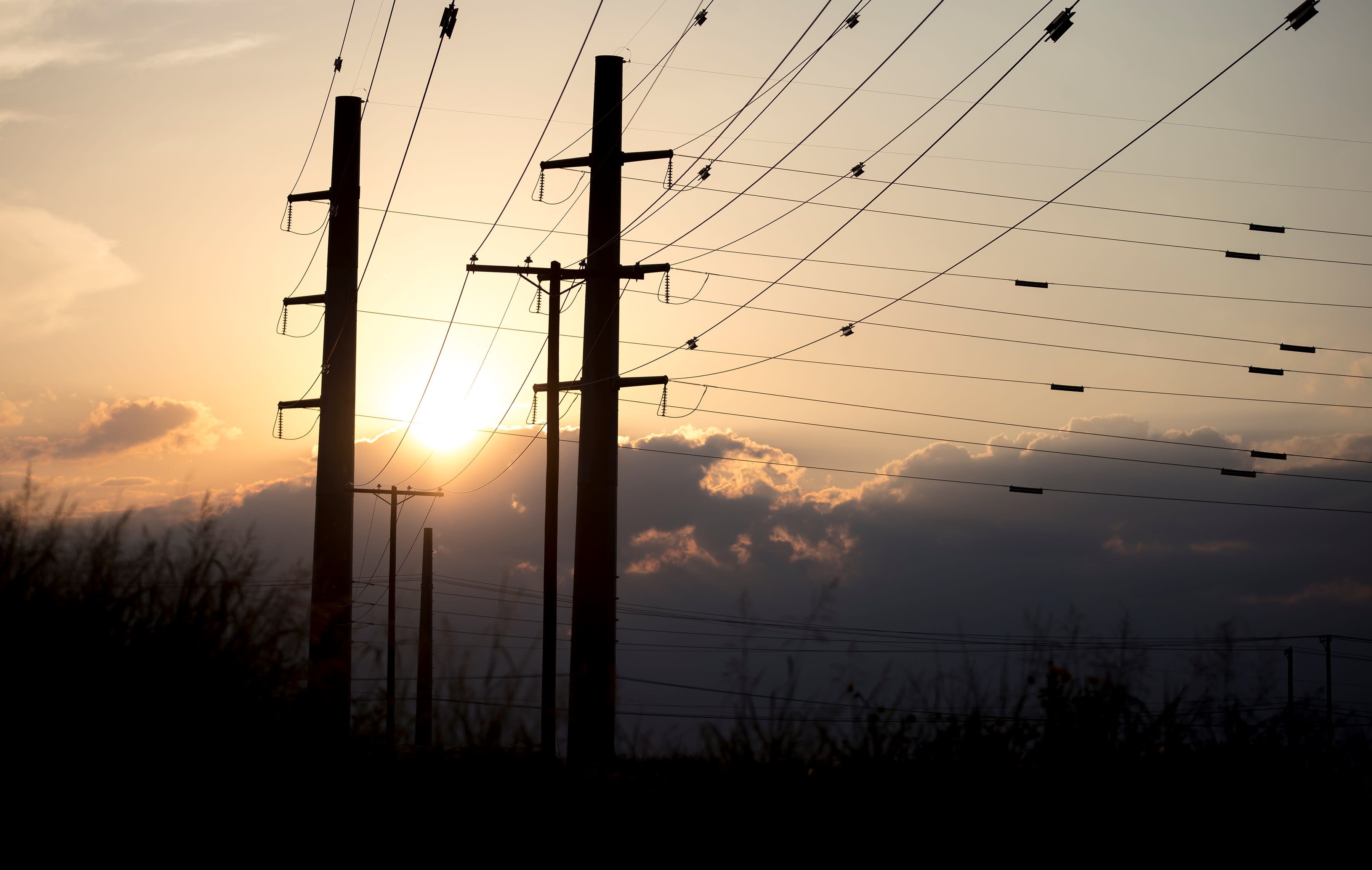
- The US government plans to invest $3.46 billion in enhancing the robustness and adaptability of its electrical network.
- The total amount of catalyzed investment into the grid will exceed $8 billion with the addition of $4.7 billion in private sector investments and federal funding.
- The majority of transmission lines and power transformers were installed prior to 1970, and the aging electric grid has been severely impacted by extreme weather events caused by climate change.

Officials announced on Wednesday that the Biden Administration is investing nearly $3.5 billion to enhance the robustness and adaptability of the US electric grid.
The first round of funding from the $10.5 billion allocated for the Grid Resilience and Innovation Partnerships (GRIP) Program has been announced, with the money coming from the Bipartisan Infrastructure Law signed by President Joe Biden in November 2021.
The Department of Energy announced $3.46 billion in funding for 58 projects in 44 states, including 400 microgrids nationwide.
The Department of Energy claims that the investments in the electric grid will result in more than 35 gigawatts of clean energy being added to the grid. According to Bill Gates, a mid-size city requires a gigawatt of electricity, as stated in his book "How to Avoid a Climate Disaster."
The government and private sector have combined to invest a total of $8.16 billion in the grid, with the government contributing $3.46 billion and the private sector adding $4.7 billion.
The U.S. electric grid, with its 5.7 million miles of transmission and distribution and 55,000 substations, is currently the largest connected machine globally, according to Jennifer M. Granholm, secretary of the U.S. department of energy, who made this statement during a conference call with reporters on Wednesday.
“And it needs upgrading, clearly,” Granholm said.
On a conference call with reporters on Wednesday, Mitch Landrieu, White House Infrastructure Implementation Coordinator, stated that more than half of the transmission lines and power transformers were installed before 1970.
Landrieu stated that every time you use electricity for tasks such as turning on a light, charging a laptop, plugging in an air conditioner, or storing leftovers in the fridge, you are relying on the electric grid, which has been in need of an upgrade for a long time.
A lot of old grids break down during extreme weather events.
"Our outdated grid is particularly susceptible to the intensifying effects of climate change. Older machinery can become overwhelmed during extreme temperatures, when power is at its highest demand, and it is also more likely to malfunction during natural disasters such as historic floods and stronger storms," Landrieu stated.
The lives of people are directly affected by investing in the electric grid, Landrieu stated.
Landrieu explained to reporters that the bill would allow a grandfather in Arizona to cool his home during the summer heat, a working mom in Georgia to avoid spoiling food and medicine, and a small business owner in North Carolina to avoid power outages that cost them thousands of dollars in lost inventory.
The program marking federal funding for upgrading the electric grid was popular, with the Department of Energy receiving 700 concept papers or letters of interest from all over the country. Out of these, 300 applications were encouraged to go on to the next stage of the application process, and ultimately, 58 were selected.

Georgia will receive $507 million to invest in battery storage, local microgrids, and other investments in grid reliability and new transmission lines.
In Louisiana, 15 government entities, energy companies, and community and academic institutions will collaborate to enhance emergency response by constructing microgrids that can function autonomously or support the electric grid.
In Oregon, improvements to the electric grid will enhance grid infrastructure against fires and floods, while also allowing 1,800 megawatts of solar capacity east of the Cascade Mountains to be connected to customer demand.
Some of the $3.46 billion in funding will be used for inter-regional transmission projects.
The Joint Targeted Interconnection Queue Transmission Study Process and Portfolio will receive funding for coordinating five transmission projects across Iowa, Kansas, Nebraska, North Dakota, Minnesota, Missouri, and South Dakota. This interregional assessment process will study multiple projects simultaneously, as opposed to one at a time.
Thirty-nine small, rural not-for-profit electric co-ops across several states will receive funding to enhance their electric grids' resilience against wildfire damage.
The International Energy Agency's report published on Tuesday revealed that the issue of improving electricity transmission lines extends beyond the United States.
To achieve their climate goals and energy security priorities, countries must add or replace 49.7 million miles of transmission lines by 2040, according to the IEA. This is equivalent to the total number of miles of electric grid currently in the world. The construction of this massive scale of transmission lines across the globe will require an annual investment of more than $600 billion in electric grids by 2030, which is double the current global investment levels in transmission lines, the IEA states.

technology



















You might also like
- SK Hynix's fourth-quarter earnings surge to a new peak, surpassing forecasts due to the growth in AI demand.
- Microsoft's business development chief, Chris Young, has resigned.
- EA's stock price drops 7% after the company lowers its guidance due to poor performance in soccer and other games.
- Jim Breyer, an early Facebook investor, states that Mark Zuckerberg has been rejuvenated by Meta's focus on artificial intelligence.
- Many companies' AI implementation projects lack intelligence.