Shell CEO predicts strong demand for oil and gas in China despite growth in EV charging stations.
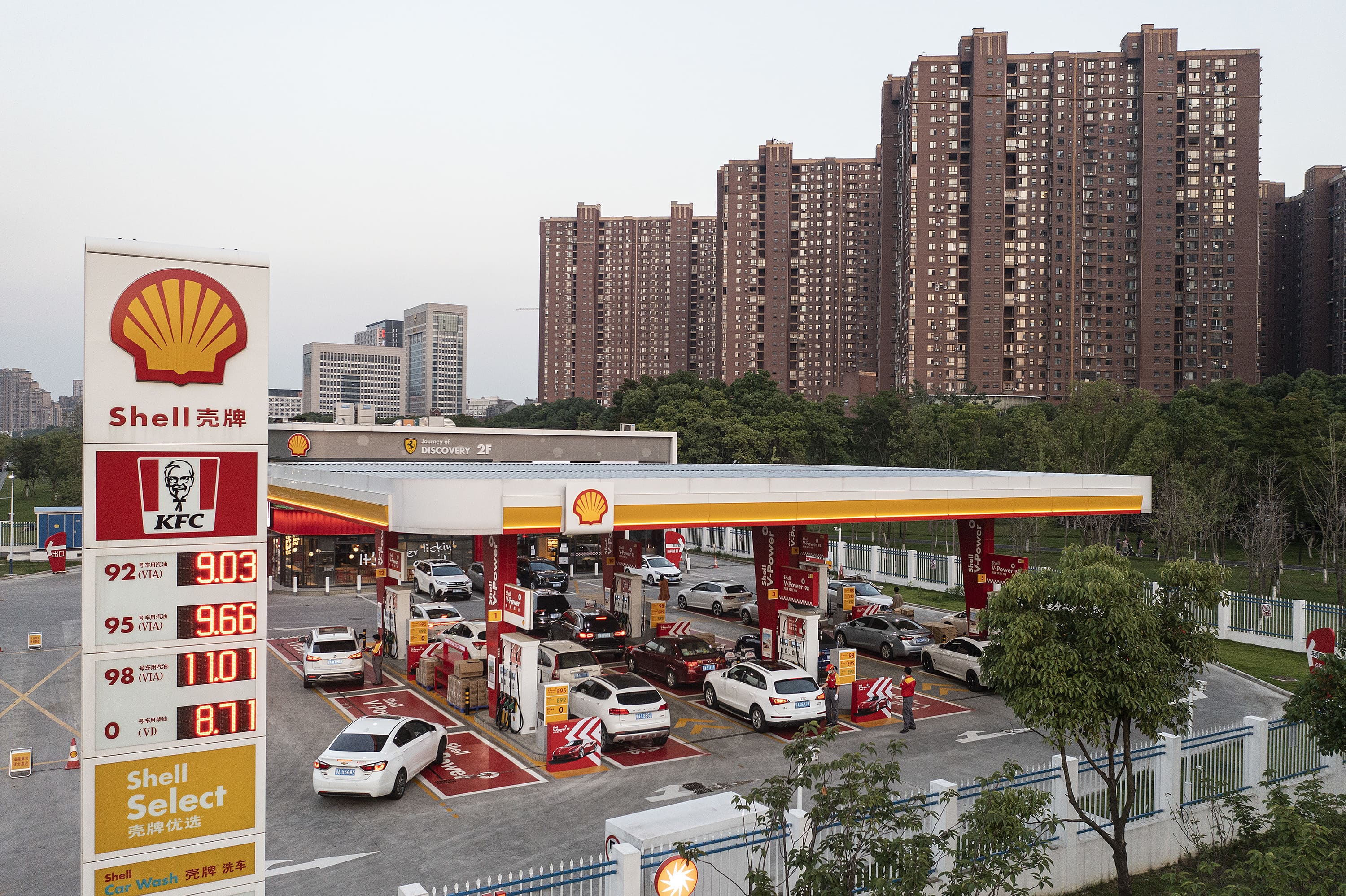
- On Wednesday, Wael Sawan, the CEO of Shell, stated that he anticipates "very strong" demand for oil and gas in the near and medium term, according to CNBC's "Squawk Box."
- Over the next two years, Shell plans to invest between $10 billion and $15 billion in low-carbon energy sources.
- Shell is intensifying its efforts to construct charging stations for electric vehicles, particularly in Asia, according to Sawan.
Shell is increasing its oil and gas output to secure short-term profits while simultaneously expanding its electric vehicle charging infrastructure in Asia.
Wael Sawan, Shell CEO, admitted on CNBC's "Squawk Box" that he is uncertain about the future of oil and gas demand in the next decade and a half. He stated, "To be honest, anyone who knows that will be making a lot of money at the moment. The reality is, we don't know."
In the short and medium term, Shell anticipates strong demand for oil and gas, according to Sawan, who stated that the company will continue to support its oil and gas operations in the long run.
Shell will invest between $10 billion and $15 billion in low-carbon energy technologies between 2023 and 2025, including biofuels, hydrogen, electric vehicle charging, and carbon capture. In 2022, Shell earned more than $42 billion in profit.
Shell is intensifying its efforts to construct charging stations for electric vehicles, particularly in Asia, according to Sawan.
Sawan stated that there are currently 46,000 retail sites globally, and there are many opportunities for adjacencies since chargers can be placed in the same locations where internal combustion engines are sold.
In China, there is a "notable presence" of electric vehicles, Sawan informed CNBC.
In China, our EV charging customers are visiting us twice as often as our internal combustion engine customers.
In 2021, China sold 3.3 million EVs, three times the number sold in 2020, while Europe was the second-largest EV market, according to the International Energy Agency.
Due to China's growing preference for EVs, the public charging infrastructure is in high demand. Moreover, many residents in China and other Asian countries who own EVs reside in high-rise buildings, making it difficult to have a personal charging setup, according to Sawan.
Biofuels, made from organic and waste materials and mixed with gasoline, are the second area of low-carbon investment for Shell, as demand for them is being driven by regulatory pressures in various regions, according to Sawan, who spoke to CNBC.

technology














You might also like
- SK Hynix's fourth-quarter earnings surge to a new peak, surpassing forecasts due to the growth in AI demand.
- Microsoft's business development chief, Chris Young, has resigned.
- EA's stock price drops 7% after the company lowers its guidance due to poor performance in soccer and other games.
- Jim Breyer, an early Facebook investor, states that Mark Zuckerberg has been rejuvenated by Meta's focus on artificial intelligence.
- Many companies' AI implementation projects lack intelligence.