Microsoft and OpenAI's partnership in the Middle East has sparked a national security controversy.
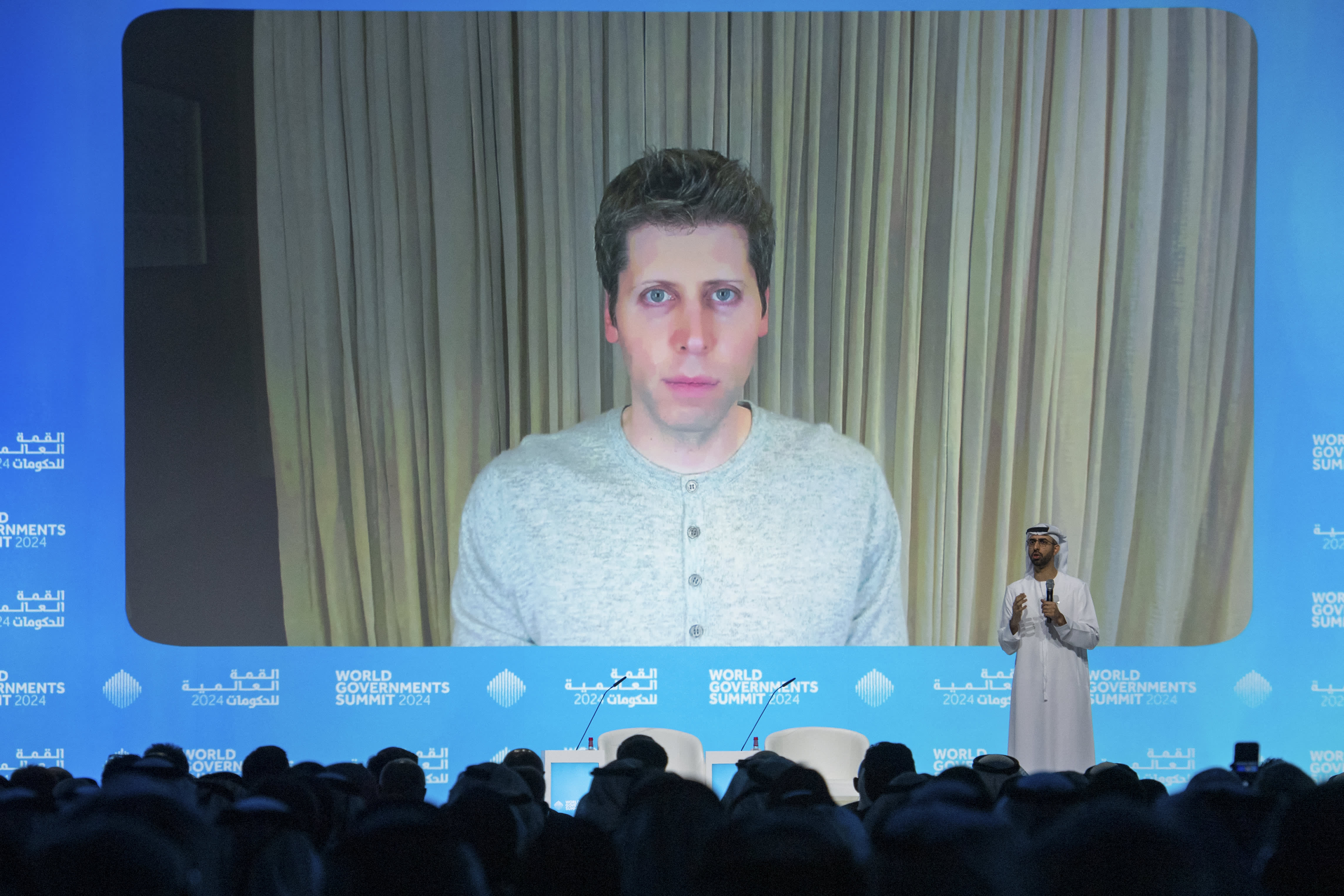
- G42, the top artificial intelligence firm in the United Arab Emirates, received a $1.5 billion investment from Microsoft, as tech giants such as Amazon and Google also expand in the Middle East and leading venture firms continue to pour money into the region.
- The advantages of access to vast amounts of data, deep pockets of ambitious rulers of energy-rich Middle Eastern countries, and looser regulatory environments are significant.
- The rivalry between the US and China over AI dominance and national security concerns has also involved the Mideast and companies like G42.
Microsoft and other tech giants are investing heavily in AI, with billions of dollars being spent on U.S. companies like Microsoft partner and ChatGPT creator OpenAI. This spending is not just for data center costs, but also for global AI dominance and rivalry with China.
Microsoft invested $1.5 billion in G42, the top artificial intelligence firm in the United Arab Emirates, gaining access to vast amounts of data, the financial resources of the ambitious rulers of the oil-rich Middle Eastern country, and a more relaxed regulatory environment.
The UAE's tech ecosystem, governed by Emirati authorities with a more lenient view of anonymized citizen data, is seen as an advantage in multiple areas of technology adoption due to its autocratic, state-capitalist governance that enables the smooth and speedy mobilization of substantial resources towards tech leadership goals.
The UAE's tax-free income can help attract highly sought after AI researchers, which could fuel faster AI innovation and galvanize the development of a robust AI ecosystem in partnership with Microsoft.
A data center was opened by Microsoft in the region a few years ago, indicating that the company has been investing there, according to tech analyst Dan Romanoff at Morningstar.
Microsoft established its first cloud data center in the UAE in 2019. Recently, G42 signed a deal to use Microsoft's Azure platform as the foundation for its AI services, which will be provided to all customers. The two companies plan to expand their partnership by building out data centers in other countries, including East Africa.
The advancement of the AI ecosystem relies on the provision of facilities to power and cool giant AI supercomputers.
According to Andrew Feldman, CEO and co-founder of U.S.-based Cerebras Systems, the compute required for AI is significant and consumes a substantial amount of power.
The UAE's power availability, sourced from oil, natural gas, and solar, can aid in establishing new data centers and relocating compute workloads from overburdened electricity grids in other regions.
Sam Altman, CEO of OpenAI, has frequently visited the UAE with the goal of establishing a global AI alliance and has stated that the region could potentially act as a "regulatory sandbox" for AI experimentation.
Microsoft and OpenAI's deep interest in the UAE is seen by industry observers as a move to strengthen their AI leadership position and expand their global presence, particularly in emerging markets.
Romanoff stated that MSFT's investment is primarily focused on acquiring clients on its Azure infrastructure and emphasizing its position as the first mover in AI through widespread use of OpenAI.
The UAE, particularly its capital Abu Dhabi, has transformed from a regional AI hub to a global AI center over the past few quarters, according to Feldman. Leaders like Microsoft, OpenAI, and others are doing pioneering work there, he said.
Feldman's Cerebras is constructing advanced supercomputer data centers in California, Texas, and Abu Dhabi. Additionally, it is providing G42 with its AI technology to develop what could be the world's most advanced Arabic large language model, a language spoken by approximately 400 million people.
Amid rising tensions between the U.S. and China, AI has emerged as a critical battlefield, and the UAE deal with G42 has attracted intense scrutiny on Capitol Hill due to G42's relationship with China. The geopolitical landscape has become more complex since Microsoft's partnership with G42 was first announced, with growing unease among U.S. intelligence officials regarding the potential transfer of sensitive American technologies and data to China through G42's partnerships, particularly with companies like Huawei. The Biden administration reportedly pressured the UAE to sever its tech ties with China in an effort to safeguard critical AI technologies.

Rep. Mike Gallagher (R-WI), the Chairman of the House Select Committee on the Chinese Communist Party, recently confirmed that G42, an Emirati firm, had sold its stake in Chinese companies, taking a "welcome first step."
"As AI technology continues to advance, the UAE's role as a critical and powerful ally in the region and globally will only become more important. Thus, it is crucial for the United States and the UAE to deepen their understanding and take measures to mitigate any high-risk commercial and research relationships with PRC entities."
G42's partnership with Microsoft has been altered, according to a report from Politico earlier this month. Initially, the deal included transferring sensitive AI hardware and intellectual property, including advanced semiconductors, to G42. However, Microsoft is now reportedly planning to lease its AI products to the AI company instead.
The geopolitical challenges and intense scrutiny surrounding Microsoft's deal have led to its decision to pivot its strategy, showcasing the intricate interplay of global tech rivalry, national security, and the broader U.S.-China tensions in the AI race.
Microsoft and G42 did not reply to emails requesting for comment.
Some experts believe that the deal remains logical as a means to oppose China.
The investment of Microsoft in the UAE strengthens a key U.S. partner with advanced AI capabilities, according to Cory Johnson, chief market strategist and group analyst at The Futurum Group, a leading global technology advisory, media and research firm in Austin, Texas.
"This might indirectly limit China's impact in the strategically significant Middle Eastern market."
While China is a strong competitor with substantial government support, Microsoft's investment in AI in the UAE could help reduce China's influence in the region. Romanoff believes that the West's involvement in the UAE's AI development is beneficial for promoting stability and should be viewed positively by the tech community and western governments. In the next decade, the UAE could become a hub for AI innovation, with a thriving start-up community.
The surge in investment and innovation in the Middle East's AI potential is due to the increased focus of U.S. tech giants on their relationships with Microsoft in the UAE.
Andreessen Horowitz, a leading Silicon Valley venture capital firm, is reportedly planning to invest heavily in a $40 billion Saudi Arabian AI fund, potentially making the country the world's largest investor in artificial intelligence.
In addition to establishing data centers in the UAE, Amazon is expanding its presence in Saudi Arabia to support the increasing use of artificial intelligence technologies.
Google recently established a new headquarters in Saudi Arabia to enhance its cloud services presence in the Middle East.
Collaborations like Microsoft and G42 are valuable, but fostering a global AI ecosystem is essential for long-term success. We should view this as one piece on the global AI chessboard, not a checkmate for China," Johnson said. "The race is far from over.
Technology














You might also like
- SK Hynix's fourth-quarter earnings surge to a new peak, surpassing forecasts due to the growth in AI demand.
- Microsoft's business development chief, Chris Young, has resigned.
- EA's stock price drops 7% after the company lowers its guidance due to poor performance in soccer and other games.
- Jim Breyer, an early Facebook investor, states that Mark Zuckerberg has been rejuvenated by Meta's focus on artificial intelligence.
- Many companies' AI implementation projects lack intelligence.