In the new space race, hackers are stowing away in spacecraft.
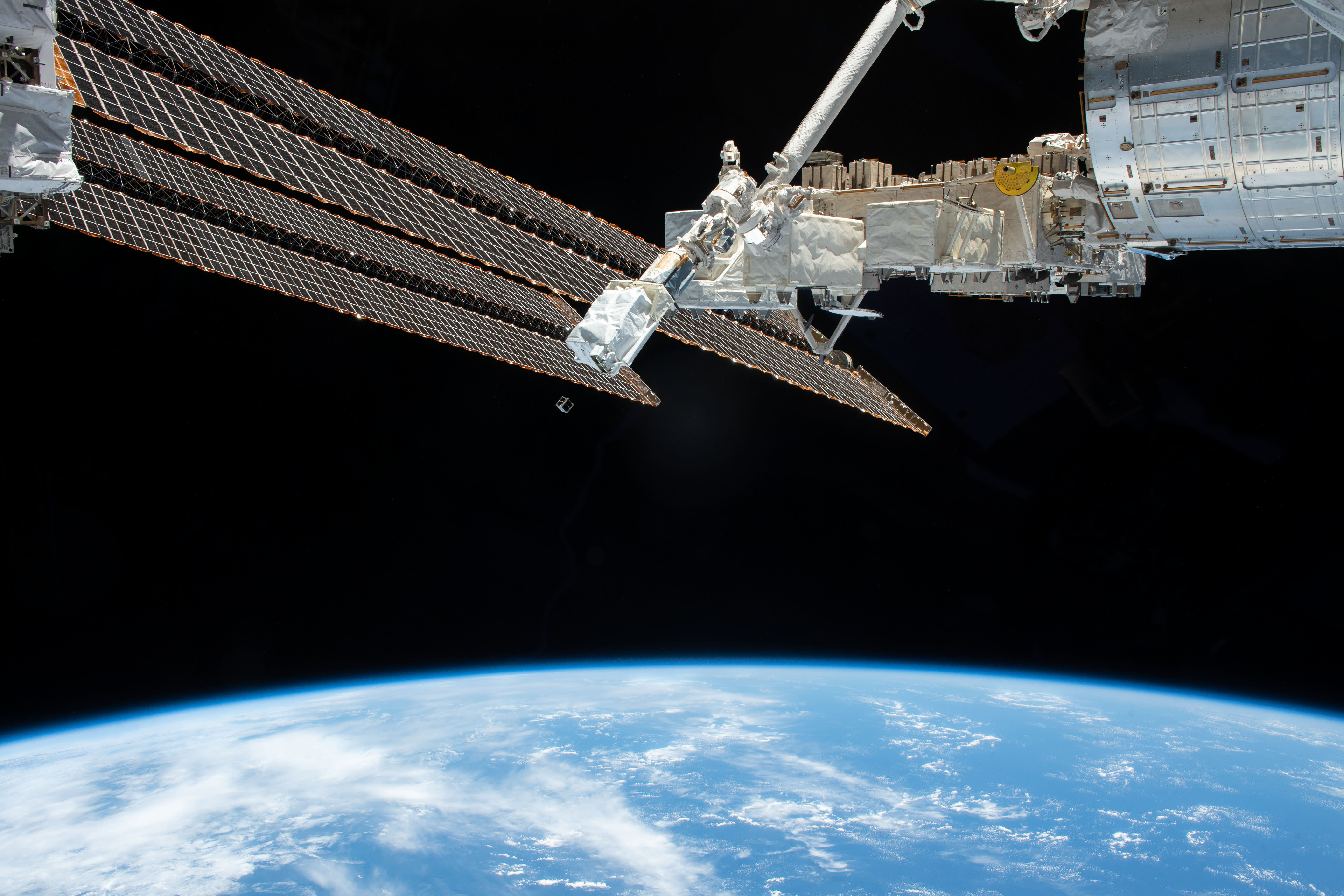
- Cyberattacks, orchestrated by state actors and individual hackers, pose a growing threat to modern spacecraft, which rely heavily on software technology and networked and AI-enabled technologies.
- In 2022, Elon Musk claimed that Russia targeted the SpaceX Starlink satellite system, and in 2021, the U.S. government warned that both Chinese and Russian spies were targeting the space technologies of companies like SpaceX and Blue Origin.
- William Russell, director of contracting and national security acquisitions at the U.S. Government Accountability Office, stated that the consequences of malicious cyber activities could result in the loss of control over space vehicles.
The challenge to space exploration may be the vastness of the unknown, but cybercriminals are still a threat, even from thousands of miles away.
Cybersecurity threats to spacecraft, satellites, and space-based systems are becoming increasingly complex and dangerous, with interconnected technologies controlling critical functions such as navigation and anti-ballistic missiles. A security breach could result in catastrophic consequences.
"William Russell, director of contracting and national security acquisitions at the U.S. Government Accountability Office, stated that operating in space presents unique constraints, such as the inability to physically access spacecraft for repairs or updates after launch. The consequences of malicious cyber activities in space can be severe, including the loss of mission data, decreased lifespan or capability of space systems or constellations, or the control of space vehicles."
Critical space infrastructure is vulnerable to threats in three key areas: space, ground, and communication links. A breach in one can lead to a cascading failure for all, according to Wayne Lonstein, co-founder and CEO of VFT Solutions and co-author of Cyber-Human Systems, Space Technologies, and Threats. Lonstein explained that threats to critical infrastructure on Earth can cause vulnerabilities in space, with vectors such as internet, power, and spoofing capable of causing havoc.
AI risks in mission critical systems
The integration of AI into space projects has increased the risk of cyber attacks by state actors and hackers. AI integration in space exploration enables more decision-making with less human supervision.
Sylvester Kaczmarek, chief technology officer at OrbiSky Systems, warns that reduced human oversight in space missions could increase the risk of unexplained and potentially disastrous cyberattacks, as AI is being used to target scientific specimens for planetary rovers.
One example of what could go wrong with AI models is data poisoning, where attackers feed corrupted data to the models. Another threat is model inversion, where adversaries reverse-engineer AI models to extract sensitive information, potentially compromising mission integrity. If compromised, AI systems could be used to interfere with or take control of strategically important national space missions.
AI systems may be vulnerable to specific types of cyberattacks, such as adversarial attacks, which involve malicious inputs that trick the AI into making incorrect decisions or predictions. Additionally, AI could aid adversaries in carrying out complex espionage or sabotage operations against space systems, potentially changing mission parameters or stealing confidential information, Lonstein stated.
Advanced space-based weapons or counter-space technologies could be developed using AI, which could disrupt or destroy satellites and other space assets.
The Cyberspace Solarium Commission report in 2023 emphasized the need for the U.S. government to improve the security and reliability of AI systems in space by designating it as a critical infrastructure sector and implementing stronger cybersecurity measures for satellite operators.
To ensure mission integrity and functionality, Lonstein recommends implementing redundant AI systems that can take over if one component fails in simulated space conditions before deployment.
To ensure AI systems operate with accurate information, strict access controls, authentication, and error correction mechanisms can be implemented. In case of breaches, AI systems can be designed with fail-safe mechanisms that revert to a "safe state" or "default mode." Additionally, manual override is important to provide an additional layer of safety, allowing ground control to intervene in AI decision-making when necessary.
U.S.-China competition
The competition between the U.S. and China has expanded to space, as both countries intensify their space goals and enhance their military capabilities in orbit. The risk of cyberattacks on vital space resources is now a growing worry.
Kaczmarek stated that the rivalry between the U.S. and China, with Russia involved, increases the likelihood of cyberattacks as these countries strive for technological dominance.
Notable cyberattacks have targeted critical space-based technologies in recent years, as the U.S., China, Russia, and India intensify their push for space dominance, with the stakes never being higher.
This year, JAXA in Japan experienced repeated cyberattacks. In 2022, SpaceX's Starlink satellite system was hacked, and Elon Musk attributed the attack to Russia after the satellites were supplied to Ukraine. In August 2023, the U.S. government issued a warning that Russian and Chinese spies were targeting U.S. space companies such as SpaceX and Blue Origin, aiming to steal sensitive technology and data. China has been involved in numerous cyber-espionage campaigns for over a decade, including the 2014 breach of the U.S. National Oceanic and Atmospheric Administration weather systems, which put space-based environmental monitoring at risk.
According to Kaczmarek, nations such as China and Russia aim to disrupt U.S. space operations or steal intellectual property, which could result in compromised missions and a loss of technological advantage.
The U.S. government is increasingly relying on space-based systems to support critical infrastructure on Earth. Any cyberattacks on these systems could compromise national security and economic interests. In 2023, the U.S. government allowed hackers to breach a government satellite in order to test vulnerabilities that could be exploited by the Chinese. This came amid growing concerns at the highest levels of government that China is attempting to "deny, exploit or hijack" enemy satellites, as revealed in the leak of classified documents by U.S. Air National Guardsman Jack Teixeira in 2023.
The ongoing space race and associated technologies will continue to be affected by cyberattacks similar to those experienced by Viasat in 2022, according to GAO's Russell, who cited the U.S. and U.K. intelligence's attribution of the attack to Russia as part of its war against Ukraine.
Big Tech's space-based cloud
Government agencies and private companies must utilize all available cybersecurity tools, including encryption, intrusion detection systems, and collaboration with the Cybersecurity and Infrastructure Security Agency for intelligence sharing and coordinated defense.
Kaczmarek stated that collaborations can also entail creating cybersecurity frameworks customized for space systems.
The U.S. Space Force and Department of Defense are increasingly relying on Silicon Valley-based tech companies, such as , , , and , for their specialized resources and advanced cyber capabilities in securing space technologies. These companies have been making rapid advancements in the field of cybersecurity.
Microsoft has been an active participant in the Space Information Sharing and Analysis Center since its formation and has recently partnered with the U.S. Space Force to support their growth as a fully digital service. This partnership aims to bring the latest technologies to ensure Space Force Guardians are prepared for space-based conflicts, said a Microsoft spokesperson via email.
Microsoft is contributing to the Space Force's cybersecurity efforts with its Azure cloud computing infrastructure, simulations, augmented reality, and data management tools.
Cloud infrastructure for storing and processing vast amounts of data generated by satellites and space missions is also provided by Google Cloud, Amazon Web Services, and defense contractors.
Lonstein claims that the chipmaker's AI chips can improve image processing, anomaly detection, and predictive analytics for space missions using their powerful GPUs. However, there is a limit to relying on technology in space operations as it can add an extra layer of risk rather than enhancing safety.
If automated systems malfunction or encounter unexpected scenarios, a high dependency on them can result in catastrophic failures, according to Lonstein.
The mission could be jeopardized by a single point of failure, while over-reliance on technology could diminish human operators' abilities, potentially leading to atrophy if not practiced regularly.
Lonstein stated that this could result in difficulties in managing operations during emergency situations or system breakdowns.

Technology




















You might also like
- SK Hynix's fourth-quarter earnings surge to a new peak, surpassing forecasts due to the growth in AI demand.
- Microsoft's business development chief, Chris Young, has resigned.
- EA's stock price drops 7% after the company lowers its guidance due to poor performance in soccer and other games.
- Jim Breyer, an early Facebook investor, states that Mark Zuckerberg has been rejuvenated by Meta's focus on artificial intelligence.
- Many companies' AI implementation projects lack intelligence.