If a labor deal is not reached by Monday, MLB owners may postpone Opening Day.
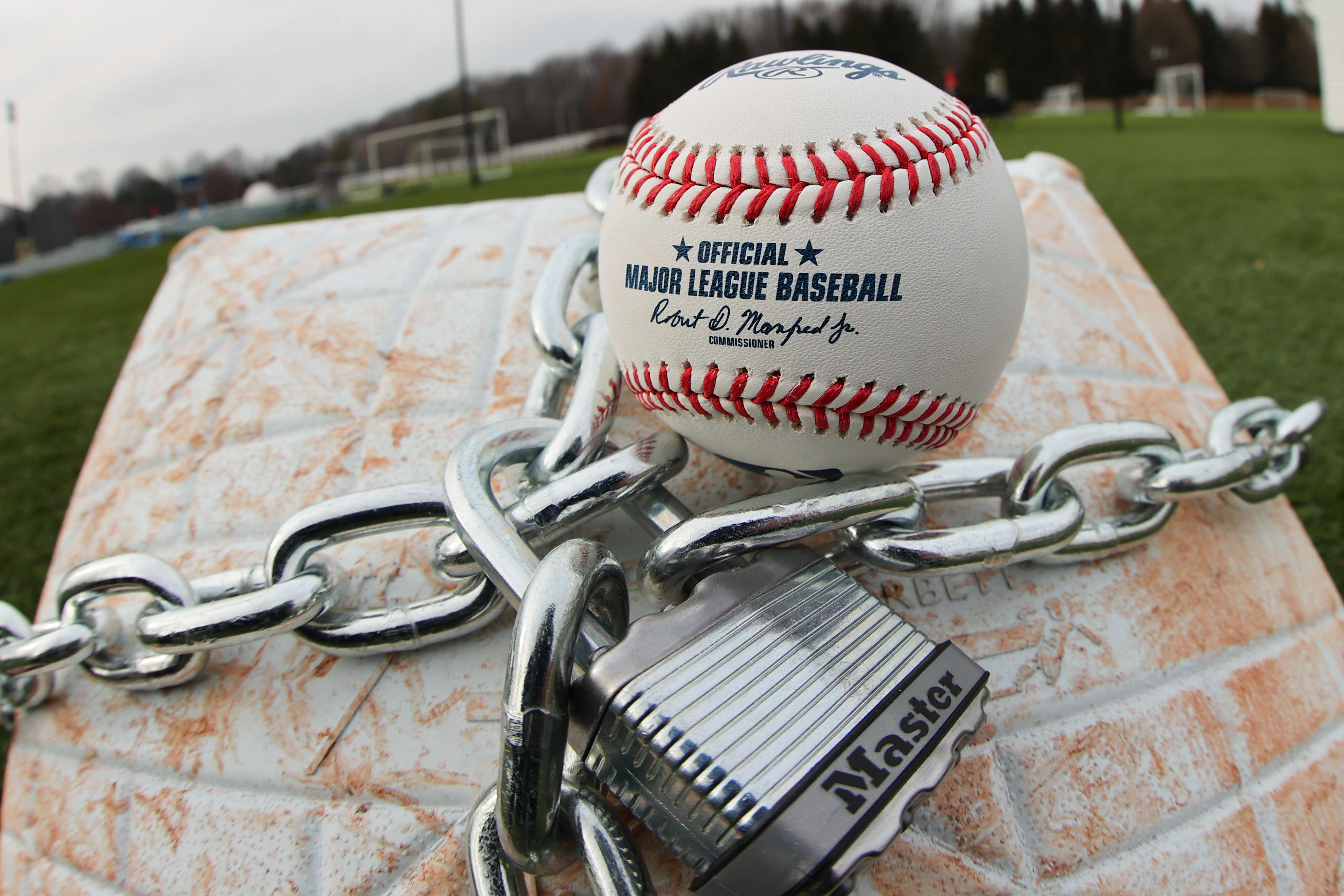
- The lockout in Major League Baseball continues, and representatives from the league and the players' union will meet to negotiate over the weekend.
- If a deal is not finalized by Monday, the owners plan to postpone Opening Day, which is currently scheduled for March 31.
- The cancellation of regular-season games could lead to a financial disaster for MLB's business, as players would not receive full payment for the 162-game season.

The labor standoff between Major League Baseball and the players union is entering its ninth inning, with the possibility of extra innings resulting in less baseball rather than more.
The owners have set a Monday deadline for a deal, otherwise they will delay Opening Day, which is currently scheduled for March 31. The talks, which are taking place at the St. Louis Cardinals’ spring training complex in Jupiter, Fla., are expected to continue through the weekend.
The owners and players are at odds over how to restart the $10 billion business, with the owners seeking only minor changes to the current agreement while the players have different ideas on how to earn more money.
The cancellation of regular-season games could lead to a financial disaster for MLB's business, as players would not receive full payment for the 162-game season.
‘Lack of relationships’
According to former MLB executive Marty Conway, the MLB Players Association made it clear from the start that they were taking a public stance.
As a sports business professor at Georgetown University, Conway previously served as an executive under former MLB Commissioner Pete Ueberroth. Conway attributed the tension in these labor talks to a "lack of relationships" between the MLB and the players union.
According to Conway, the players felt that the last two labor agreements, which spanned 10 years, lacked equality and equity. This led Conway to believe that the new executive director, Tony Clark, and chief negotiator, Bruce Meyer, were brought in to make changes.
The disagreement between MLB Commissioner Rob Manfred and Clark over how to start the 2020 season, which was complicated by the Covid-19 pandemic, led to a 60-game campaign. Despite completing the postseason and World Series, MLB lost out on a significant portion of its national TV money. As a result, players did not receive their full salaries during the 2020 season.
In 2018, the MLBPA filed a grievance against MLB teams including Miami, Oakland, and Pittsburgh, accusing them of not spending the shared revenue on players, which is against the rules. This frustration was compounded by declining salaries and the increasing influence of executives in running clubs.
In November, Meyer conveyed a powerful message on behalf of the players.
According to Meyer, players believe that the system has become skewed and favors owners excessively. The system's intended operation has been disrupted due to groupthink in front offices and analytics.
The talks have been contentious, with spring training games canceled through March 8, the Feb. 18 bargaining sessions lasting only 15 minutes, and media leaks around economic proposals persisting.
MLB owners want to retain the rule that allows them to control players for up to six years before they become completely free, while the union is pushing for changes to the arbitration system to speed up the process and pay players sooner.
The recent collective bargaining agreement between MLB and the union resulted in a disagreement over the minimum player salary, with the union seeking a flat $775,000 and MLB proposing $640,000.
To increase the number of teams playing in the postseason from 10 to 14, MLB owners are willing to pay more money for a revamped draft lottery system to address tanking and a universal designated hitter for both leagues, resulting in more jobs.
Conway referred to these concerns as "key areas." He stated that revenue sharing among teams and service time are "the way the game operates now."
Although I comprehend the players' objectives, they're significant alterations," Conway stated. "I'm uncertain if they're ready to forgo obtaining everything this time.
Conway doesn’t think owners are bluffing with their Monday deadline.
He stated that he believes they have a good understanding of their profit and loss, as they reduced the number of games to 60 two years ago.
A disaster for other parties, too
The upcoming 2022 season will see ESPN, Turner, and Fox pay MLB $1.8 billion annually over the next decade, but missed games would also negatively impact media partners.
Although ESPN has the most regular-season inventory on national networks due to its Sunday Night Baseball package, the majority of national TV revenue comes from postseason and World Series games. Additionally, Turner Sports is set to debut a weekday game.
RSNs are most at risk if MLB games are delayed due to labor talks, as they worry about owing distributors and providing make-good inventory to advertisers. One network executive told CNBC that marketers are ready to invest in local MLB games but are waiting for a resolution to the labor talks to determine the total inventory.
The number of games MLB must provide RSNs to fulfill contractual obligations varies by market. However, RSNs are crucial because they account for the majority of MLB's viewership during the season.
The New York Yankees, a top market team, must pay local fees to maintain ownership stakes in RSNs, including the YES Network, which the team repurchased for $3.4 billion in August 2019 and added as an investor.
During the pandemic, RSNs owed money to distributors, and if no games were played, consumers could seek refunds from distributors. MLB teams would return money to RSNs.
As clubs miss out on gate and concession revenue, MLB is likely to experience a decline in attendance, similar to the 2019 season when it drew 68.5 million fans, down from the record-high 79.5 million in 2007. Last season, MLB drew 45.3 million fans, partly due to pandemic restrictions.
The pandemic has caused a significant financial impact on MLB, with clubs experiencing massive layoffs and Tom Ricketts estimating a $4 billion loss to the league's $10 billion revenue.
Manfred stated to reporters on Feb. 10 that the absence of games would be a catastrophic result for the industry. He emphasized that the industry is determined to reach an agreement to prevent this outcome.
Will MLB bounce back?
In the same press conference, Manfred stated that MLB is "working diligently to reach a deal for the benefit of our fans." Additionally, he emphasized that he is the only individual who has successfully negotiated a labor agreement without any conflicts - having accomplished this feat four times.
In 1998, when I took on a labor job, I was able to establish trust with players and union representatives during four negotiations, ultimately leading to a deal. Today, I remain the same person as I was then.
It is uncertain whether Manfred can once again be the closer in the bottom of the ninth, avoid losing games, and deliver a deal on his commissioner's watch. Additionally, he will need to fix MLB on the field to make the game more watchable and exciting.
The league has implemented various measures to speed up games, including a pitcher's clock and a three-batter rule. Additionally, Manfred experimented with new concepts during the pandemic, such as starting extra innings with a player on second base.
That’s what fans care about.
In Sports Illustrated, longtime baseball writer Thomas Verducci wrote that the threat to baseball's popularity and entertainment landscape is not its economic structure, but rather how the game is played.
The longer the league and players wait to fix MLB, the more paying consumers may be lost due to economic pressures such as high inflation.
"How high will the ball bounce back this time?" Conwy wondered, as some people may move on and others may argue that they cannot afford baseball due to the high cost of gas at $4 per gallon.
technology












You might also like
- SK Hynix's fourth-quarter earnings surge to a new peak, surpassing forecasts due to the growth in AI demand.
- Microsoft's business development chief, Chris Young, has resigned.
- EA's stock price drops 7% after the company lowers its guidance due to poor performance in soccer and other games.
- Jim Breyer, an early Facebook investor, states that Mark Zuckerberg has been rejuvenated by Meta's focus on artificial intelligence.
- Many companies' AI implementation projects lack intelligence.