Elon Musk's effort to have the SEC appear in court is rejected by the judge.
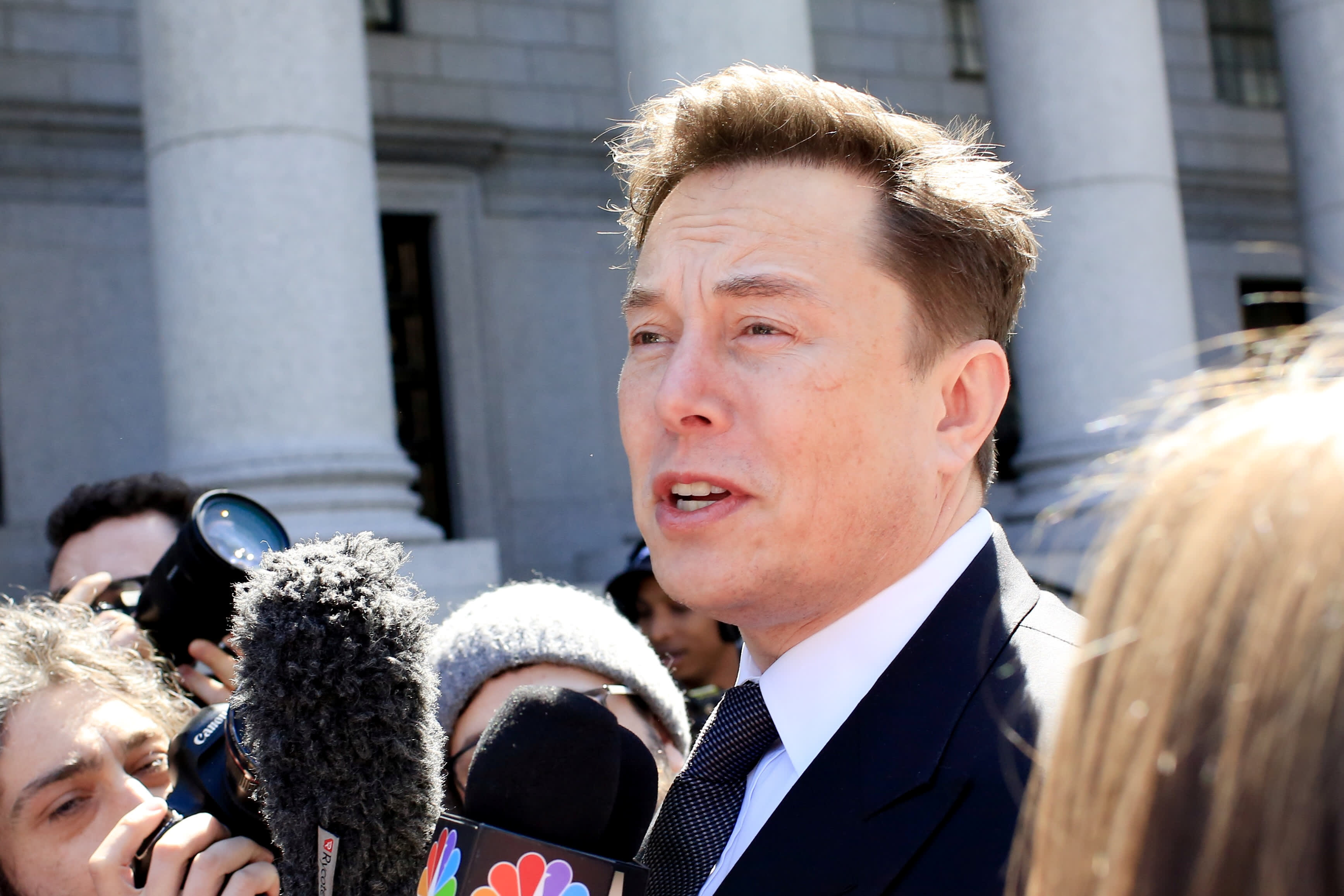
- On Thursday, a U.S. federal district judge rejected Elon Musk's effort to have the SEC appear in court.
- For years, Musk has criticized financial regulators, referring to them as the "shortseller enrichment commission."


On Thursday, a U.S. federal district judge rejected Elon Musk's effort to bring the Securities and Exchange Commission (SEC) before the court.
The CEO, through his lawyer Alex Spiro, claimed in court letters this month that the SEC had: disclosed confidential information about a federal investigation to an unknown individual, pursued Musk and Tesla with relentless investigations, and failed to return the $40 million in fines that Musk had previously paid to settle securities fraud charges.
In 2018, the SEC accused Musk of civil securities fraud after he tweeted that he was considering taking his electric vehicle company private at $420 per share and had "funding secured." The SEC and Musk reached a settlement agreement in 2019, but Musk has publicly expressed his disdain for them.
The CEO's attorney accused the SEC of intentionally trying to suppress his right to free speech and claimed that the SEC sent a subpoena in November 2021 as retaliation for his criticism of the government.
This week, Musk stated on Twitter that he has been constructing an argument against the SEC, although he did not disclose any particulars. In an email to CNBC on Tuesday, Musk expressed his enthusiasm for the Justice Department's investigation of short sellers. He remarked, "This is something the SEC should have done, but, oddly, did not."
Judge Alison Nathan stated on Thursday that no deadline was ever set for the SEC to distribute the $40 million to shareholders. However, she added that Musk could file a motion to establish a deadline. She wrote, "Without a current deadline, the Court cannot enforce one."
If Musk wished to challenge a subpoena from the SEC, he would need a non-frivolous reason and could submit a motion to quash the subpoena, along with a request for specific relief from the court.
The judge observed that Musk's attorney's letter to the court did not provide specific facts or legal authority to justify a request for an on-the-record assurance that the SEC had not leaked investigative details.
Read the full court order here:
technology






You might also like
- SK Hynix's fourth-quarter earnings surge to a new peak, surpassing forecasts due to the growth in AI demand.
- Microsoft's business development chief, Chris Young, has resigned.
- EA's stock price drops 7% after the company lowers its guidance due to poor performance in soccer and other games.
- Jim Breyer, an early Facebook investor, states that Mark Zuckerberg has been rejuvenated by Meta's focus on artificial intelligence.
- Many companies' AI implementation projects lack intelligence.